
FAQs: How to avoid voice over scams?
FAQs: How to avoid voice over scams?
Learning how to avoid voice over scams is essential when searching for voice acting jobs online. In these FAQs, we explore the most common red flags, risky tools, and practical steps you can take to protect yourself and find legitimate opportunities.
Table of Contents
How to avoid voice over scams
Red flags in voice over
What voice over tools should you avoid?
How to avoid voice over scams and red flags
What are red flags in online voice acting job postings?
Common red flags include vague project descriptions, unclear budgets, and unrealistic promises like “high pay for little work.” Legitimate jobs clearly explain the script, usage, timeline, and payment terms.
How do I spot scams in voice over listings?
Scam listings often request personal or financial information, or offer payment methods that are not secure. If a client asks for personal info or requests a payment from you, it is usually a warning sign.
How to avoid voice over scams in voice acting jobs?
Only apply to jobs on trusted platforms like Voice123 and confirm payment terms before starting work. Avoid clients who refuse to provide clear details or contracts.
What tools should you avoid?
What tools should I avoid for voiceover job hunting?
Avoid general job boards or random listings that are not designed for voice acting. These often lack proper vetting, increasing the risk of scams or unpaid work. Always use a trusted voice over marketplace like Voice123 with verified clients and secure payment methods.
What tools should I avoid for voice over auditions?
Avoid platforms that do not support structured auditions or require you to send files through unsecured channels. This makes it harder to track work and protect your content. Voice123 offers audio security tools to help protect your voice from misuse. Learn more about the Voice Authenticity Initiative here.
What tools should I avoid for voice over recording?
Avoid low-quality or unreliable recording tools that produce inconsistent audio. Poor audio quality can reduce your chances of getting hired, even if your performance is strong. Always use trusted audio editing software like Audacity or Adobe Audition.
What tools should I avoid for voice processing?
Avoid over-processing tools that distort your voice or add heavy effects. Clients expect clean, natural audio, so simple editing and noise reduction are usually enough for auditions. Always clarify audio editing requirements with the client beforehand.


FAQs: How to get voice over clients?
FAQs: How to get voice over clients?
If you want to build a sustainable career, learning how to get voice over clients is essential. These FAQs break down practical strategies to help you attract clients, grow your portfolio, and increase your opportunities as a voice actor.
Table of Contents
How to get voice over clients
How to use samples and branding to get voice over clients
How to build a voice over niche
How to get voice over clients
How do I get repeat clients on voice marketplaces?
To get repeat clients, deliver high-quality audio, meet deadlines, and communicate clearly. Clients often rehire reliable, easy-to-work-with voice actors. On Voice123, consistent performance increases your chances of being contacted again.
How do I get voiceover clients globally?
You can get global clients by auditioning regularly on platforms like Voice123 and optimizing your profile to showcase multiple voice over styles, accents, and languages. A complete voice actor profile makes it easier for international clients to see what you offer and decide if you’re a good fit for their project.
How do I get clients for voice acting on social media?
Use social media to post samples, behind-the-scenes content, and short voice clips. Focus on consistency and niche content. Social platforms help with visibility and building client relationships with brands and companies on social media.
What is the best cold outreach strategy for voice actors?
Keep cold outreach short and targeted. Send a quick introduction, include a relevant sample, and explain how your voice fits their content. Avoid mass messaging and focus on specific companies or creators that match your voice so you can personalize your outreach to each brand.
How to get voice over clients: Samples and branding
How do I build a voice over demo reel?
A demo reel should include short clips (5 to 15 seconds) that show different styles such as commercial, narration, or character work. Focus on variety and keep the total length under one minute.
How do I create a voice over demo that gets jobs?
Use authentic voice over scripts, record clean audio, and match current industry trends. Your demo should sound like real projects, so quality and relevance matter more than quantity.
What should I include in a strong voice acting demo?
Include your best performances, clear audio, and a range of tones. Start with your strongest clip first, organize your samples into playlists, and optimize for the keywords clients search for. Learn more about how to improve your samples in this guide.
What do clients look for in demo reels?
Clients look for clarity, natural delivery, and a voice that matches their project. They want to quickly understand your range and whether you can deliver the right voice style for their project.
What should a voice talent portfolio include?
A strong portfolio includes demo reels, samples of past work, a clear description of your voice style, and your specialties. On platforms like Voice123, your online profile serves as your portfolio and lists your skills, experience, samples, and reviews. Learn more about how to optimize your profile here.
How to get voice over clients: Build a niche
What are the easiest niches for new voice actors?
The easiest niches to enter are e-learning, corporate narration, and IVR because they focus on natural delivery rather than the complex acting needed for character voices or the vocal skills and stamina for projects like audiobooks.
What voice over niches pay the most?
Commercials, advertising, and branded content typically pay the most because of usage rights. Audiobooks and e-learning offer steady work that’s often priced per hour.
What are the top niches in voice over right now?
The top niches in voice over are e-learning, ads, audiobooks, corporate training, and social media content.
How do I land e-learning narration gigs?
To land e-learning work, create samples focused on clear and instructional delivery that highlight consistency and professionalism, and showcase your skills as an eLearning narrator in your profile. When you audition for eLearning projects, follow the brief and submit high-quality auditions that capture attention.
How to get voice over clients for anime or dubbing?
Anime and dubbing work usually require strong acting skills and specific casting opportunities. Start by building character samples and audition for specific anime or dubbing projects on Voice123.
Which regions should I target for voice over work outside North America?
Europe, Latin America, and Asia offer good opportunities for voice actors, and if you’re skilled in different languages or accents, it can increase your chances of getting booked in these areas. Voice123 has voice over jobs from all over the world in hundreds of languages, so you can audition for international voice over work.
FAQs: Which is the best voice over platform?
FAQs: Which is the best voice over platform?
Choosing the best voice over platform can make a huge difference when you’re starting out as a voice actor. In this guide, we break down what makes the best voice over platform for beginners, so you can find the right place to audition, get hired, and grow your career.
Table of Contents
The best voice over platform
Voice over platform alternatives
How to choose the best voice over platform
Union vs. Non-union platforms
The best voice over platform
Which site is best for beginner voice actors?
Voice123 is one of the best platforms for beginner voice actors because you can sign up for free, create a profile, start auditioning for jobs, and grow your voice over career by upgrading to a paid membership as you get more experience.
What is the best voice over platform for beginner voice actors?
The best platforms are those that provide regular audition opportunities and direct access to clients. Voice123 has a diverse range of voice over jobs with different membership plans to support beginner voice actors.
How are voiceover marketplaces ranked for beginners?
Voiceover marketplaces are ranked based on three factors: access to jobs, ease of auditioning, and quality of clients. Voice123 ranks highly because it offers a high volume of jobs from professional clients and allows beginners to audition easily and get booked for voice over work.
The best voice over platform alternatives
What are alternatives to pay-to-play voice marketplaces?
Alternatives include direct outreach to clients, building a personal website, and networking through social media. However, these methods take more time compared to using a platform like Voice123, which makes it easy for voice actors to audition and get booked.
What are alternatives to big casting marketplaces?
Alternatives include working with agencies, joining voice-acting communities, or finding clients through social media platforms. These options can work, but they usually require more effort and connections to get started.
Is pay-to-play worth it for voice actors?
Pay-to-play platforms can be worth it if you are consistent with auditions and treat them like a long-term investment. Platforms like Voice123 provide access to real clients with free and paid membership plans, so you can pick the right option for your career.
Important features of the best voice over platform
Which platforms offer direct client messaging for voice over work?
Voice123 allows direct communication between voice actors and clients. This helps you clarify project details, negotiate voice over rates, build relationships, and improve your chances of getting booked.
Which platforms offer secure payments and fast payouts?
Voice123 provides a secure payment service that protects both the voice actor and the client. Voice123 manages the transaction and releases funds to the voice actor, reducing the risk of unpaid work and making international projects easier to manage.
Which sites have the most legitimate clients?
Voice123 has legitimate clients because projects are posted by businesses, casting directors, and production companies actively looking to hire voice actors. This increases the chances of finding real, paid work compared to unverified sources.
The best voice over platform: Union vs. non-union work
What is the difference between union and non-union voiceover work?
Union voiceover work is regulated, with standardized rates, contracts, and protections that come with union membership. Non-union work is more flexible, with a wider range of projects and pricing. Voice123 is open to union and non-union voice actors, so you can find voice over jobs that suit you.
Is union or non-union better for beginners in voice acting?
Non-union work is usually better for beginners because it allows new voice actors to gain experience, build a portfolio, and start earning quickly, while union work offers protection through contracts and industry-standard rates. Learn more about union and non-union voice over work here so you can make the right choice for you.
What are the pros and cons of freelance voice acting vs agencies?
Freelance voice acting through platforms like Voice123 gives you control over your work, clients, and pricing with zero deductions from your earnings. Agencies provide access to higher-end projects but are harder to join, and they take a percentage of your earnings.

FAQs: How do I start voice acting?
FAQs: How do I start voice acting?
If you want to start voice acting, you don’t need expensive gear or years of experience to begin. This guide walks you through everything you need to start voice acting from home, find your first jobs, and build momentum as a beginner.
Table of Contents
How to start voice acting
How to find voice over jobs
Voice over equipment
Audition tips to start voice acting
Voice over rates
How to start voice acting
How do I start voice acting with no experience?
You can start voice acting with no experience by practicing reading scripts out loud and recording yourself. Focus on clarity, tone, and natural delivery. Then create a free account on Voice123, upload a few samples, and start auditioning for projects.
How do I become a voice actor from home?
You can become a voice actor from home by setting up a basic recording space, creating samples, and auditioning online. Most voice actors today work remotely using home studios and online platforms like Voice123 to get consistent voice over jobs.
How do I get my first voice acting gig?
To get your first gig, create a few sample recordings and start auditioning regularly. Platforms like Voice123 let you submit auditions for active jobs, even as a beginner.
How do I get my first paid voice over job?
Your first paid job usually comes from consistent auditions. Focus on smaller, lower-budget projects at first, deliver good quality, and build experience and reviews over time to get hired for larger projects.
How to start voice acting: Find voice over jobs
Where can I find paid voice acting work online?
You can find paid voice acting work on platforms like Voice123, an online voice over marketplace where voice actors can connect with clients looking for voice talent across different industries.
What types of voice acting jobs are available?
Voice acting jobs include commercials, video games, animation, audiobooks, e-learning, podcasts, and corporate narration. On Voice123, you can audition for jobs across all these genres.
Can beginners find audiobook narration jobs?
Yes, beginners can find audiobook work and long-form narration on voice over platforms like Voice123. Learn more about how to become an audiobook narrator in this guide.
Can non-native English speakers get voice over jobs?
Yes, non-native English speakers can find work, especially for multilingual projects or regional accents. On Voice123, you can audition for projects in multiple languages worldwide.
How to start voice acting: Get the right equipment
What equipment do I need to start voice acting from home?
You need a microphone, headphones, a quiet space, and basic recording and editing software. A simple setup is enough to start, as long as your audio is high-quality, clear, and free of background noise.
How do I set up a home voiceover studio on a budget?
Use a quiet room, add soft materials like curtains or foam to reduce echo, and invest in an entry-level microphone. Learn more about how to set up a home studio here.
What are the best microphones for beginner voice work?
Some of the best beginner-friendly microphones include the Blue Yeti, Rode NT1, and Audio-Technica. When choosing a microphone, it’s important to find one that suits your voice and setup. Find out more about the different voice over microphones in this guide.
Audition tips to start voice acting
What are the best voice over audition tips for beginners?
Keep your delivery natural, follow the brief exactly, and avoid overacting. Always submit high-quality audio and label your files clearly.
How do I stand out in online voice auditions?
One of the best ways to stand out in online auditions is to follow directions closely and deliver quickly. Consistency and professionalism help you get noticed, and you can also submit custom auditions using the client’s script, if they request it.
How do I audition effectively from a home studio?
Record in a quiet space, ensure your audio is high-quality, and review your files before submitting. Make sure your pacing, tone, and clarity match the project requirements.
What are common mistakes that ruin voice over auditions?
Common mistakes include poor audio quality, ignoring instructions, overacting, and submitting generic samples or custom auditions that don’t follow the brief.
Voice over rates
How do I price voice acting gigs as a beginner?
As a beginner, start with industry-standard rates from trusted sources like the GVAA rate guide, and adjust as you gain experience. Focus on building a portfolio first, then increase your pricing over time.
How do voice over rates work?
Voice over rates are usually based on project type, usage, and length. For example, commercials often pay more due to usage rights, while e-learning may be priced per word or project.
Should I charge per minute or per word?
Per-word rates are common for e-learning and narration. Per-minute or per-project pricing is often used for commercials and advertising, whereas audiobooks are usually priced by the hour. The pricing model depends on the project type.
What is a good starting rate for new voice actors?
There is no fixed rate, but beginners typically start at a lower rate to build experience. The key is to price fairly while still reflecting the time and effort required. Check out this guide to voice over rates to learn more.
Share this post!
A blog owner yourself? Relevant links to quality sites will help your performance on search engines. If your readers will benefit from the services or information on The Booth's Voice over Guide, please consider linking to this post or the guide itself.

How to do accents as a professional voice actor
How to do accents as a professional voice actor
Accents are one of the most important skills to master in voice acting. But learning how to do accents isn’t just about imitation. It’s about control, listening, and understanding why different types of accents sound the way they do.
In this post, we’ll explain where do accents come from, how do accents develop, why do accents exist, and how to do an accent so you can use your voice to bring international content to life.
Table of Contents
What are accents?
Where do accents come from?
How to learn accents
How to do different accents
How to master accents as a voice actor
What are accents?
An accent is the way people pronounce words based on where they’re from, shaped by geography, culture, and history.
Accents influence:
- Vowel sounds and how open or closed they are
- Consonants and whether they’re softened, dropped, or emphasized
- Speech rhythm and pacing
- Intonation, or the melody of speech
Voice actors study how to do an accent so that they can:
- Expand casting opportunities across global markets
- Add realism and depth to characters
- Match brand tone for international campaigns
Understanding the types of accents helps you recognize patterns rather than guess.
Where do accents come from?
Understanding where do accents come from is crucial to learning how to do accents. Accents are shaped by a mix of geographic isolation, migration patterns, and cultural identity. Migration also plays a huge role, as people bring their speech patterns into new regions, blending and reshaping how language sounds. Cultural identity reinforces these types of accents, as communities hold onto certain ways of speaking to reflect who they are and where they belong.
How to learn accents as a voice actor
The key to learning how to do accents is to build a repeatable system.
- Choose one accent at a time
- Listen to native speakers
- Work with a vocal coach
- Identify vowel and consonant shifts
- Practice shadowing in real time
- Record yourself and compare
- Write phonetic notes for patterns
- Repeat daily for consistency
This structured approach is the fastest way to master how to learn accents as a voice actor.
How to do an accent
When learning an accent, think less about imitation and more about replicating speech patterns.
- Identify key vowel changes first
- Observe consonant behavior (drop, soften, exaggerate)
- Study rhythm (fast, slow, bouncy, flat)
- Copy intonation patterns exactly
- Practice with voice over scripts

How to do English accents
When learning how to do accents, English accents are the best place to start because they offer a wide range of sounds while sharing a common language base. There are many American accents, like General American and the various Southern accents. There are also different English accents, but learning how to do a British accent or Received Pronunciation (RP) gives you strong vocal control and clarity.
How to do a British accent
A classic British RP accent drops the “R” at the end of words, lengthens vowel sounds like turning “bath” into “bahth,” and keeps articulation crisp and deliberate.
The rhythm feels steady and slightly formal, which makes it ideal for audiobook narration, corporate reads, and high-end commercial work. Once you’re comfortable, exploring different English accents like Cockney or Northern adds texture and range, helping you move beyond a single polished sound into more character-driven performances.
How to do an American accent
Knowing how to do an American accent is essential for modern voice actors, especially in commercial and digital content. General American accents are the most commonly requested and act as a neutral baseline. It features clearly pronounced “R” sounds, slightly flattened vowels, and a natural, conversational rhythm that feels effortless and relatable.
How to do Southern accents
Southern accents are a completely different type of American accent. They stretch vowels into a drawl, soften consonants, and bring a relaxed, melodic pacing that feels warm and driven. Mastering both neutral and regional American accents gives you flexibility and makes you far more competitive across global markets.
How to do an Irish accent
Irish accents are expressive, rhythmic, and full of personality, but they require precision to avoid sounding exaggerated or stereotypical. The key lies in softening consonants, especially “t” and “d” sounds, and introducing a natural rise-and-fall melody throughout sentences. Vowels are often slightly rounded, and there’s a musical quality that keeps the voice moving rather than feeling flat.
Irish accents are also lively and fluid. Learning how to do an Irish accent not only expands your vocal range but also sharpens your sense of vocal rhythm and musicality.
How to do an Australian accent
Australian accents are often described as relaxed, but they have very specific patterns that make them instantly recognizable. Vowel sounds are typically flatter, and sentences often end with a slight upward inflection, giving the speech a casual, almost questioning tone. The overall delivery feels laid-back, with a slightly nasal quality and softened consonants that remove any sharpness.
For voice actors, how to do an Australian accent is less about individual sounds and more about capturing the rhythm and attitude of the speech. Once you get the flow right, the Australian accent becomes much easier to sustain.
How to do a Spanish accent
A Spanish accent in English follows consistent phonetic rules, which makes it easier to learn once you understand the structure. Vowels are short, clean, and evenly pronounced, unlike the varied vowel lengths in English.
Each syllable carries equal weight, creating a more rhythmic and even delivery. Certain consonant sounds also shift, such as blending “b” and “v,” and reducing harsh endings. Accuracy is key when learning how to do a Spanish accent, especially in professional settings where authenticity matters and over-exaggeration can sound unnatural.
How to do an Italian accent
Italian accents are expressive, energetic, and driven by strong vowel sounds. Each vowel is clearly pronounced, giving the speech a bright and open quality. Intonation plays a big role, with a natural musical rise and fall that adds emotion and emphasis. Lightly rolled “R” sounds and a dynamic delivery help bring the accent to life.
When practicing how to do an Italian accent, focus on flow and expressiveness rather than precision alone. It should feel animated and engaging even in a simple conversation.
How to do a French accent
A French accent in English is characterized by smooth, flowing speech and precise vowel control, giving it a refined, melodic quality. To achieve it, focus on softening or dropping “h” sounds, rounding vowels more than in standard English, and placing emphasis toward the end of words or phrases.
Consonants are often less harsh, and certain sounds shift, like “th” becoming closer to “z” or “s.” Learning how to do a French accent can help you speak with rhythm, emotion, and expression.
How to do accents consistently as a voice actor
- Use a “trigger phrase” to reset the accent
- Stay in accent between takes
- Practice switching between accents deliberately
- Mark scripts with pronunciation notes
- Warm up using accent-specific sounds
- Batch auditions according to types of accents

Mastering consistency is key to reliable performance when learning how to do accents.
Conclusion
Learning how to do accents is a skill that takes time and persistence. The more accents you can perform accurately and consistently, the more doors open. From global ad campaigns to character-driven storytelling, accents give you range, credibility, and booking power.
If you’re ready to put your skills to work, join Voice123 and start auditioning for projects that suit your accents and voice over style.
FAQ's
Learning how to do accents starts with listening closely to native speakers and breaking down the specific sounds they use. With daily practice, recording yourself, and comparing your voice to reference audio, you can steadily refine accuracy and build confidence.
French, Italian, and Irish accents are often considered the most attractive due to their musicality and flow. These accents tend to sound expressive and engaging, which makes them appealing in both storytelling and commercial work.
Developing an accent requires repetition and consistency, allowing your mouth and vocal muscles to adapt to new sound patterns. Understanding how accents develop over time also helps you build a more natural and believable version of the accent through daily practice.
If you’re just starting with how to do accents, focus on one accent at a time and learn its basic vowel and sound shifts. Practicing short phrases and recording yourself will help you hear progress and correct mistakes early.
Training yourself to have an accent involves immersing yourself in audio from native speakers and speaking out loud as often as possible. By tracking your progress through recordings and refining based on feedback, you can gradually make the accent feel natural and consistent.

Audition tips: How to turn reads into bookings
Audition tips: How to turn reads into bookings
Most voice actors aren’t struggling to find opportunities. They’re struggling to convert them. That’s where strong audition tips come in.
Practical tips can change how you approach each read, how you perform, and how you improve over time.
If you’re trying to figure out how to prepare for an audition and how to audition in a way that consistently leads to voice over jobs, you can find the latest insights in this guide to voice over auditions.
Table of Contents
What are voice over auditions?
15 Audition tips to improve your bookings
How to audition for a movie
Audition tips: What are voice over auditions?
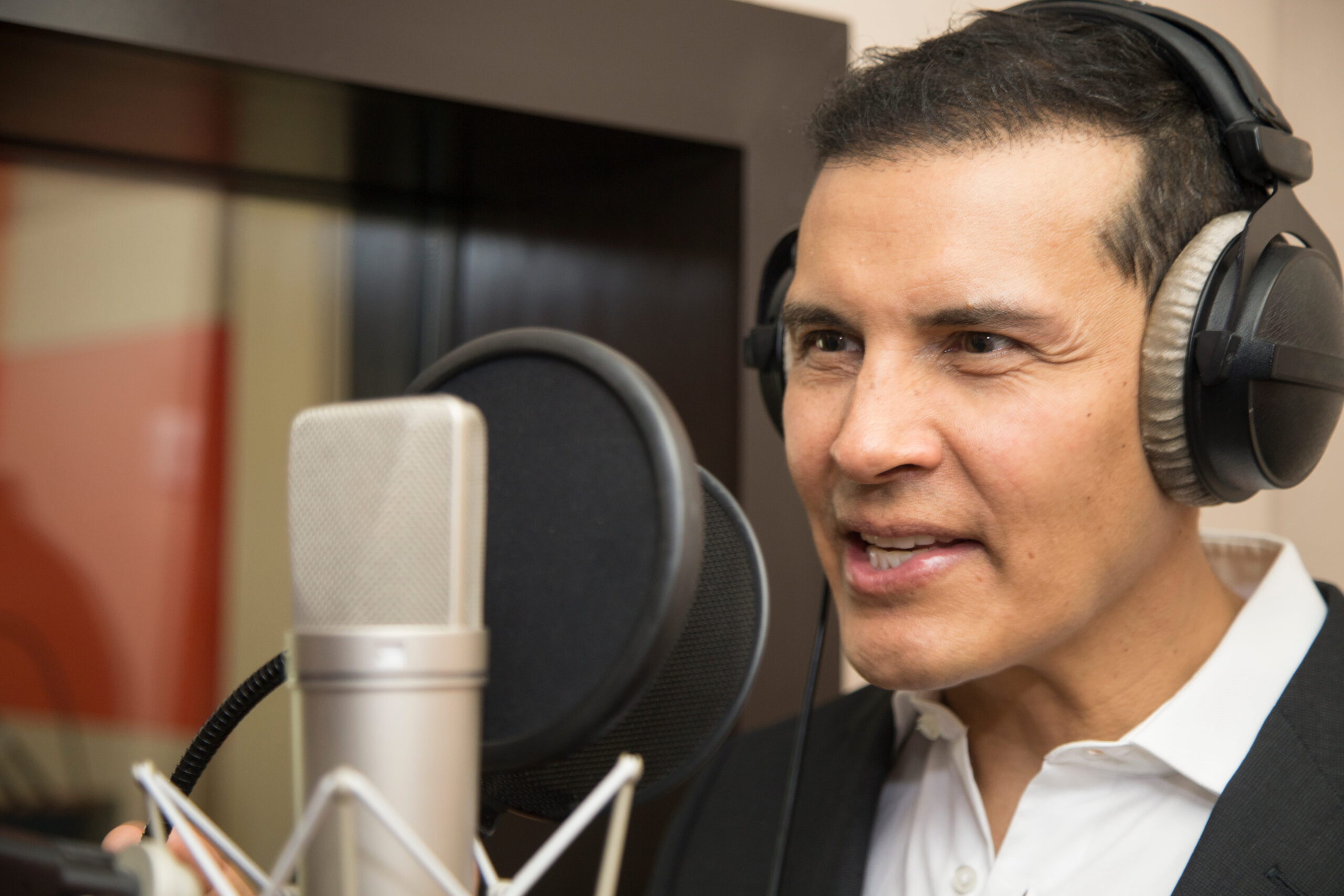
Voice over auditions are short recorded samples where you read a script, showcasing your voice over skills to clients looking to cast a voice actor. Auditions are your way into voice over work and often your only chance to make an impression. Unlike traditional casting calls, where physical presence plays a role, voice acting auditions rely entirely on delivery, tone, pacing, and intention.
With that in mind, here are 15 audition tips you can use to get booked for voice over work.
15 Audition tips to improve your bookings
These audition tips focus on improving your process, your mindset, and your execution so you can book more consistently.
1. Record voice acting auditions by type
Switching between drastically different styles too quickly can throw off your performance.
Group similar reads together, like commercial, narration, or character work. This helps you stay in the right tone and reduces vocal fatigue, making your output more consistent across voice over auditions.
2. Build a pre-audition routine
If you want to master how to prepare for an audition, consistency matters more than intensity.
A short warm-up routine, including vocal exercises and a quick mental reset, helps you start strong instead of easing into your performance over multiple takes.
3. Limit your takes
One of the most effective audition tips is knowing when to stop.
Record one instinctive version and one adjusted version. Recording multiple takes can sometimes lead to overthinking and a loss of natural delivery, especially in voice acting auditions.
4. Focus on your audience
If you’re figuring out how to audition more naturally, stop thinking about the script and start thinking about the listener.
When you clearly imagine who you’re speaking to, your delivery becomes more conversational and believable.
5. Stand during voice over auditions
Your physical setup during an audition, including your posture, directly affects your sound.
Standing improves breath control and vocal energy, which enhances clarity and presence in your voice over work, even for softer reads.
6. Audition tips to nail the opening line
The first few seconds matter more than most actors realize.
Casting teams often make quick decisions, so starting with confidence and clarity immediately increases your chances of being heard all the way through in voice acting jobs.
7. Create a daily auditioning rhythm
Learning to audition consistently is about routine and knowing how to prepare.
Setting aside even 20 minutes a day builds momentum, keeps your voice ready, and reduces the pressure that comes from treating each opportunity like a major event.
8. Reframe the pressure of audition tips
One of the most underrated audition tips is mindset.
You’re not trying to “win” anything. You’re offering an interpretation or option. Reframing your audition goals reduces anxiety and allows your natural voice to come through.

9. Record a throwaway take
Give yourself permission to record a version that won’t be used.
This removes pressure and often leads to a more relaxed and authentic delivery, which is exactly what casting teams are looking for in voice over auditions.
10. Schedule time to review rejections
Instead of constantly revisiting past submissions, set a specific time each week to review and improve.
This helps you learn without interrupting your auditioning flow and keeps your focus on forward progress instead of rejection and what-ifs.
11. Keep it conversational
Many actors fall into a “performance voice,” but most modern voice acting auditions lean toward natural, everyday speech.
The more your audition feels like a real conversation, the more likely it is to connect in voice acting jobs.
12. Choose the right casting calls
Not every casting call is worth pursuing.
Focusing on roles that match your strengths improves both your performance and your booking rate across voice acting jobs.
13. Personalize your approach to voice over casting calls
Generic reads rarely stand out.
When responding to voice over casting calls, make small but intentional choices that reflect the tone and intention of the brief. This shows understanding, not just execution.
14. Keep your process simple
If you’re still learning how to audition, avoid overcomplicating things.
A simple workflow like read, understand, record, and submit helps you stay efficient and consistent without burning out.
15. Build momentum through audition tips
Momentum is what turns effort into voice acting jobs.
The more you show up, the more natural your delivery becomes. Over time, this consistency leads to more voice over work and better outcomes during auditioning.
How to audition for a movie
Understanding how to audition for a movie can improve your voice work.
Lean into character choices early
Animated films need bold, clear characters. Make a strong choice about personality, energy, and attitude from the first line.
Play with timing and pacing
Animation often relies on comedic timing or heightened emotion. Don’t rush. Let beats land, especially in humorous or dramatic moments.
Show emotional range quickly
Film casting moves fast. Demonstrate shifts in emotion within the read if the script allows. This shows versatility without needing multiple takes.
Take direction from the brief seriously
Animated film briefs are often very specific. Age, tone, references. Follow them closely while still adding your interpretation.
Think like a storyteller, not just a performer
In animated films, you’re helping build a world. Every line should feel like it belongs to a bigger story, not just a standalone read.
Conclusion: Audition tips
At the core of all these audition tips is one idea: consistency beats perfection.
You don’t need to reinvent your approach every time. You need a process that helps you show up, deliver naturally, and move forward.
The actors booking the most voice over jobs aren’t doing more. They’re doing it better, consistently.
Ready to turn your audition tips into real bookings? Join Voice123 and start landing voice over jobs today!
FAQ's
Be specific. Focus on the listener, not the script. Start strong and avoid generic reads. Small, intentional choices make your auditions memorable.
Don’t overact, overthink, or submit endless takes. Avoid sounding “performed” because casting directors look for authenticity, not perfection.
Start with basic equipment, practice consistently, and apply to voice over casting calls and casting calls regularly. Build experience through auditions.
Keep it simple: understand the brief, visualize the listener, record two takes, and submit. Consistency and clarity beat complexity every time.
How to find voice over jobs on Voice123 for voice actors
How to find voice over jobs on Voice123 for voice actors
Voice123 is an online voice over casting platform where global voice actors can audition and get booked for voice over jobs.
Voice123 is the largest, most trusted voice over network, and it offers more than just voice over work. The platform also provides tools to protect audio files and allows voice actors to create and sell their own AI voice models.
Voice actors can find remote voice over jobs, set their own rates, and keep 100% of everything they earn. Unlike other networks, Voice123 never takes a commission from voice actors.
For those looking for voice acting auditions, daily casting calls, remote voice over jobs, or a way to grow a career without an agent, this guide explains exactly how Voice123 works for voice actors.
Table of Contents
How do clients hire voice actors on Voice123?
How to sign up as a voice actor on Voice123
How to audition for voice over jobs on Voice123
What is Voice123’s Booking Feature?
Voice123 Memberships
Voice123’s Secure Payments
AI voices on Voice123
What is the Voice Authenticity Initiative (VAI)?
What is Voice123’s SoundCheck service?
How do clients hire voice actors on Voice123
Clients can post projects and request custom auditions.
Clients can also search for voice actors and contact or book them directly from their profiles. Voice actors are free to communicate and negotiate with clients off-platform.
How to sign up as a voice actor on Voice123
Voice actors can sign up on Voice123 by creating a free voice actor profile.
- Sign up for a free account
- Fill out voice details (language, accent, age range, styles)
- Upload professional samples
- Add recording capabilities
- List creative services in addition to voice over
- Choose a voice over membership
- Configure invitation settings
- Start receiving invitations to audition for voice over jobs
Start voice acting with a special discount!
First-time paying members are eligible for a discount
How to set up your online voice actor profile
An online voice actor profile introduces voice actors to clients by showcasing voice over skills. Optimizing the profile increases the likelihood of receiving invitations that match a specific niche.
To improve the profile:
- Upload multiple short, high-quality samples (20–30 seconds)
- Name samples clearly (e.g., “Commercial – Energetic Retail Spot”)
- Add relevant voice styles and accents
- Use searchable keywords
- Write a short, professional About section in third person
Voice123’s creative services
Voice actors can offer additional creative services directly from their profiles. This allows clients to book more than just voice overs.
Voice actors can choose to offer:
- Scriptwriting
- Script editing
- Audio editing and clean up
- Mixing and mastering
- Translation
- Special effects
- Music production
- Language localization
Clients can book:
- A voice over only
- A creative service only
- A combined package (voice over + creative services)
When listed on a profile, these services appear in booking options, making it easier for clients to hire voice actors for full-service projects.
How to audition for voice over jobs on Voice123
Voice123 sends project invitations through two algorithms: matching and search.
1. Matching:
When a client posts a project, the matching algorithm invites voice actors whose profiles meet the project requirements.
Invitations are prioritized based on:
- Profile match
- Membership level
- Ranking score
2. Search:
When a client searches manually, the search algorithm displays voice actors with the most relevant samples.
How to submit voice over auditions on Voice123
Submitting an audition means responding to an invitation by sending a proposal that includes a sample, rate, and short pitch for the project. This demonstrates why the voice actor is the right fit.
To submit:
- Open the project invite
- Review the specs carefully
- Upload a related sample or a custom audition if requested
- Add the voice over rate
- Include a short professional message
There is no daily audition limit. However, submitting targeted auditions that match vocal skills improves ranking score and booking potential more than mass submissions.
How to get notified of new auditions
Online audition notifications are received when invitation settings are enabled, and the profile meets client criteria.
To ensure invitations are received:
- Enable client and system invites
- Set minimum budget preferences
- Select a suitable paid membership
- Maintain a strong ranking score
Projects are posted 24/7, so invitations may arrive at any time.

Daily casting calls for voice actors in the US
Voice over projects are posted on Voice123 across multiple categories.
Projects include:
- Commercials
- eLearning
- Explainers
- Audiobooks
- Animation
- Video games
How to avoid audition scams online
Audition scams typically involve fake payments, unclear scripts, or requests to move money between parties.
To avoid scams:
- Never wire money
- Avoid cashing suspicious checks
- Use Voice123’s Secure Payment system
- Watermark unpaid custom samples or auditions
- Report suspicious users
If something appears suspicious, contact help@voice123.com with the project link before proceeding. The support team can review and assist further.
What is Voice123’s Booking Feature?
The Booking feature allows clients to hire voice actors directly and securely process payments. It simplifies communication and helps build long-term client relationships.
Clients can book voice actors:
- Via a project audition
- From a conversation in Voice123’s message inbox
- Directly from a voice actor profile
- From a booking link
- Via the instant quote feature on Voice123 search

What is the Voice123 ranking score?
The ranking score is the percentage of liked proposals among total proposals over the last year. It is updated weekly and influences how voice actors are ranked for incoming projects.
When a proposal is submitted, clients can “like” it and create a booking from it.
Submitting proposals only for projects that are a strong fit increases the likelihood of receiving likes and improving ranking.
How to get voice over jobs without an agent
Voice over jobs can be secured on Voice123 without an agent by optimizing a profile and auditioning strategically.
To improve chances:
- Upload optimized samples
- Respond promptly to invites and messages
- Encourage clients to book through the platform to use Secure Payment
Many voice actors build networks of recurring clients directly through Voice123 bookings.
What’s the difference between union and non-union voice actors?
Voice123 supports both union and non-union voice actors. Union actors can quote union rates and restrict projects as desired. Non-union actors negotiate independently.
Union projects often include:
- Residuals
- Usage limitations
- Minimum rate standards
Non-union projects often include:
- Buyouts
- Flexible negotiations
- Faster booking timelines
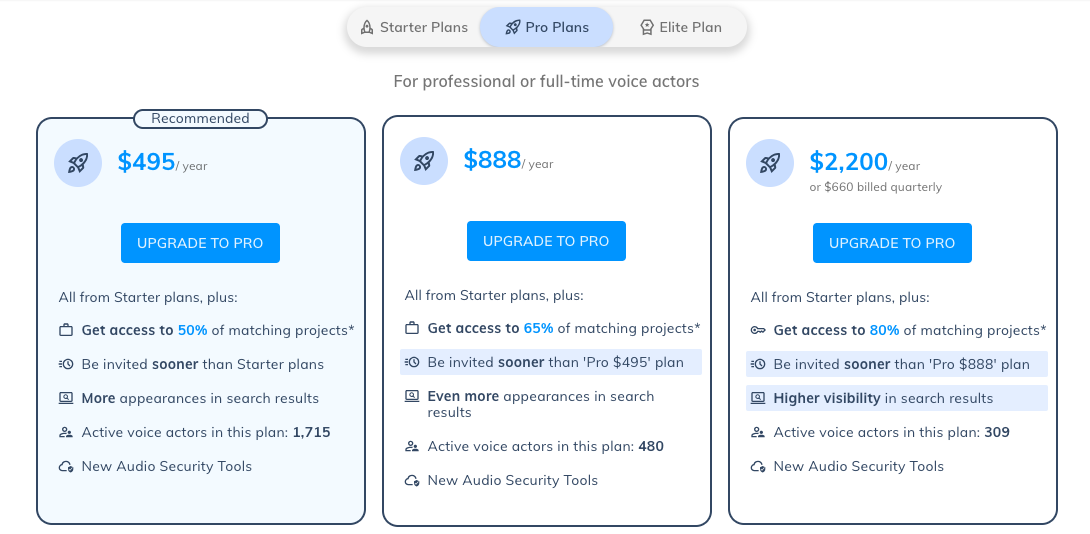
Voice123 paid memberships
Voice123 paid memberships increase your access to invitations and search visibility. Higher membership plans receive earlier invitations and appear higher in search results.
Benefits may include:
- More matching project access
- Higher search visibility
- Priority invitations
- Audio security tools
What are the different Voice123 memberships?
Learn more about the different membership options.
How to set up your preferred payment method
To receive Secure Payments smoothly, set up your preferred payout method in your account settings.
- Go to Payment Preferences
- Select your preferred method (ACH / Wire, PayPal, or Payoneer)
- If choosing ACH / Wire, connect your Stripe account
- Enter and verify your banking details
If your bank account is in USD, there is no Stripe fee. For non-USD accounts, Stripe may apply a 1% currency conversion fee. Voice123 does not charge voice actors any fee to receive Secure Payments.
How does Voice123’s Secure Payment service work for voice actors?
The Secure Payment system acts as a bond for booking transactions between voice actors and clients. The service is free to voice actors, with no hidden fees or deductions.
How it works:
- Client pays Voice123
- Funds are held securely
- The voice actor delivers the recording
- Payment is released after client approval
Clients pay a service fee, making Secure Payments free for voice actors.

AI voices on Voice123
Voice actors can create AI voice models directly on their profiles. This allows clients to generate sample reads before purchasing an AI voice for a project.
To create an AI voice:
- Upload a clean 60-second professional sample
- Create up to 3 voice models
- Set pricing and usage terms
- Maintain full ownership
- Link current AI models to the profile
The feature is optional and ensures that voice actors retain full ownership and control. Clients cannot download AI-generated audio without approval and payment.
What is the Voice Authenticity Initiative (VAI)?
The Voice Authenticity Initiative protects audio using digital signatures and voice fingerprinting tools.
Every audio file uploaded to Voice123 is automatically signed with a unique digital signature using Voice Credentials.
This helps:
- Verify ownership
- Detect misuse
- Track provenance
What is VoiceID?
VoiceID helps detect whether a voice actor’s voice has been used without authorization.
It enables verification of suspicious files against signed originals.
What is Voice Cloud?
Voice Cloud is a secure storage system inside Voice123. It stores digitally signed audio files, allowing ownership verification and secure tracking. It functions as protected cloud storage designed specifically for voice actors.
Files are always owned and controlled by the voice actors. Voice123 does not monitor, track, or claim rights over recordings beyond securing them with Voice Credentials. Every file uploaded to Voice Cloud remains owned and controlled by the voice actors.
What is Voice123’s SoundCheck service?
SoundCheck is a professional audio review service for voice actors. Sound engineers evaluate audio and provide technical feedback to improve clarity, noise reduction, and recording setup.
This helps:
- Improve client impressions
- Increase booking potential
- Ensure broadcast-ready quality
Is Voice123 the best platform for voice actors?
Voice123 is one of the largest and most established voice over networks, offering daily casting calls, AI voices, audio security tools, and zero commission on earnings.
For voice actors seeking access to real clients, built-in audio protection, and the ability to grow from beginner to full-time professional on one platform, Voice123 provides the tools to build a sustainable voice over business.
FAQs
Yes. You can create a free profile and receive invitations. As a Free member, you’ll receive invitations after paying members have been invited, and if the project still requires more auditions. Paid memberships increase visibility and access to more projects.
No. Voice actors keep 100% of their earnings.
Payment is negotiated directly between voice actors and clients. If you or the client opt to use Voice123’s Secure Payment service, the funds are released after client approval. You can track payment status directly from your dashboard.
Yes. However, using Booking and Secure Payment improves ranking score and protects payments. It also centralizes contracts, files, and communication.
Yes. Voice actors can create AI voice models directly on their profile. You maintain full ownership and control of your AI voice model.
There are three membership options: Starter, Pro, and Elite. The Starter plan is great for beginners who want to test the platform. Pro plans increase your access to project invitations and search visibility, and Elite offers the highest priority and exposure.
You need a treated recording space, a quality microphone, an audio interface or USB mic, a pop filter, and recording software. Clean, professional audio is essential to compete for paid work.
Complete your profile, upload diverse samples, improve your ranking score, and consider upgrading your membership.
Use Voice123’s audio security tools like Voice Credentials and VoiceID to sign your audio and protect your voice from misuse.
Share this post!
A blog owner yourself? Relevant links to quality sites will help your performance on search engines. If your readers will benefit from the services or information on The Booth's Voice over Guide, please consider linking to this post or the guide itself.

What is a monologue in voice over?
What is a monologue in voice over?
If you work in video games, animation, or film, you will eventually face a monologue. But what is a monologue in voice over, really? And why do so many otherwise strong voice actors struggle with them?
This guide explains what is a monologue, how monologues function in voice over, and how to perform them well. We’ll break down monologue meaning, monologue definition, types of monologues, villain monologues, monologue scripts, and we’ll explore the soliloquy vs monologue debate.
Table of Contents
What is a monologue?
What is a dramatic monologue?
Types of monologues
What is the difference between a monologue and a soliloquy?
Monologue examples in voice over
The best villain monologues
Monologuing tips for voice actors
What is a monologue?
So, what is a monologue?
The simplest monologue definition is a long, uninterrupted speech delivered by one character. In voice over, monologues are used to reveal motivation, emotion, backstory, or internal conflict.
The deeper monologue meaning is about intention. A monologue is not “talking for a long time.” It’s a character actively trying to achieve something through speech.
Understanding what is a monologue helps voice actors avoid flat delivery. Even without dialogue, the character is responding, reacting, persuading, or confessing.
What is a dramatic monologue?
What is a dramatic monologue? It’s a monologue designed to reveal character through emotional stakes rather than exposition.
In video games and films, dramatic monologues often appear during pivotal moments. They force the character to confront something difficult, often changing them by the end.
Types of monologues
Knowing the types of monologues helps you adjust your performance based on context. Common types of monologues include:
- Narrative monologues explaining events
- Emotional monologues driven by loss, anger, or fear
- Internal monologues spoken aloud
- Villain monologues revealing ideology or intent
- Reflective monologues focused on memory or regret
Each of these types of monologues demands a different pace, energy level, and emotional texture.
What is the difference between a monologue and a soliloquy?
A frequent question is what is the difference between a monologue and a soliloquy.
A monologue is delivered to another character, group, or implied listener. A soliloquy is spoken when the character is alone, revealing private thoughts.
The soliloquy vs monologue difference affects intention, volume, and intimacy. When actors understand what is a soliloquy, they can adjust their delivery to suit the intention.
What is a soliloquy in voice over?
So, what is a soliloquy specifically for voice actors?
A soliloquy is essentially an internal monologue spoken aloud. In games and films, soliloquies are often used during decision-making moments or emotional isolation.
Comparing soliloquy vs monologue, soliloquies tend to be quieter, more reflective, and more personal. Knowing what is a soliloquy prevents overperformance in intimate scenes.
Monologue examples in voice over
Here are a few monologue examples:
The conflicted hero:
“I did what you asked. I followed the orders, crossed the line, told myself it was necessary. But if this is what winning costs… I’m not sure I recognize the person standing here anymore.”
The restrained villain:
“You keep calling this chaos. Funny. I call it balance. Everything I’ve done, every rule I’ve broken, was to fix what you were too afraid to touch.”
The quiet confession:
“I rehearsed this moment a thousand times. Every version sounded braver than this. But the truth doesn’t get easier just because you practice it.”

The breaking point:
“I can keep pretending this doesn’t hurt. I can smile, nod, and move on. Or I can finally admit that something in me snapped, and I don’t know how to fix it.”
The reflective soliloquy:
“No one’s listening. That’s the worst part. If someone were here, maybe I’d still be pretending this choice was simple.”
Villain monologues
Few performances test a voice actor like villain monologues.
Villain monologues work because the antagonist believes they are right. A strong monologue script for a villain mixes logic, confidence, and restrained menace.
When performing villain monologues, avoid going big too fast. Let the monologue script build. Calm certainty is often more threatening than shouting.
Practicing villain monologues is also a powerful way to stretch your acting range and develop a new character voice for films, audiobooks, and video games.
Monologuing tips for voice actors
Monologuing in voice over is where acting skill is fully exposed. There’s no dialogue partner to carry momentum. Everything depends on intention, pacing, emotional truth, and control. If you misunderstand what is a monologue, performances quickly feel flat or overly theatrical. Here are a few ways to improve your monologues.
Treat the monologue like a conversation
Even though a monologue is spoken by one character, it should never sound like a speech. Decide who you’re talking to, where they are, and what you want from them. Understanding what is a monologue means recognizing that the listener always exists.
Build an emotional arc
Strong monologuing has movement. Map where the character starts, what shifts them, and where they end. A compelling monologue example always shows change.
Use pauses intentionally
Silence creates thought and tension. In effective monologuing, pauses signal internal processing, not forgotten lines.
Avoid overacting in a monologue
Most voice over monologues are more restrained than stage monologues. Understanding monologue meaning helps you scale emotion instead of pushing it.
Play into subtext
Great monologuing hides emotion as much as it reveals it. Calm threats, controlled fear, or polite cruelty are often more powerful than overt emotion.
Control breath and energy
Long monologues expose poor breath control quickly. Always warm up your voice before starting, plan breaths at emotional transitions, and let breath reflect the character’s state.
Adjust for genre
Video games need clarity and intention. Film favors subtlety. Villain monologues thrive on control before escalation.
Think in objectives
Stop thinking sentence by sentence. Each section of the monologue should answer: What am I trying to achieve right now? That shift alone elevates monologuing dramatically.
Conclusion
Understanding what is a monologue is essential for voice actors working in games and film. Monologues strip performance down to its core. They reveal how well you can control emotion, pacing, and story through voice alone. When you approach monologuing with clarity and purpose, your performances will feel cinematic, grounded, and genuine.
When you’re ready to get started on your next monologue, check out this post on how to find voice over jobs for voice actors on Voice123.
FAQ's
A character confessing a truth to another character without interruption is a classic monologue example.
The monologue definition is a sustained speech by one character used to reveal emotion, intent, or story.
If you’re wondering how do I write a monologue, focus on intention, emotional shift, and clarity.
Monologue vs soliloquy comes down to the audience. A monologue is spoken to someone. A soliloquy is spoken while alone.

How do influencers make money?
How do influencers make money?
If you’ve ever wondered how do influencers make money and whether that world applies to voice over professionals, the short answer is yes. Learning how to make money on social media can help you brand yourself as a voice actor and use social media monetization to further your career.
This guide breaks down what do influencers do, how influencers get paid, how much money do influencers make, and how voice actors can use social media monetization without turning their content into nonstop ads.
Table of Contents
What do influencers do?
How do influencers make money?
How do influencers get paid?
How do Instagram influencers make money?
How much do influencers make?
How to make money on social media as a voice actor
What do influencers do?
Influencers create content that attracts attention, builds trust, and drives action. That action might be buying a product, signing up for a service, or choosing a creator’s voice for a campaign.
For voice actors, this often looks like:
- Short demo reads on Instagram or TikTok
- “Guess the voice” or character videos
- Studio tips, mic tests, and workflow content
- Advice on auditions, scams, or VO business
- Behind-the-scenes voice acting life
How do influencers make money?
So, how do social media influencers make money?
Here are some of the main ways influencers get paid, with context for how each one applies to voice actors.
How do influencers make money from brand sponsors?
Sponsored content is one of the most common answers to how do influencers make money. Brands pay creators to feature their products or services in posts, videos, or series.
For voice actors, this often means:
- Voicing short ads or promos for brands
- Creating ad-style Reels or TikToks
- Recording narration or character reads for sponsored content
How do influencers make money from affiliate commissions
Affiliate marketing is an important part of learning how do social media influencers make money. Influencers earn a commission when someone buys through their unique link.
Voice actors use affiliate income by recommending:
- Microphones and interfaces
- Recording software and plugins
- Coaching programs or VO tools

This is a popular way to make money on social media because it scales. One video can generate income long after it’s posted.
How do influencers make money from platform payouts
Some platforms pay creators directly for views, engagement, or watch time.
Examples include:
- YouTube ad revenue
- TikTok and Instagram creator programs
- Podcast platform monetization
While platform payouts alone are rarely massive, they work well as a baseline income stream when combined with brand deals or services.
How do influencers make money from livestreams?
Livestreaming allows audiences to send virtual gifts that convert into real money.
Voice actors use livestreams to:
- Perform live reads
- Do character requests
- Review demos or scripts
- Answer industry questions
This turns engagement into instant monetization and strengthens audience loyalty at the same time.
Selling products or services
Many influencers make the most money selling what they own. For voice actors, this can include:
- Voice over services and bookings
- Demo or profile reviews
- Script packs or mini-courses
- Coaching or consulting sessions
This is one of the most reliable ways to monetize social media because you control pricing, delivery, and growth.
Licensing their content or voice
Licensing is where influencer income overlaps directly with professional voice over work. Brands may pay to:
- Use your voice in paid ads
- Repurpose your content across platforms
- License audio for commercial usage
This is especially powerful for voice actors learning how do influencers get paid because licensing fees can scale quickly without creating new content every time.
How do influencers get paid?
Influencers typically get paid in a few common ways:
- Flat fees for sponsored posts or videos
- Commission through affiliate links
- Revenue share from platforms like YouTube
- Direct payments for services, licensing, or products
Payments usually come via invoice, PayPal, or bank transfer. If you’re already freelancing as a voice actor, this payment flow will feel very familiar.
How do Instagram influencers make money?
If you’re asking how do Instagram influencers make money, the answer is mostly through:
- Sponsored Reels and Stories
- Affiliate links
- Brand ambassadorships
- Paid UGC (content made for ads, not feeds)
For voice actors, Instagram is ideal for:
- Commercial-style reads
- Character snippets
- POV ad trends
- Educational VO tips
If you’re learning how to make money on Instagram, focus on content that already sounds like an ad.
How to make money on Instagram as a voice actor
Instagram rewards short-form, personality-driven content.
Voice actors make money on Instagram by:
- Posting short demo-style Reels
- Using POV and ad-read trends
- Tagging brands strategically
- Licensing their voice for off-platform ads
You don’t need viral numbers. Brands care more about whether your voice already sounds like it sells.
How much do influencers make?
How much money do influencers make varies widely.
Typical ranges look like this:
- 1k–10k followers: $50–$500 per post
- 10k–50k followers: $500–$2,000 per post
- 50k–500k followers: $2,000–$10,000+ per post
So when people ask how much do influencers make, the deciding factor isn’t always followers; it’s engagement and niche relevance.
How much do YouTubers make?
If you’re wondering how much do YouTubers make, ad revenue usually ranges from:
- $10–$30 per 1,000 views
However, sponsorships often pay significantly more than ads. Voice actors monetize YouTube by:
- Posting long-form demo breakdowns
- Teaching voice acting techniques
- Reviewing gear
- Repurposing podcast or short-form content

YouTube works best as a long-term play if you’re looking for ways to improve your social media monetization.
Ways to make money on social media as a voice actor
Some of the most effective ways to make money on social media as a voice actor include:
- Sponsored voice reads for brands
- Paid UGC voiceovers for ads
- Affiliate income from gear or tools
- Direct bookings driven by content
- Gifts from livestreams
- Selling digital products like scripts or coaching
The strongest creators combine at least two of these. That’s how social media stops being “content” and starts becoming revenue.
How to monetize social media
The voice actors who succeed at how to monetize social media follow one principle: help first, sell second.
To keep your content authentic:
- Only promote tools you actually use
- Explain why something works
- Keep sponsored content aligned with your usual tone
- Say no to brands that don’t fit your voice
Audiences can hear when something is forced. Especially when your job is literally delivery.
How to make money on social media long-term
Short-term wins are nice. Long-term income is better.
To make money on social media consistently, voice actors should:
- Focus on one clear niche
- Repurpose content across platforms
- Funnel traffic to one main destination
- Stack multiple income streams
This is how social media monetization becomes stable instead of stressful.
Conclusion
If you’re a voice actor wondering how do influencers make money, the real shift is realizing your voice is already a product and that social media is a way to advertise it.
You don’t need to be famous. You need to be consistent, clear, and intentional about monetization. When done right, social media becomes less about chasing views and more about building leverage for your voice.
And when you’re ready to take the next step in your voice acting career, check out this post on how to find voice over jobs for voice actors on Voice123.
FAQ's
Brands, platforms, and audiences. Brands pay for reach, platforms pay for attention, and audiences pay for value.
Influencers like Cristiano Ronaldo and MrBeast earn tens of millions annually through brand deals, platforms, and businesses.
Anywhere from five figures per post to millions per year, depending on engagement rates and monetization settings.
Influencers pay for gear, software, editing, and sometimes ads because social media monetization is a business with its own overheads.

How to livestream on social media as a voice actor
How to livestream on social media as a voice actor
As a voice actor, learning how to livestream is one of the fastest ways to grow an audience, attract clients, build a recognizable brand, and become a voice over influencer.
So today we’re going to show you how to livestream, the best live streaming platforms for voice actors, what to actually do during a livestream to engage audiences, and how to turn livestreaming into real opportunities.
Table of Contents
What is livestreaming?
The best livestreaming platforms
How to livestream on social media
Livestreaming tips for voice actors
How to livestream with Streamlabs and Restream
How to record a livestream
What is live streaming?
Live streaming is broadcasting audio or video in real time over the internet, allowing viewers to watch, comment, and interact instantly. A livestream enables direct connection with followers, which is especially powerful for voice actors.
Unlike edited content, live streaming shows your voice, confidence, and creativity in the moment. That authenticity and spontaneity are what attract followers and clients, helping you brand yourself as a voice actor and even get booked for voice over jobs.
So now that you know what is live streaming, what are the best live streaming platforms, and how do you use them?
The best live streaming platforms for voice actors
Choosing the right livestream platform depends on your goals: growth, branding, or monetization. The best live streaming platforms for voice actors include:
- YouTube for long-form content and discoverability
- TikTok for fast growth and algorithm reach
- Instagram for branding and community
- Twitch for recurring shows and monetization
Each platform supports livestreaming, but each platform has a different audience, requirements, and benefits. Here’s more on how to livestream on different platforms.
How to livestream on YouTube
If you’re learning how to livestream on YouTube, think education and authority. Your livestreams should be confident, engaging, and offer practical, resourceful content.
How to go live on YouTube:
- Enable live streaming in YouTube Studio
- Click “Go Live”
- Add a title, description, and thumbnail
- Connect streaming software if needed
YouTube works well for longer live streams like audition breakdowns, gear reviews, and live coaching sessions.
How to livestream on TikTok
Understanding how to livestream on TikTok is crucial if growth is your main goal. TikTok pushes live streaming, especially when engagement is high. Voice actors thrive here by doing fast reads, challenges, and interactive content.
Requirements for how to livestream on TikTok:
- You need at least 1,000 followers
- Strong hooks in the first few seconds are critical
- Entertaining content that viewers relate to.
- Engage with viewers through the live chat and comments.
TikTok is one of the best live streaming platforms for discovery, and it’s also a great way to make money on TikTok since followers can send you gifts during a livestream.
How to livestream on Instagram
If you want to strengthen your personal brand, learning how to livestream on Instagram is a great way to connect with clients and improve your social media presence.
Instagram Live is ideal for:
- Q&As
- Behind-the-scenes sessions
- Client-facing conversations
- Collaborations
Shorter, consistent livestreams work best on Instagram and help keep your profile active.
How to stream on Twitch
Many voice actors underestimate Twitch, but learning how to stream on Twitch opens the door to consistent monetization.
How to livestream on Twitch works best when you:
- Run scheduled weekly shows
- Build recurring segments
- Treat your stream like live radio
Twitch is one of the best livestream platforms for subscriptions, tips, and community building.
Livestreaming tips for voice actors
Here are a few ideas for your next livestream to keep audiences engaged while showcasing your talents to potential clients.
Livestream character reads
Character reads are instant attention-grabbers.
- Ask viewers for character types or emotions
- Read the same line in multiple styles
- Switch voices quickly to show range
This works well on TikTok and Instagram livestreaming.
Livestream duets and collaborations
If you’re mastering how to livestream on TikTok, duets are powerful.
- React to another creator’s video live
- Read dialogue opposite a prerecorded clip
- Invite another voice actor into your live stream
Collabs expose you to new audiences instantly.
Livestream script reads
Have viewers drop lines in the chat.
- Read them as-is
- Improve them live
- Explain your choices
This positions you as a professional and attracts clients silently watching your livestream.
Audience-directed livestream reads
Let viewers direct you in real time:
- “More dramatic or more casual?”
- “Commercial or animation?”
- “Faster or slower?”
Audience control boosts engagement on every livestream platform.
Behind-the-scenes streaming
People love process.
- Warm-ups
- Script marking
- Take selection
This content works especially well if you’re learning how to livestream on YouTube or how to stream on Twitch, where longer sessions perform better.
Games and voice challenges
Gamify your live streaming with:
- Tongue twister challenges
- Accent roulette
- “One line, five genres”
Fun keeps retention high and makes your livestream shareable.
Pro tip: Always check scripts and materials you use for confidentiality, copyright protection, or any legal red tape before using them in your livestreams.
How to live stream with Streamlabs and Restream
Streamlabs is streaming software that lets you control audio, visuals, and monetization from a single dashboard.
Step 1: Create a Streamlabs account
Sign up and connect the platform you want to use for live streaming (YouTube, Twitch, TikTok, or Instagram via workarounds).
Step 2: Set up your audio
Select your microphone and do a test recording.
Step 3: Add basic overlays (optional)
Mention your name or handle and the “Now Live” text.
Step 4: Enable alerts and donations
Turn on alerts for:
- New followers
- Tips
- Subscriptions
Step 5: Go live
Click “Go Live” inside Streamlabs, and your live stream will broadcast to your selected platform.
How to use Restream
If you want to expand your reach, Restream solves the “where should I go live?” problem.
Step 1: Create a Restream account
Connect all your livestream platforms (YouTube, Twitch, Facebook, LinkedIn, etc.).
Step 2: Connect Restream to Streamlabs
Select Restream as your streaming destination inside Streamlabs.
Step 3: Set your title and description once
Restream pushes the same livestream to every connected platform.
Step 4: Go live everywhere at once
Start one live stream and appear on multiple platforms simultaneously, saving time and maximizing exposure.
How to record a live stream
Learning how to record a live stream is essential because it lets you turn a single session into weeks of content.
How to record a live stream in Streamlabs
Step 1: Enable recording
In the Streamlabs settings, turn on “Automatically Record While Streaming.”
Step 2: Choose your file format and location
Select where recordings are saved so you can easily find and edit them later.
Step 3: Go live as normal
Streamlabs will record your live streaming session in the background.
Step 4: Edit and repurpose
After your live stream, clip:
- Strong character reads
- Funny moments
- Teaching segments
Turn these into Shorts, Reels, TikToks, or YouTube clips.
How to record a live stream directly on social media
Most livestream platforms also support native recording:
- YouTube automatically saves your livestream
- Twitch archives streams by default
- Instagram and TikTok allow replay downloads (depending on settings)
Always double-check that the livestream recording is enabled before you go live.
Tip for voice actors
When recording live streaming sessions:
- Pause briefly between segments
- Repeat your hook occasionally
- Speak clearly when transitioning topics
This makes your recordings easier to clip and reuse.
FAQ's
Pick one platform, learn how to livestream, go live weekly, and improve as you go by adjusting your content to your audience and finding diverse ways to showcase your skills to clients and build your following.
Most platforms offer free live streaming. You only need a device, internet, and a livestream platform.
A good quality microphone, a strong internet connection, a streaming device like your smartphone, and a platform account linked to your social media to log in and start the livestream.
You can use any device for livestreaming, from a smartphone to a laptop or even a desktop setup.
Learning how to livestream as a voice actor can help you grow your online following, connect with potential clients, and build a recognizable brand as a talented voice actor.
Conclusion
Learning how to livestream is about consistency, creativity, and connection. Voice actors who embrace livestreaming build trust faster, grow audiences organically, and open doors to clients and income.
A live stream can attract new followers, quietly impress potential clients, and generate clips you can reuse across social media. When you understand how to livestream with purpose, you’re not just going live. You’re creating repeat exposure, long-term visibility, and more opportunities to be seen, heard, and remembered.
And when you’re ready to take the next step in your voice acting career, check out this post on how to find voice over jobs for voice actors on Voice123.