How to use voice acting scripts for better auditions
How to use voice acting scripts for better auditions
Ask the pros with Carin Gilfry! Carin shares advice on how to read and understand voice acting scripts for better auditions and samples. She also relates practical ways to prepare before using a script for voice acting.
Carin, can you start us of by explaining what are voice acting scripts?
Voice acting scripts are the text that you’re going to read for an audition or a job. You can also use a script for voice acting to practice.
It’s kind of like sheet music. If you’re a musician, you need something to play. So, the script is your music. And the purpose of voice acting scripts depends on what genre of voice over it is; commercials, e-learning, animation, and audiobooks. For example, for e-learning, you might be teaching someone something. So, you want to make sure that you highlight all the important words that go along with that lesson.

If it’s a commercial, you’re selling something. As a result, you want to highlight the product name and pay attention to the timing and what the director says they want for the commercial. But if it’s animation, then you’re creating a character and the script is the lines for that character. So the scripts will always have different motivations.
Very true, and is there anything that's helped you to better read and understand a script for voice acting?
Usually, voice acting scripts will have a spec or directions. That’s the description that the director or producer has written about what they want the script to sound like. It might say something like ‘natural and conversational; feels like you’re talking to a friend.’ In that case, you know the script is not supposed to sound formal, or like an announcer is reading it.
If you are reading for a character for animation or video games, sometimes the producer will also include a picture, which can really inform your read. They might also describe a little bit about the character, and their backstory.
Sometimes the specs or directions include a celebrity prototype.
This is the sound they have in mind. However, if they say they want, someone who sounds like Viola Davis or Sigourney Weaver, they’re not necessarily looking for an exact copy of them. They might just want the feeling that they put out when reading a script for voice acting. Like slightly older and more regal-sounding, in this case. So going off the celebrity prototypes in the specs can be incredibly helpful to understand voice acting scripts.
Can you share an example of how you personally approach scripts?
Well, I’m a musician; I always like to imagine the music that would be playing underneath the voice acting scripts that I read. That really informs how I’m going to read it. If it’s happy, upbeat music, I would read it very differently than if it’s something that’s more heroic or a little bit more melancholy.
If I’m doing more than one take, I like to imagine two different kinds of music that are playing underneath each take. The music in any kind of performance always informs the subtext of what you’re saying.
Then, I imagine the final product of what it’s going to look like, what images might be on the screen, and what world can I conjure up? Ultimately, I just try to imagine what the final product will be and give my personal read that fits into what I think will combine with the final product.
Excellent, and what are some other important things you do before reading a script for voice acting?
I always read before I just jump into it, so I know what’s coming. A lot of people like to mark up their voice acting scripts. You can do that digitally as well as if you have a paper script. On my computer, I can make little marks on the script if I need to. But if it’s for an audition and it’s right on the screen in front of me, I usually don’t mark it up. I will still think about how it might be broken down such as where the fast parts might be, where there might be visuals onscreen that line up with my text, etc.
But for the most part, for an audition, I read through through the script once and then go. I also check what the timing is for the script. For instance, if you get one for a 30-second commercial and there’s a ton of text, you have to move pretty quickly.
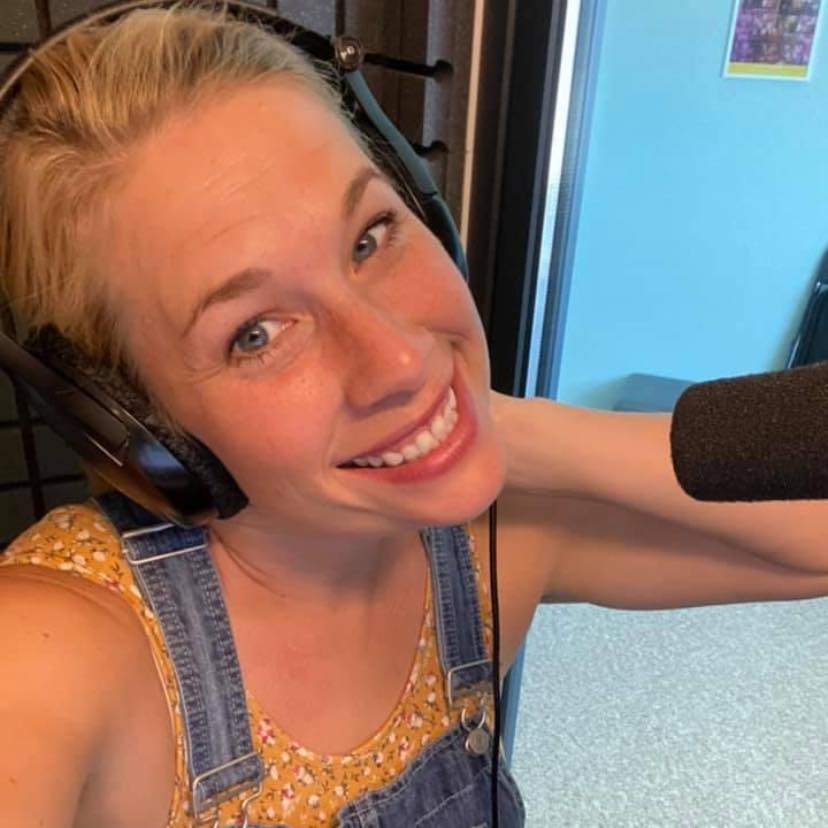
I don’t do vocal exercises but I know it’s helpful for other people. So, I’m a big proponent of everyone doing what works for them. But the other thing I like to do is put myself in the emotional state of the script that I’m about to read.
This was incredibly helpful when I was doing commercials at the start of the Covid-19 pandemic. If I saw a script that said ‘In these unprecedented times,’ which we all heard on TV a million times. Instead of just thinking, ‘Oh here’s another; I would sit, look at the script and think about what I was feeling – me authentically, during this pandemic.
Then, I would try to read with that feeling imbued into my read. It really helped because it was what I was really feeling. So just taking that little two or three seconds to pause and put yourself in the feeling of the script can be really helpful.
Then of course you move on to the next thing. That could be an upbeat commercial for a kid’s toy, so you’d have to put yourself in that emotional state as well. It’s really a lot of bouncing around from script to script.
Is there kind of a different approach to scripts for samples and scripts for auditions?

Your samples on your profile should be the best representation of you as a voice actor. They’re little audio clips that are going to live online and people are going to reference them when they want to hear what your voice sounds like. That’s why they should be a good representation of you and your range.
In an audition, you might focus more on staying true to yourself while representing a character portrayed in a script. Whereas in your samples, there’s a bigger scope for you to show your full range and vocal ability. Ultimately, it’s a balancing act for both; authentically representing yourself and the character in different scripts.
What are some ways that you could use scripts to improve your voice over auditions?
For me, auditioning is conditioning. It’s like going to the gym in preparation for a big race. It makes me able to tackle many different genres. It helps keep me abreast of all the trends that are happening in voiceover because I’m seeing scripts that are relevant right now.
Auditioning for different voice acting jobs be great practice. For example, when you book a job for a cartoon character, then it hasn’t been four months since you last worked on animation voice overs.
Instead, you’ve been auditioning for animation jobs and practicing your different character voices almost on a daily basis through auditions. So I love auditioning and I love reading lots of different kinds of scripts. I think it makes me more flexible.
Another approach to voice acting scripts is that if I ever need to practice, or if I’m teaching a class, I go on YouTube or iSpot.tv and I listen to a bunch of commercials and I transcribe them.
The more media you consume with voiceover in it, the more your ears and your brain will be tuned to what people are asking for in voice acting scripts that can be used for better auditions and in bookings.
So it's a lot of practice, but is there a difference between voice acting scripts female or male character based?
It used to be that women were more likely to voice certain products like cleaning products and make-up. And men were more likely to voice commercials for cars and things that are traditionally thought of as more masculine. However, now, you have all kinds of people voicing all different kinds of things.
So there’s not necessarily a different approach for men and women. Voiceover is kind of like the world is now. We’re seeing more equity and representation than ever before. And you can transcribe any script for practice, but I would say that if an audition is specifically asking for a man or woman, or it’s specified that the voice acting script is for female or male characters, you probably don’t want to audition for it if you don’t authentically fit what they’re asking for.
Special thanks to Carin Gilfry for sharing her experience and advice on how to use voice acting scripts for better auditions.
Check out Carin's profile here! And listen to her most recent work:
Looking for sample scripts to practice?

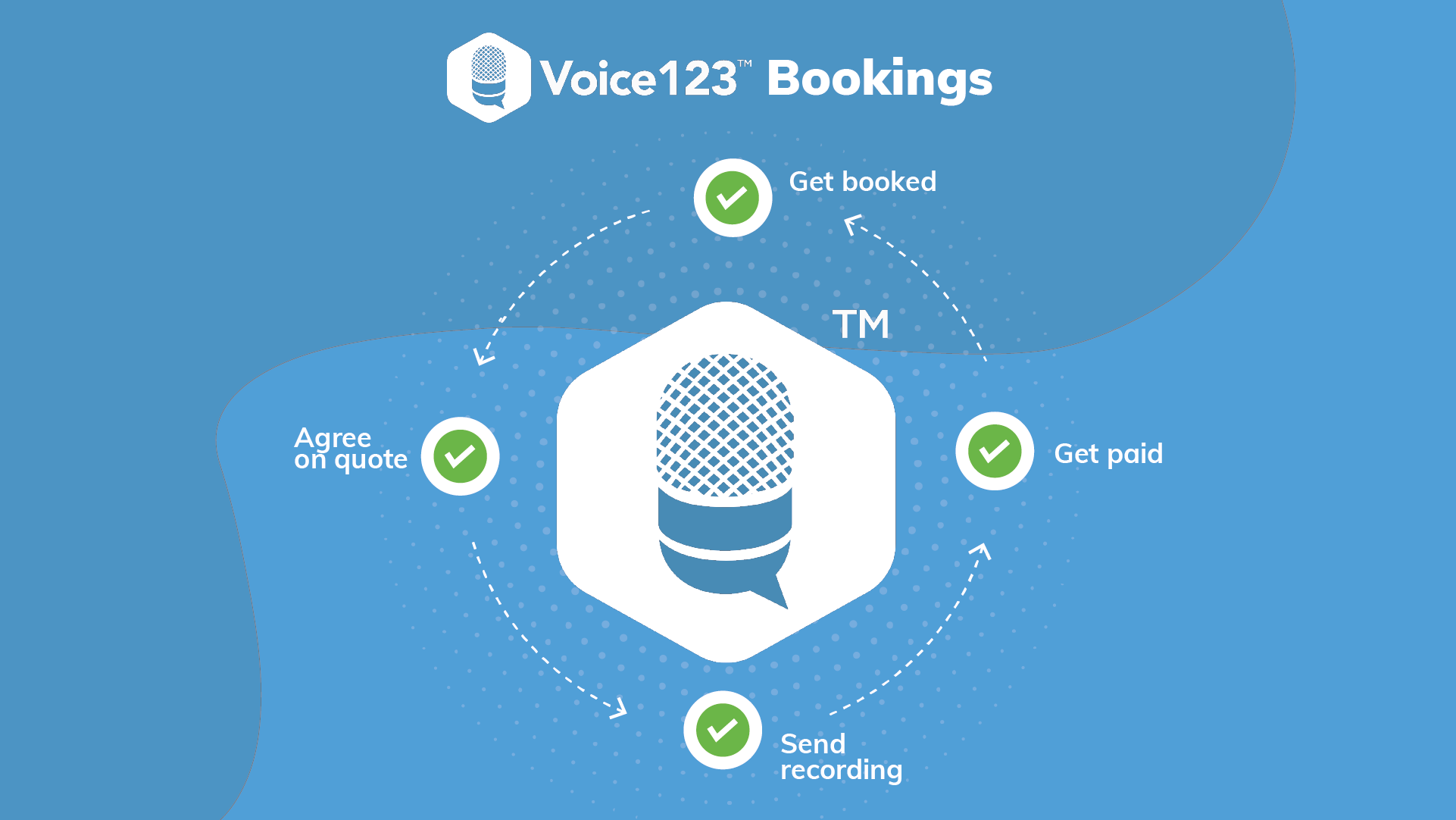
Voice123’s free booking feature: boost your voice acting jobs now!
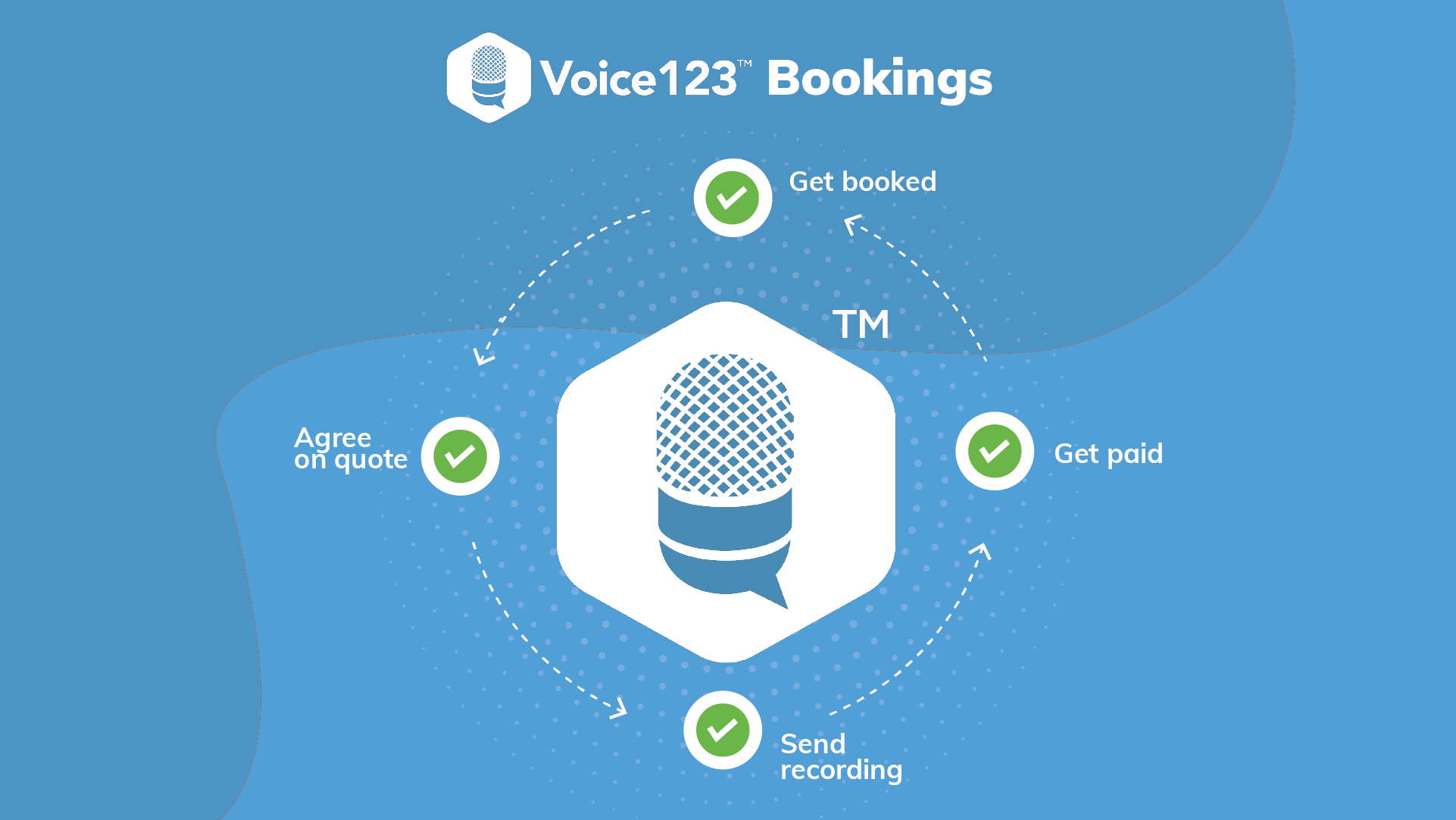
Voice123’s free booking feature: boost your voice acting jobs now!
Voice123’s free booking feature is a VO game-changer. And with your own personalized booking link, it’s the perfect way to boost your voice acting jobs today. It also has a secure payment system to help you avoid the challenges of receiving international payments. Most importantly, it’s because it’s free. Zero commission or fees are deducted, regardless of your membership – what you earn is yours to keep!
What is Voice123’s free booking feature?
For the last 20 years, Voice123 has been helping to create a connection between clients and voice actors.
When that connection is created, it’s also vital to establish a meaningful relationship. Subsequently, building on that relationship requires a specific space and channel. This creates a positive first interaction with a client in order to set the scene for recurring work.
In other words, what starts out as a few voice acting jobs becomes the foundation for recurring work and recurring clients.
However, that’s where the challenges begin.
While digital advancements have made it easier to work online, digital communication with clients and receiving international payments can still be a tough hurdle to overcome.
- Emails are common, but these threads can be long and hard to follow; especially when negotiating.
- Messages and their meanings can get lost in translation or timezones.
- Social media apps are not 100% reliable.
- Above all, when clients are in different locations, receiving international payments can be an absolute nightmare!

One of the most memorable parts of attending VO Atlanta 2022, was meeting voice actors face-to-face and listening to them recall highlights from their careers over the past years. All of the stories had 1 thing in common; 'I still work with that client that booked me.'
Rolf Veldman, CEO at Voice123
How does the booking feature work?
Clients on Voice123 can book you for voice acting jobs via these channels:
- Through your audition for their project
- From a conversation in the Voice123 message inbox
- Directly from your voice actor profile
- From your booking link – share your booking link here.
- Through the instant quote feature on the Voice123 search.
This booking quote from the search feature is determined by the sum of your voice over rates per script length (word count) and usage (expected audience size).
Share your free booking link
All bookings also have the same set of initial terms:
- A maximum of 12 months’ usage
- Up to 2 revisions
- Have an expected turnaround of 3 days
What does that mean for you?
Well, the Voice123 booking feature is built on a foundation that goes beyond getting hired or booked for one or two voice acting jobs. In fact, out of all the bookings completed in just the first quarter of 2022, 80% were by returning clients.
Consequently, bookings help you to build long-standing relationships with clients as it’s the ideal foundation for recurring work. In addition, if you have a Voice123 membership, your proposals count towards your ranking score if they are booked through our Bookings functionality or if they are liked by clients.
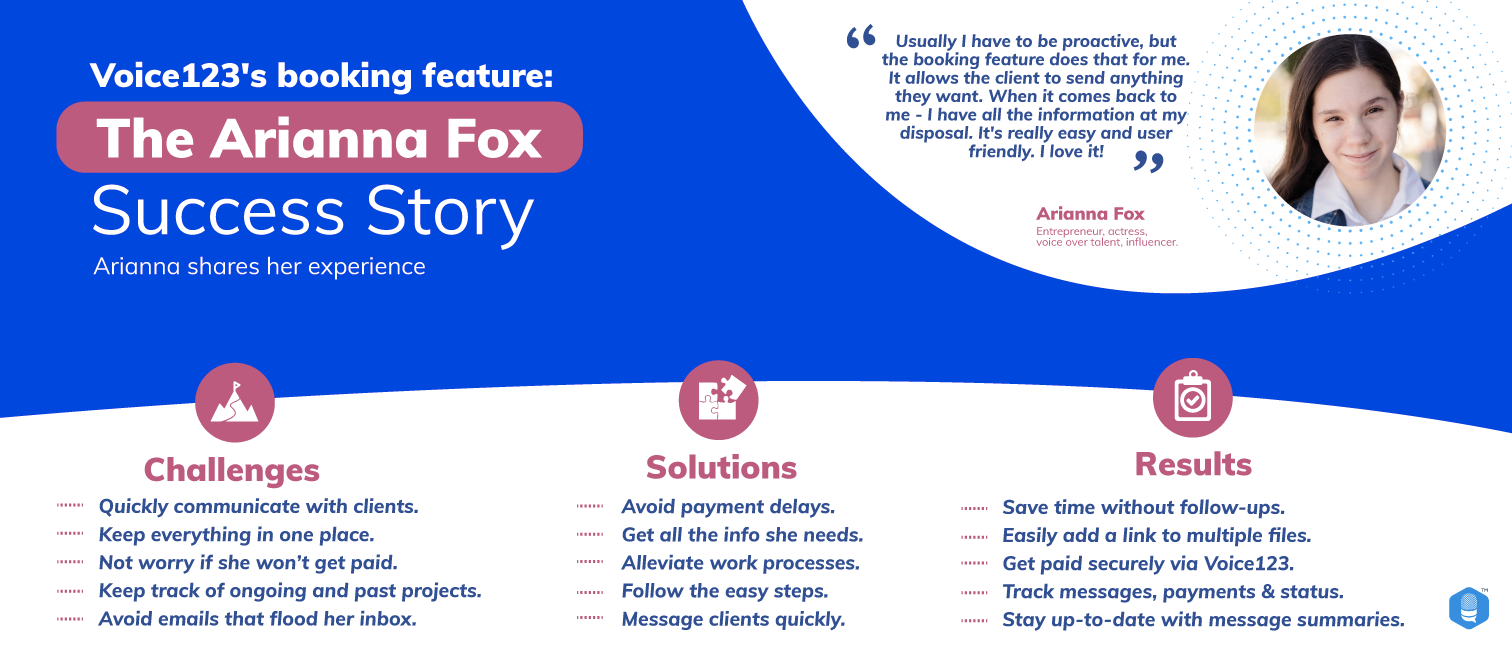
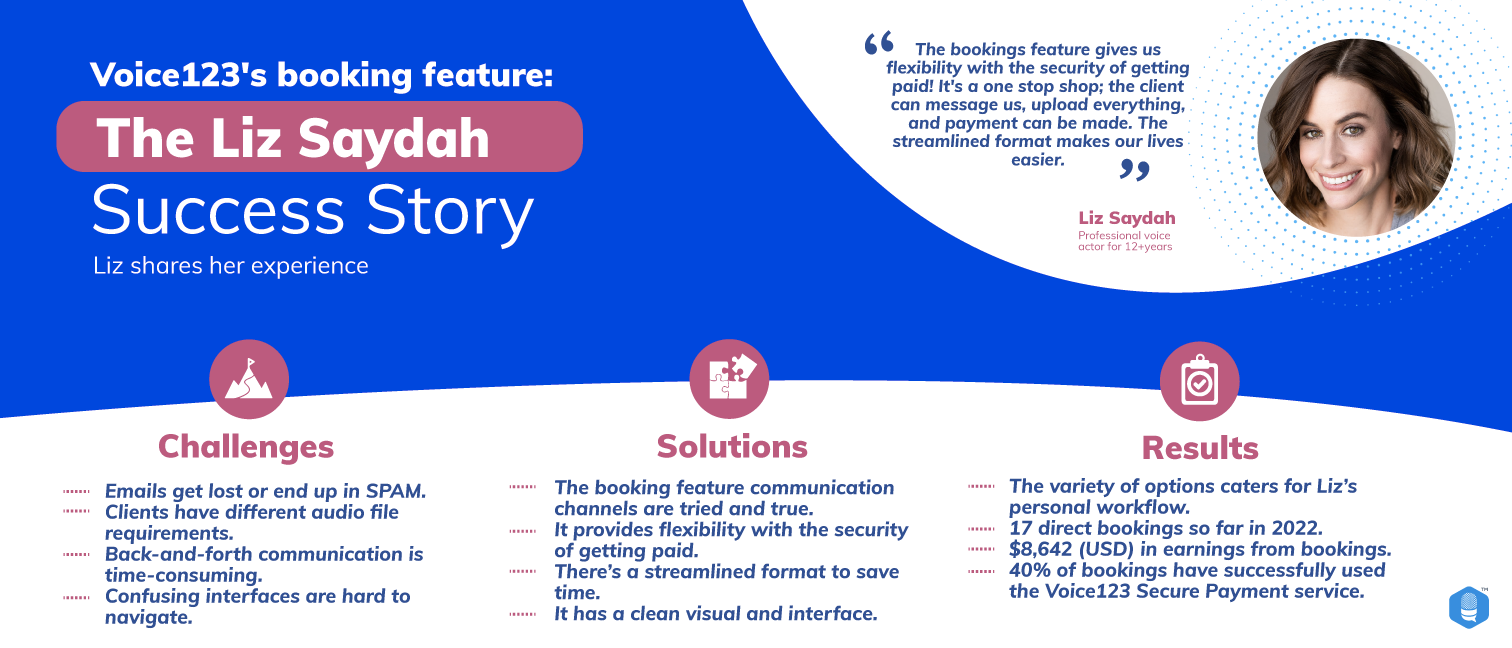
How Voice123's booking feature can boost your voice acting jobs
1. Avoid miscommunications. The message tab is directly in the booking, as a result, you can quickly converse with the client in the same thread that stays in your message inbox. Therefore, while the predetermined terms make it easier for you to be on the same page as your client; you can also use this space to discuss negotiations and additional terms/usage.
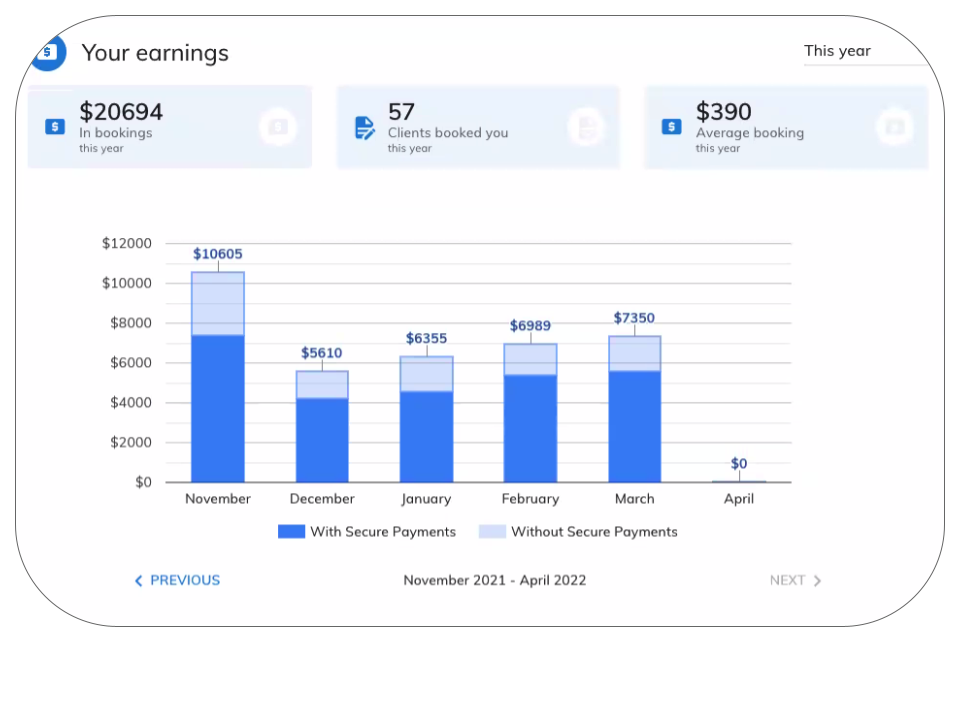
2. It’s easier for you to track your funds and payments directly on your dashboard under ‘Your earnings.’ You can also filter this according to date, and which payments came through the Secure payment system.
3. Save valuable time that you can rather invest in growing your business, instead of following up on payments, processes, clients, or hiring a third-party service.
4. Keep everything in one safe place. The messages, files, agreement/quote, negotiation, payment information – nothing slips through the cracks.
5. The Secure Payment system is free for voice actors – no fees are deducted from your earnings, and Voice123 manages the transaction so that you can focus on what you do best – being a VO pro!
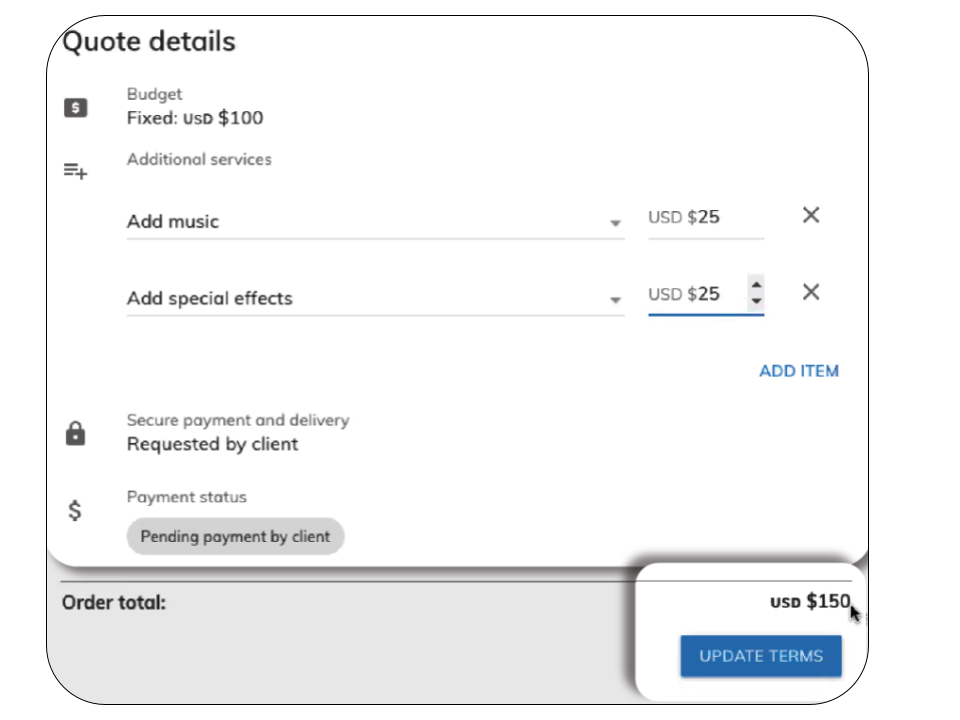
6. Easily use the negotiation feature to negotiate additional fees for extra services or usage before accepting a booking.
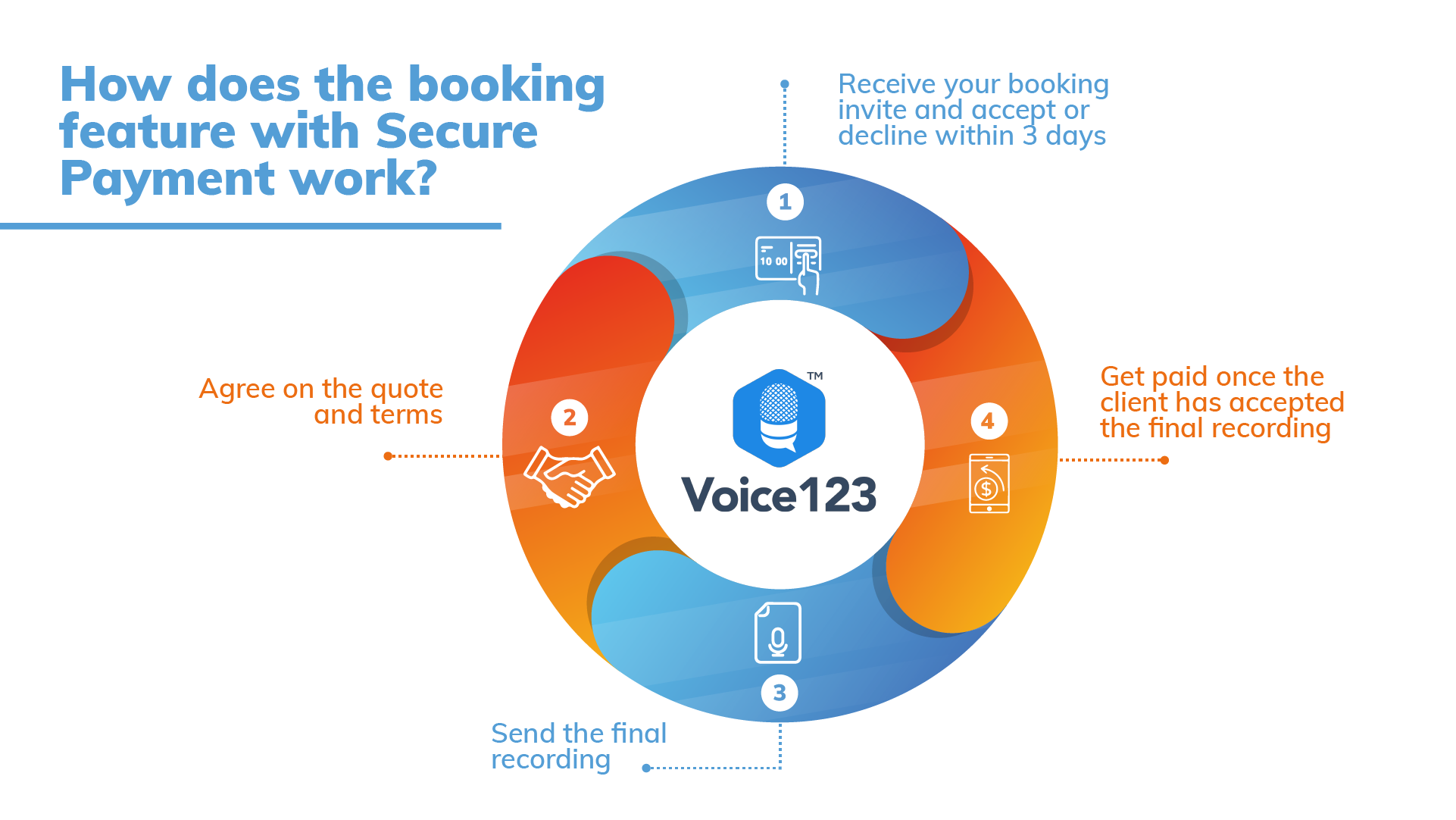
What is the Voice123 free Secure Payment system?
The Secure Payment system is where Voice123 acts as a bond for the booking transaction. As a result, the service is free to all voice actors, and while it’s not a requirement, it does have numerous benefits:
- 0 deductions from your earnings
- Save time, energy, and resources as Voice123 will manage the transaction until the final recording is accepted
- Rest easy with a secure and trusted third party method to manage your payments
- Resolve the problem of sending and receiving international payments without having to follow up on invoices
- Track the status of the payment directly in the booking and deliver the recording when you see the funds were paid
- Get email notifications along the way to help you keep track of each stage of the booking process
- Choose from 5 different payment methods to receive your funds
Secure Payment FAQ's
- The funds are released when the client pays and accepts the final recording.
- The timeframe for Voice123 to release the payment is between 5 hours and 8 days after the recording is accepted.
- Yes! Voice actors will not be charged for using Secure Payment. The client is charged a fee, however, this is not deducted from the total job amount.
- The costs associated with receiving the money will be for you, depending on the payment method you have chosen. (You can check with the third-party provider you have chosen.)
- By requesting Secure Payment when you receive a Booking.
- By enabling the functionality in your Booking settings.
Boost your voice acting jobs now
Regardless of your membership, all Voice123 members can have a personal booking URL link. This is a special link that is customizable and which directs a client straight to a booking form where they can input their project details.
You can also get booked for voice acting jobs through the following channels:
If you’re a paid member:
- Share your booking link with a client
- Bring your off-platform bookings to increase your bookings stats and see your earnings on your dashboard
- Enable bookings for our instant quote feature; set your rates now
- Audition for projects so clients can book you directly from your auditions
- Talking to a client in the message inbox? Ask the client to click ‘book voice actor’ from the message tab at the top of the page
- Tag your samples with relevant keywords so clients can find your profile in the search feature and book you through your profile card
If you’re a standard member:
- Share your booking link with a client
- Bring your off-platform bookings to increase your bookings stats and see your earnings on your dashboard
- Audition for projects and clients can book you directly from your auditions
- Talking to a client in the message inbox? Ask the client to click ‘book voice actor’ from the message tab at the top of the page
- Tag your samples with relevant keywords in order for clients can find your profile in the search feature and book you through your profile card
In addition, while our voice acting booking feature is a collaboration between our product and engineering teams, product engineer, Luis Perichon is spearheading the project! He shares that …
“Working on the Bookings and Secure Payments team at Voice123 is very fulfilling. The team focuses on what really matters: helping voice actors get more jobs, become better professionals, and get paid faster. Keeping that at the back of our mind puts every change and feature we publish into a different perspective. Most importantly, whether it’s an amateur voice actor getting their feet wet for the first time in the industry, or a seasoned professional with years of experience, everyone can get booked and get paid via Voice123’s free booking feature. I just love that!”

– Luis Perichon,
Product engineer at Voice123
Bring your off-platform voice acting jobs to Voice123 to increase your booking stats, see real-time earnings in your dashboard, and use Voice123’s Secure Payment system to make receiving your funds easier, safer, and faster!
Share this link with your client to sign up for a free Voice123 client profile today.
Share this post!
A blog owner yourself? Relevant links to quality sites will help your performance on search engines. If your readers will benefit from the services or information on The Booth's Voice over Guide, please consider linking to this post or the guide itself.

How to get Netflix voice over jobs
How to get Netflix voice over jobs
As more and more voice actors search for Netflix voice over jobs, Netflix continues to expand and the demand for streaming content in various languages continues to grow. Thus leading to more opportunities for Netflix voice over jobs. For example, famous shows like Squid Game were dubbed to appeal to an international audience. In fact, Netflix dubbed 5 million minutes of programming last year. And since the average television series has between six and seven seasons, these kinds of Netflix voice over jobs can be a stable long-term project.
However, starting an acting career or getting Netflix voice acting jobs or dubbing jobs doesn’t happen overnight. It involves doing regular industry research, learning how to use the right tools, honing your acting craft, and creating a diverse range of samples.
3 things to do before applying for Netflix voice over jobs
Do your research
Research Netflix voice over shows dubbed in English according to their relevant genres. For instance, the streaming platform features a wide range of dubbed content in multiple genres like the documentary ‘Catching Killers,’ and the anime production ‘Marvel Wolverine.’ However, doing Netflix voice over jobs, especially for productions in different languages involves more than just reading scripted dialogue. You have to become the voice behind the character. This is where researching the culture and heritage of the characters you’ll be voicing can also be helpful. And to put you on the right path, here are a few simple steps to help you learn more about what is dubbing.
Create an assortment of samples
Since the focus of Netflix voice over jobs is ‘the voice’ it’s only natural that casting agents, directors, or producers will want to hear an audio sample of your vocal and dubbing abilities. So, creating a diverse range of voice over samples provides you with a type of performance portfolio. In addition, when they’re top-quality, you have a chance to stand out from the crowd of Netflix voice over auditions. This also applies if you’re looking for Netflix acting jobs. Finally, if you’re deciding whether coaching will help you enhance your craft, check out this practical guide.
Learn the tools of the voice over trade
When creating your own voice over samples and final deliverables, keep in mind that they need to be high-quality recordings. So, it’s good to understand the workings of specific software like Audacity and WavePad. And especially how to make your voice sound better. Then, when you have to record in your own studio, you’ll be able to produce professional recordings that bring your characters to life. And whether you’re focusing on Netflix voice over jobs or acting jobs, the key ingredient is authentic and believable performances. So, be sure to hone your acting craft!
FAQ
Dubbing is when the original dialogue in a film/series is replaced with one of another language. Simply put, it’s when a different person/actor speaks for the on-screen actor.
Yes. For instance, Netflix’s most-watched series, Squid Game, and the Emmy Award-winning, Money Heist have both been dubbed in English. Although originally filmed in foreign languages, these shows are perfect examples of a successful Netflix voice over performance.
“Dubbing is hard. When you’re trying to actually provide a voice for a real, living, breathing person, that you can see every little tick of their eyebrow, every kind of, you know, slight grin, frown, grimace, and you’re trying to match all of that vocally, there’s a lot to do and pay attention to. You’re doing your vocal performance while watching the actor’s performance."
How to practice voice acting
How to practice voice acting
Ask the pros with Liz Saydah. Liz shares vital tips on how to practice voice acting to hone your art and craft. She also answers questions such as: How to voice act? How to use voice acting practice lines? And what are practical ways to get voice acting training?
Liz, you’ve been successfully voice acting for the last 12 years. Can you share more about how to voice act?
In the beginning, it was a combination of throwing everything against the wall to see what stuck, doing it every single day (consistency), and never losing hope (persistence).
As far as how to practice voice acting – let me preface this by saying: everyone is different. So take everything with a grain of salt and do what works for YOU. But if you’re truthful and intentional, I really don’t think you can go wrong. So don’t be generic – just go for it.
When I get a script – either an audition or a job – I hit record. I don’t look at it, I don’t analyze it, I just go and trust my instincts. I like to see what organically comes out of that.
It could be abysmal, or it could be just authentic and raw. I always think it’s worth recording a cold read (which intentionally or unintentionally also helps your cold reading skills) because it helps you learn to trust and hone your instincts, which bring a script to life.
From there I hone and polish as needed. I think these are all things that you learn in the beginning when you’re really figuring out your voice and your individual strengths.
That's great advice; but would you say that it's 100% natural talent or can anyone practice voice acting?
Though talent certainly helps, voice acting can absolutely be a learned skill. Most of the time, we’re just hired to be ourselves. Gone are the days of the “radio announcer” guy. So if you’re good at “being you” you can voice act. Easier said than done, however! The amount of time and energy that goes into the “effortless” read is crazy. In the real world, we don’t have a script in front of us while standing in a box with eight agency people breathing into our ears while trying to be effortlessly natural.
For me, it’s been the experience more than anything that has elevated my skills and calmed my nerves in those moments. I think coaches are essential early on to help with bad habits, technical know-how, and some of the broader strokes, but it’s up to you to really learn your instrument and how to use it best over time.
How do you practice voice acting?
There’s this great free resource – called the internet – where you can find any type of script you could ever want. And by “script” I mean anything: articles, book excerpts, spec copy, anything. For example, I enjoy the challenge of taking something out of context or that’s not necessarily written for VO and making it into whatever genre I want.
So often you’ll get a script that’s full of tech-speak or statistics or let’s say, not the most exciting content, and it’s your job to breathe life into it. Even if it’s a super dry article on the stock market, why not read it as the all-knowing Silicon Valley millennial? Or the corporate CEO? It just helps to see the same texts differently, and how you can do it in infinite ways.
Excellent, and what else did you do to improve?
Early on, I got myself into some voice acting workshops just to – again – get a handle on what I was working with, and what I could improve on. Then I just started auditioning so that I could get the practice while putting myself out there. Ultimately, it did help me gauge how I was doing since I slowly started getting hired more and more. At the end of the day, the question is always: Am I getting hired? Yes – then keep doing more of that. No – figure out what isn’t working.

On that thought of auditioning, how can someone use voice acting practice lines to hone their craft?
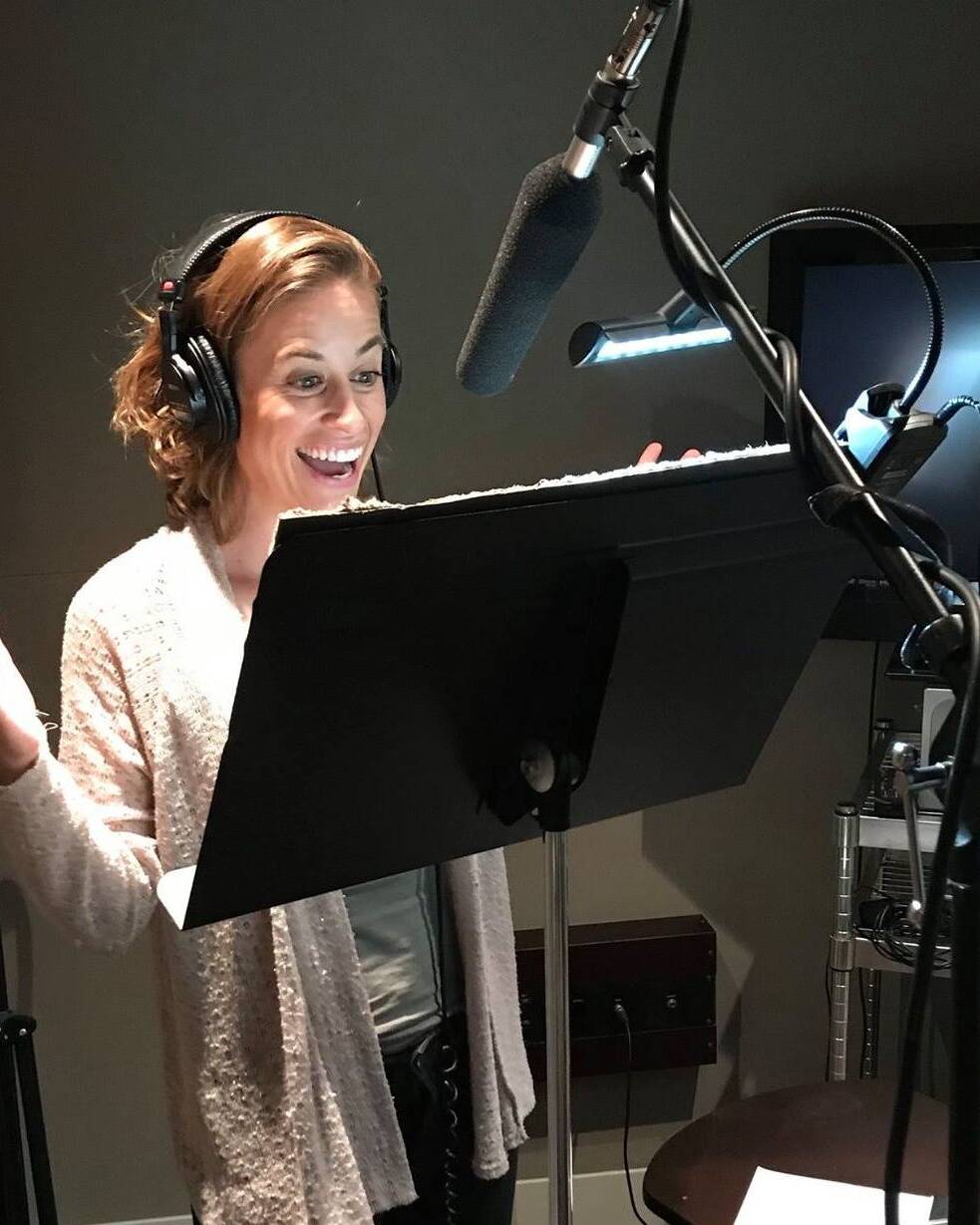
I think as I said before, you can look at the same script in 75 different ways. You can emphasize every word differently. You can vary the energy in some sections and not in others. When you’re practicing, you have to be willing to play and go outside your comfort zone, and just be willing to be awful. I think that broke me free of a lot of “sameness.”
Very practical tip, so have you used voice acting practice lines as a type of voice acting training?
It sounds kind of clinical, but take one line and read it 10 different ways. Emphasize different words, do it with a giant smile, get intimate with the mic, go big energy, etc. If you don’t try it, you won’t know what’s in your wheelhouse.
Excellent point, and can you share other types of training?
I am a huge proponent of improv. Take an improv class – it’s just the best. At the very least, it’ll get you out of your head for an hour or two, but it’s the best way to develop characters, think on your feet, and learn how to add to a script. I often improvise in sessions (read the room first – it’s not always welcome or appropriate!), and clients (usually) LOVE it.
Sounds fun! Are there different types of training for different genres?
That’s where I recommend a great coach to really hone into the nuances of a specific genre because, in the beginning, you don’t know what you don’t know.
For example, TV promo work is going to be a different approach than coaching for eLearning. I think it’s helpful to hire a coach who can identify your voice type and help you find your “niche” so that you can succeed.
There are no hard and fast rules anymore about voice “types” for specific things; it’s just about you learning to tailor your voice around the genre.

And for those who want to learn how to get in to voice acting, what initial steps can they take?
If you’re starting out, be patient, use workshops or coaching to help learn how to voice act and get a handle on your instrument. And practice and/or audition like crazy. There’s tons of work out there to be had, so get out and get it!
Special thanks to Liz Saydah for sharing her experience and advice on how to practice voice acting.
Check out Liz's profile here! And listen to her most recent work:
FAQ's: How to practice voice acting
Practice reading all types of scripts: articles, book excerpts, spec copy, anything! Make the best of workshops, auditioning, and improv classes.
You can look at the same script in 75 different ways. You can emphasize every word differently, vary the energy; be willing to play and go outside your comfort zone, and just be willing to be awful.

How to become an audiobook narrator
Are you wondering how to become an audiobook narrator and start building a career in voice acting? With the audiobook industry booming—valued at $6,825.2 million in 2023—there’s never been a better time to explore audiobook narrator jobs. Whether you’re an experienced voice actor or a beginner searching for audiobook narrator jobs for beginners, this guide will help you navigate the path to becoming a successful audiobook reader.
What is an audiobook narrator?
An audiobook narrator is the voice behind the story. They read and record fiction or non-fiction books so listeners can enjoy them on platforms like Audible, Spotify, or Google Play Books. But audiobook narration isn’t just about reading aloud—it’s about acting. A skilled narrator uses tone, pacing, and character voices to bring stories to life.
From epic fantasy adventures to business bestsellers, audiobook narrators give books a second life. With rising demand, audiobook narrator jobs are more available than ever for talented voice actors.
How to be an audiobook narrator
If you’re researching how to be an audiobook narrator, the process involves more than just reading into a microphone. You’ll need the right skills, voice acting equipment, and networking strategies to land consistent audiobook jobs.
Here’s a step-by-step breakdown:
Here’s how to become an audiobook narrator in 7 steps.
How to become an audiobook narrator in 7 steps
1. Learn the craft of voice acting
As a new audiobook narrator, consider voice coaching and audio tech training to enhance your vocal range and stamina. You can also use a voice over guide to improve your knowledge of the voice over industry. Learn about rates, how voice overs are made, finding jobs, or creating demo reels. Your voice is also your most important resource, so research warm-up and exercise tips to help you care for your vocal health.
2. Create an online presence
To build a solid online presence, you need a website or portfolio that’s eye-catching and optimized for search engines. Since this is similar to a vocal resume, always include quality content that spotlights your voice range, past projects, and unique vocal talents. Then, use social media platforms to amplify your brand voice as a vocal authority. Be proactive by consistently sharing snippets of your work to grow an audience.
3. Get the right studio set up
You need high-quality equipment to produce professional recordings as a remote audiobook narrator. The good news is that you can set up a DIY home recording studio that saves time and money. Resources like a microphone guide or equipment for a home setup teach you about the best microphones, computers, laptops, audio interfaces, digital audio workstations (DAW), headphones, pop filters, and acoustic treatment.
4. Learn audio voice acting techniques
Learn vocal techniques like breathing and warm-up exercises to improve your enunciation, range, and vocal stamina. Practice different styles, like accents and sounds, to create diverse characters. Take acting workshops or classes to learn about character development, improvisation, and script analysis. Stay updated with voice acting trends and participate in voice acting forums to pick up more helpful voice acting tips and tricks.
5. Learn from pros
Experienced audiobook narrators at workshops and conferences can share valuable industry insights to sharpen your vocal senses. Learn from their tried and tested strategies and ask for tips on voice care or techniques to narrow your search for audiobook narrator jobs. New audiobook narrators can learn valuable directions about pacing a delivery and using tones, pitch, and intonation to infuse emotions into characters. Check out our Ask the Pros series for additional tips from experienced voice actors.
6. Network and grow your portfolio
Audiobook narrators can create high-quality narration samples to share with authors and publishers. The top voice over platforms are ACX, SoundCloud, and Voice123. Engage with the literary community on social media and join forums where you can connect with authors seeking narrators. Attend book fairs, workshops, and webinars to meet industry professionals and learn about new opportunities.
7. Find audiobook narrator jobs for beginners
To find audiobook narrator jobs for beginners, join ACX (Audiobook Creation Exchange), which connects new narrators with authors. Voice123 offers multiple voice over opportunities, including audiobook narrator jobs for beginners. Freelancing sites also list narration jobs for independent short stories. Join online communities and groups for audiobook narrators on LinkedIn or Facebook to find beginner-friendly opportunities.
Where to find audiobook narrator resources
Online forums like the Audiobook Creation Exchange (ACX) community connect you with other narrators to gain industry insights on how to be an audiobook narrator. The Audiobook Publishers Association (APA) offers industry news, networking opportunities, and professional development programs. Take advantage of audiobook-specific voiceover training courses, books on the art of narration, and workshops to help improve your vocal performance. Stay up-to-date with voice over news and trends on social media like Twitter and LinkedIn.
Learning how to become an audiobook narrator takes time, training, and persistence—but the rewards are worth it. With the right skills, tools, and networking, you can land audiobook narrator jobs and build a sustainable career as a storyteller.
Whether you’re just starting out or looking to level up your voice acting career, becoming an audiobook narrator is one of the most exciting opportunities in today’s voice-over industry.
FAQ's
Newcomers can earn between $100 and $350 per finished hour, while experienced narrators can earn $500 and more.
Start by perfecting your reading and performance skills; create a demo reel that showcases your narration style; and network with other professionals or use online platforms to find narration opportunities.
You’ll need:
-
A strong portfolio with diverse samples
-
A professional home studio
-
Active profiles on casting platforms
-
Networking in audiobook and publishing communities
Yes! The audiobook industry is growing rapidly, with more publishers, authors, and listeners every year. This means rising opportunities for both professional and beginner audiobook narrators.
“Audiobook narration is acting. It just happens to be done behind a microphone. The voice you were born with is uniquely yours. If this is something you really want to invest your time and energy in, then know your voice, know your worth, and let the world hear it. Take a class and learn the trade.”
How to become a voice over artist
How to become a voice over artist
Ask the pros with Dave Pettitt! He advises how to become a voice over artist and shares vital tips on how to navigate the voice over industry from his 22-year career. Dave also answers questions such as: What is a voice over artist? What are the different types of voice over work and much more!
Dave, for those wondering how to become a voice over artist, can you please share, ‘What is a voice over artist and what do they do?’
A voice over artist is anybody that gets behind a microphone to tell a story. The story of the business, company, or product that has hired them.
The beautiful thing about it is that it’s a different job every day. One day you might do a local corporate video. Then, the next day something for a small company on the other side of the world.
For me, at least once a week, I do a voice over for a television program like the Discovery Channel. So becoming a voice over artist means you get to work with new people every day, and there’s a beauty in finding a creative way to learn how to tell different peoples’ stories.
How does storytelling link to how to become a voice over artist?
When you’re trying to become a voice over artist, the artistry is about acting. Otherwise, you’re just somebody who’s talking into a microphone. If you’re doing commercial work for a hospital, you have to care about the people’s families as if they were your own. Or for audio tours, you become the tour guide; you gotta be friendly and keep people entertained.
So the artistry behind how to become a voice over artist is learning how to act. Instead of being somebody who owns a microphone.
I own a really nice microphone, but I practiced for years to be able to tell peoples’ stories the way I do. I also own a really nice hammer, yet there’s no way you’d want me to build your house.
It’s not just about picking up the hammer and putting a nail in a piece of wood. It’s about learning a skill. Then you have to craft and hone that skill, no matter what your art is. That’s the difference between being an amateur and a professional voice over artist.

You certainly hit that nail on the head!
Can you share the different types of work you could do when you become a voice over artist? Perhaps some that you've been involved in?
Most jobs are what we call non-broadcast jobs. Things like e-learning and corporate videos, which is explaining what a company does. It could also be a product informational video that highlights the products a company offers.
I’m very fortunate to be far enough in my career where I get a good bit of commercial work. One that really stands out is a job I did for an agency for Tourism Ecuador.
I was really excited to be their voice. But then that excitement just went tenfold when they told me ‘We’re producing this commercial for the Super Bowl. And it’s going to air in some 20 different countries.’ So, what was really a lovely job turned into this colossal worldwide job.
Doing an NFL voice over for the Super Bowl sounds like a major career highlight. What was that experience like?
It was definitely one of those bucket list items of your career – to have your NFL voice over spot on the Super Bowl. And that was just the start of it! They had also bought the rights to use ‘All you need is love’ from The Beatles.
And I read the lyrics to the song as if it were this beautiful poem set to this Andean guitar music. It was spectacular! At one point, I think Paul McCartney might’ve heard my voice on the commercial! That was just as exciting as the fact that I was doing an NFL voice over.

An NFL voice over sounds like a great goal to work towards, but what initial steps should a voice over artist take to develop their voice and find their niche?

Somebody actually told me that early on in my career; ‘You need to find your niche.’ And if you’re just learning how to become a voice over artist then it takes time to find your sweet spot. You have to try lots of things and you need to listen to feedback.
Start by evaluating what kind of jobs you primarily book. Personally, I’ll audition for every hospital spot that I see, if they’re reasonable about their budget because I can sound warm, caring, inspirational, and hopeful.
So, figuring out what jobs you book, paying attention to the auditions you do and projects that you love doing is very important.
Another thing to find what you’re really good at is to read. You have to read the specs that a client puts out there and be reasonable about whether or not it suits you.
If you start auditioning outside of your spectrum, you’re going to be disappointed in the jobs you do or don’t book. So it takes a little while to go through lots of practice, auditions, and listening to what you personally love to do. It also helps to get feedback from people who are veterans in this industry as they have an ear for being objective.
Great advice! But there’s always a concern about how much do voice actors make, so why is it important to learn about voice over rates?
There’s a fine balance between just wanting to book jobs and getting paid what you’re worth. You’ll have to determine for yourself if you’re a bargain voice over artist or a premium one. Because everybody’s always looking for a bargain. And if that’s who you want to be, you have to expect that that is the role you’ll fill in the industry. And it will be tough to break out of it.
So, the rates that you choose to work with will determine the jobs that are in your inbox right now. And also your value five years from now. That’s why you’ll have better luck if you determine this early on. So be willing to say no. Or at least ask for a little bit more according to the value of what you’re doing.
It’s also about investing in your own career and learning to negotiate. You have to become a business person along with being a voice over artist. The Global Voice Acting Academy has a great rate guide to learn more about voice over rates and is a good baseline for what people should be working with.
That’s very practical advice, and for anyone focused on how to become a voice over artist right now, what other tips can you pass along?
It helps to be realistic about your expectations. At the start, you’re not going to book jobs like people who have been doing this for the last 15 years.
Some people sign up for online profiles to learn how to record their voice and make good quality recordings. There are also peer groups where you can read a spot and other voice actors will give you feedback on it.
You also need to learn about the industry or get someone to teach you about it. I can’t just decide that I’m going to be a furniture maker because I like furniture and I own a drill. There’s true value in learning from the people who know what they’re doing.
What about the costs involved in learning how to become a voice over artist?
Like any business, you have to expect that it’s going to cost you something. If you get a coach to help you, that will cost money. Or it will cost you time if you go to sites like Ad Age or iSpot.tv and listen to their number one spots.
You can also have short voice over samples on a site like Voice123. And if you’re creating a website to showcase your work, remember that you don’t get a lot of chances to make a good first impression. If your work is not competitive, it’s going to take years for a potential client to consider you again.
So, learning how to become a voice over artist means there’s more to it than just having a lovely voice. That’s the easy part. Learning how to use that is the difference between an amateur and becoming a voice over artist.
Special thanks to Dave Pettitt for sharing his experience and advice on how to become a voice over artist!
Check out Dave profile here! And listen to his most recent work:
FAQ's
- Start with figuring out what jobs you want to book and pay attention to the auditions and projects that you love doing.
- Be prepared to go through lots of practice and auditions.
- Learn about investing in your own career and learning to negotiate. You have to become a business person along with being a voice over artist.

What you need to know when setting successful voice over rates
What you need to know when setting successful voice over rates
This article has research and tips from voice over experts to help you learn more about voice over rates, and how to set and negotiate your own successful voice over rates with real-world examples.
What are voice over rates?
Voice over rates are specifically set and negotiated according to industry standards. Subsequently, in order to establish a long-term voice over career, you first have to learn what are voice over rates, and how to set successful voice over rates according to what is fair and acceptable. This involves taking time to understand the foundation of voice over rates as well as researching information about in-depth pricing.
What are voice over rates based on?
Every choice you make when setting and quoting voice over rates has a knock-on effect on the voice over industry as a whole. It also sets the scene for how clients will collaborate with you and future voice actors.
This is because voice over jobs are connected to industries that typically lead to repeat work and word-of-mouth referrals if you follow best practices. This not only aligns with the voice over industry but adds to its longevity.
Many people who haven’t worked with VO talent, have no idea what a fair rate is. It’s our job to educate them.
Jessica Taylor
The foundation of voice over rates
We could compare voice over rates to price tags.
They both represent the cost of buying something. In voice over, these rates are the amounts that voice actors charge for their services and recordings. And just like every item at a supermarket has its own tag, each voice over varies according to these key factors:
- The usage of a recording: which platform/s it is used on, and for how long.
- Geographic locations and voice over unions.

What is a usage fee?
This is an amount charged to cover ‘using’ a voice over.
Example 1: A company uses a recording for a branding video that lives on its website.
Example 2: A company uses a recording for a commercial that’s played state-wide.
This type of usage plays an integral part in voice over pricing as each category and sector varies. There is never any one-price suits-all approach.
“A tagline for a national TV spot could run for years, and if VO talent does not factor in the usage for some kind of buyout fee or residual payment for incremental additional usage, then they are giving up a large portion of the pie.”
Debbie Grattan
What is a buyout?
Buyout fees are what clients pay to ‘buy’ the use of your recording for a certain amount of time.
While it’s often associated with being used ‘forever,’ all commercial broadcast buys (tv, radio, digital) are also buyouts. The common usage terms, 13-week, 6-months, and 1 year, are all buyouts. And ‘buyout’ is also used in non-broadcast work which is usually in-perpetuity (forever) by nature.
For example, a client can pay to use your recording for 6 months on social media. Or, they could buy it for use in perpetuity. And on this point, it’s important to note if royalties should be paid out according to specific time frames that the recording is used or if future conflicts could cause limitations.
“If I agreed to an in-perpetuity buyout on a project for a national bank, I wouldn’t be able to offer exclusivity to another bank because I have already have a voice over for one of their competitors floating around. So, be careful and think about what kind of work you hope to be doing down the road.”
Jessica Taylor
Non union voice over rates
Another key factor that influences voice over pricing is union memberships. For example, if a voice actor belongs to a union like SAG-AFTRA, it has its own rate guide that voice actors agree to adhere to. To learn more about how unions provide voice over work and its related voice over pricing, check out our research in the section, Union vs non union voice acting.

Additional services
Clients often ask for additional services. This can cover a wide range of services such as background music, revisions, pickups, copywriting, translation, re-reads, audio post-production, live session direction; all at an additional cost. These rates depend on factors such as how long, how much, and the gap between final delivery and the request for additional services. It’s important to have a set policy on your rates as it makes quoting and communicating with clients faster and more professional.
A guide to voice over rates
The best places to learn about industry standards are through the many helpful guides that provide reliable information on industry standards for voice over rates. One of the commonly used and respected guides is from the Global Voice Acting Academy: The GVAA Rate Guide.
David Toback, who helped create the guide with the GVAA shares that “it has great information about rates, the different genres, how to calculate the rates, what you should be looking for and also gives you a really solid foundation. Ultimately, it’s for your own business, knowledge, welfare, and voiceover journey. But it also helps the industry as a whole. For example, if someone says, ‘Hey, we have this narration we want you to do; it’s a corporate narration on the web.’ Well, what do those things mean? The guide helps to understand the terminology, genres, and what constitutes those genres.”
What are some of the helpful features?
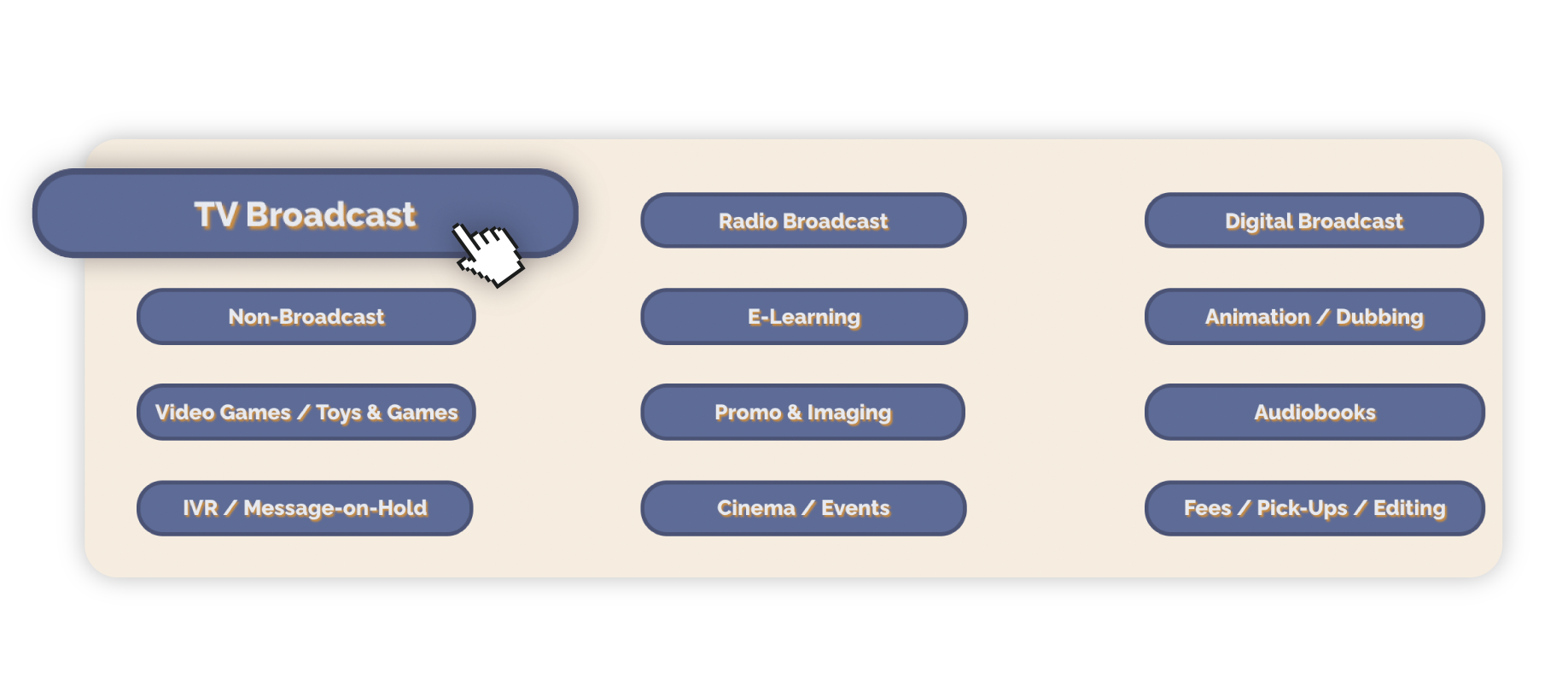
1: The guide is made up of 12 different categories so you can set your rates according to each industry and genre that you will be working in.
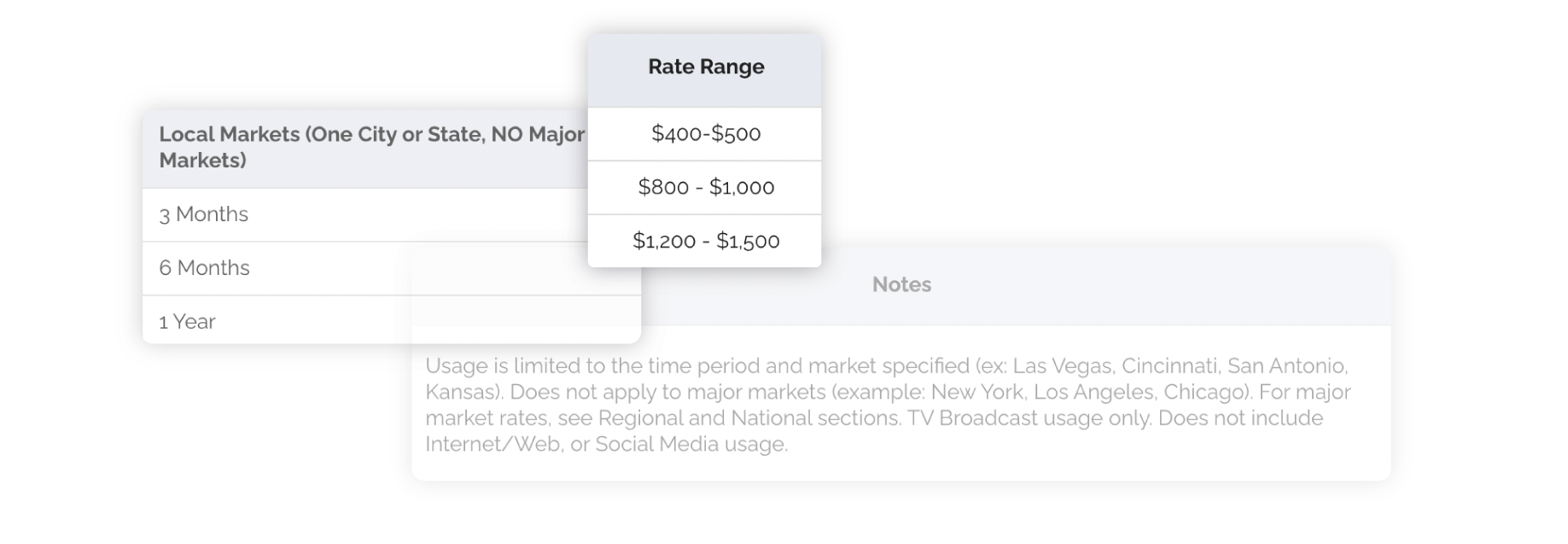
2: Each category offers a breakdown of the platform, usage, relevant rates, and helpful notes.
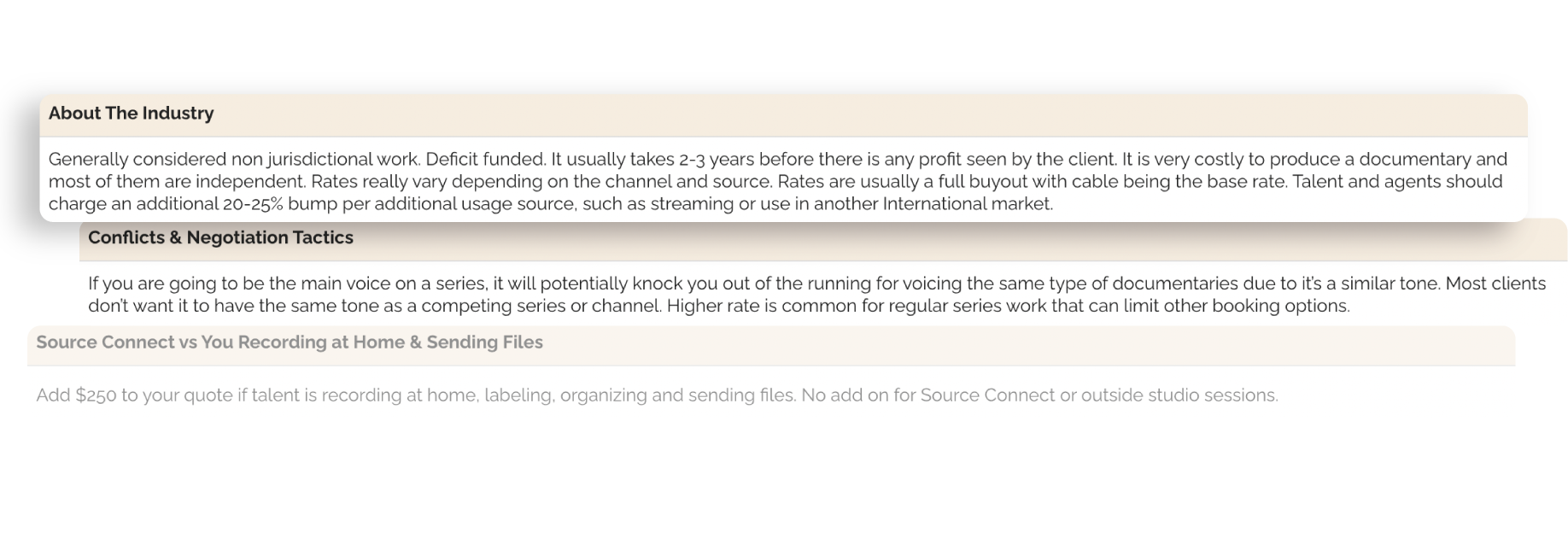
3: Another excellent section is how it provides tips about the industry, along with negotiation tactics.
“Think of it like an X-Y graph, where you have to look up the X and then find the Y. That’s kind of what the rate guide is, but you have to already know what the Ys and Xs are. That’s why you have to understand the foundation of rates, voiceovers genres, what the differences are, and how to spot the differences.”
David Toback
How to set your voice over rates
Once you get up to speed with a guide like the GVAA, you’ll have a better grasp of industry standard rates.
This can be used to create your own voice over pricing framework, which you can refer to whenever you need to quote on a project. It can also be stored in your voice over CRM (Customer Relationship Manager) by following a basic structure:
- Make a list of the voice over categories that you can/want to perform in
- Read up on the possible usages, lifespans, and advice for each genre
- Decide on the options that you are prepared to accept
- Create a rate card for each genre
- Plan flexibility for discounts, buyouts, and additional services
- Confirm the payment methods and currencies that you can accept
FAQ
Have a clear goal to facilitate a positive outcome. Setting a base rate can also be helpful. You could also start by asking a client how much they have to work with. They might surprise you by offering a higher fee than you expected! However, keep in mind negotiating doesn’t always reach a compromise.
Voice over pricing will typically be done in your local currency. But with foreign clients, factor in conversions and foreign exchanges. For example, a project might be quoted in Australian dollars, but when being paid through PayPal; the only available currency is US dollars. Being aware of these differences can prevent payment discrepancies and having to pull out of a project you’ve already started.
Each method has its pros and cons, so decide which works best for your voice over business. Do research on what’s available in your location and once you decide, double-check the details carefully! One wrong detail can seriously affect your payment.
You can learn how to set your voice over rates by consulting a respected rate guide such as The GVAA Rate Guide.
Voice over pricing examples
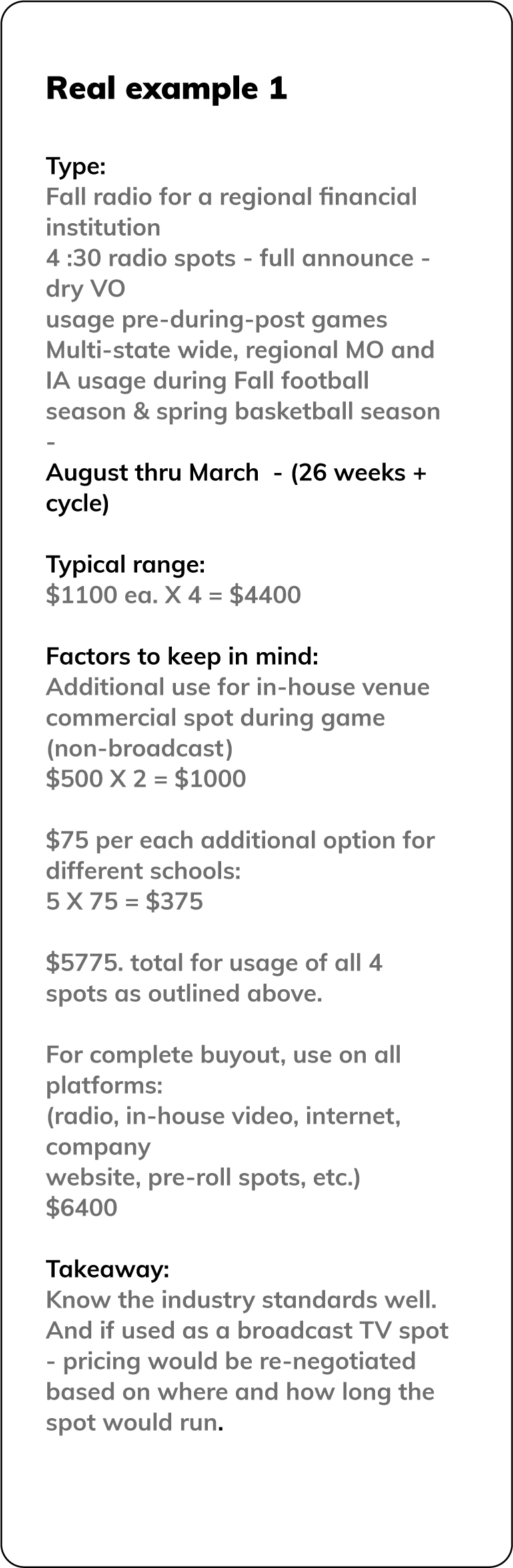
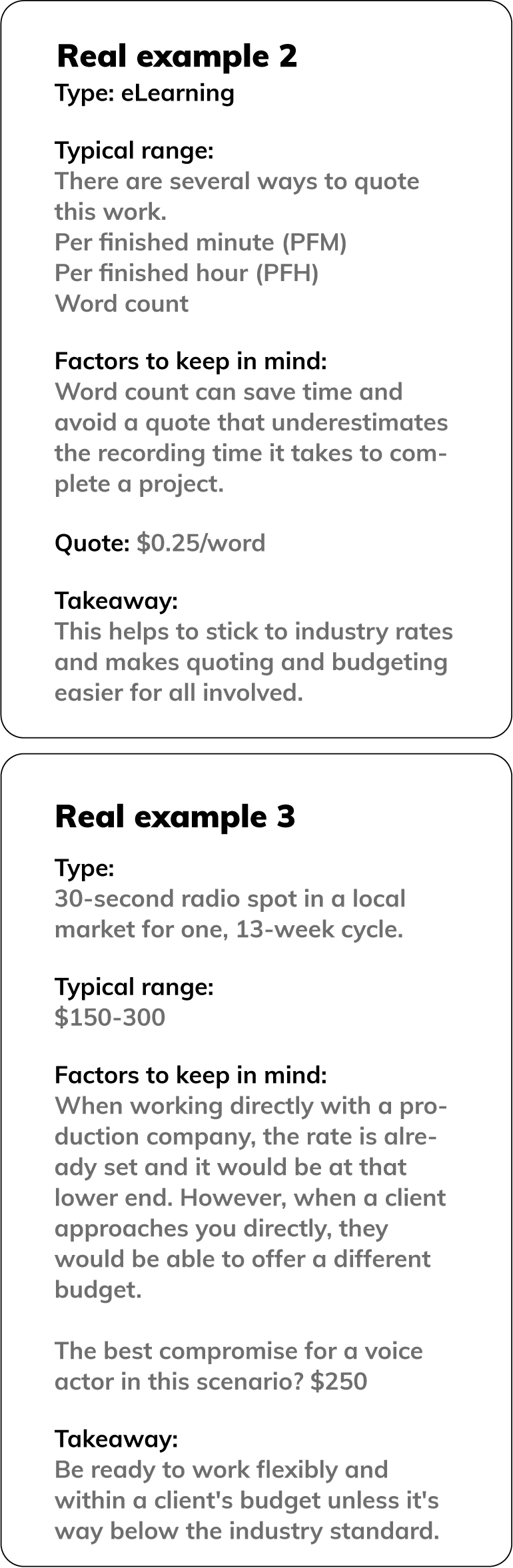
Now that you’re aware of what voice over rates are based on, where they can be found, and what you need to set your own; how does this translate into real-world application?
Take a look at some of these practical examples on how to quote for a project, based on usage, platforms, and lifespan. You’ll notice that experience, skills, studio abilities, and work hours do not play a role in the final price.
Closing advice
Being a voice actor is more than just auditioning, booking work, and reading scripts. Doing voice overs is your talent, skill, hobby, but most importantly your business. And like any successful business, it needs a secure foundation, short and long-term goals, and financial stability.
This is where consistency and flexibility are needed.

Consistency enables you to actively bring in voice over work and set the foundation for opportunities to find you.
Flexibility helps you to keep up with the ever-changing market that shifts according to buying habits and company goals.
If you balance these well, you’ll be able to set successful voice over rates that help you to establish a long-term voice over business.
Special thanks to our VO experts for their insightful contributions:
Debbie Grattan and Jessica Taylor

Debbie Grattan relates that “this career is a marathon. You need to be prepared for the amount of daily auditioning and rejection along with the relentless pursuit of not only a working salary but sometimes any paid work. But, there is always a quest for a new sound, so there’s some luck involved, as well as the talent and tenacity needed to succeed.”

Jessica Taylor advises you to “always ask to see the script before quoting. If it says ‘tap here’ and they’re asking for a radio rate, or if it’s written more like a TV spot, but they’re telling you it’s for radio, then you know you may not be getting the full story. Once you’ve agreed to a rate, it muddies the waters of your relationship with your client, so you want to get as much info as possible before agreeing to a rate.”
David Toback and Marc Scott

David Toback relates that you should “always put things into terms that clients understand so that you’re also educating them. They’re counting on you to be the pro to guide them. And that’s where the real power comes from. You’re not just telling them what the rate is or what you need to make. You’re educating them on our industry.

Marc Scott notes that “I offer value through my voice, performance, quality of my read, and the level of service I offer. Sticking to fair market rates helps me build a client base that respects my value. Those are the people I want long-term relationships with. That’s good for my business and the business of every voice actor who sets the same standard.
Looking for information on how much voice actors earn?
Boost your voice over work opportunites with a paid Voice123 membership
First-time paying members are eligible for a discount

Voice acting for kids with The Voice Over Family

New faces, new people, new stories — this is New Voices.
How did you start this family project, and how did you each get into voice acting?
Hernan: Silvia and I run an audiovisual production company called Pangea.tv and we’ve been voice acting for at least 10 years, so that’s our background in this industry.
A few years ago, Emilio’s school asked us for a video, and I said it would be cool if he did the voice of the video, and the final product was really good.
It was at that moment we realized that not only Emilio enjoyed it a lot, but he was good at it. So we then decided to open up a Fiverr profile, and his voice began to get a lot of attention. Afterwards, Mateo also started to get interested, so he was the last one to record his demo.

Why did you decide on 'The Voice Over Family' with kid voice actors?
Hernan: We realized that it was better to sell ourselves as a community. Because it’s definitely a team effort. We as parents pay our own kids and divide the expenses. For example: thanks to this, they even bought a playstation.
Silvia: Somehow that gratification has helped them take it more seriously. They have also done online courses, and it is something that they like, it catches their attention and we help them deepen that.
This question is for Mateo and Emilio: Do you think that the interests of your parents and their professions helped you become kid voice actors?
Mateo: I think so, it had a lot of influence not only on a professional level, but also on the things we enjoy doing. Sometimes I think that if it weren’t for the voice over world, we wouldn’t even have a profession to begin with. If we grow without knowing how to do anything, it would be more difficult to adapt to life as an independent adult.

So you started voice acting for kids, but is it something you plan to do professionally in the future?
Mateo: I’m still not sure what I want to do when I grow up, but I do keep in mind that speaking and acting in general are going quite well for me, so it could be a path to take.
Emilio: I would like to take voice over as a second profession, along with some others such as modeling and acting. I am also passionate about sports, so it would be interesting to have a lot to choose from.
Where do you usually record and what voice acting equipment do you have?
Hernan: I adapted a floor of the house as a studio, so we have a Baby Bottle microphone, speakers, some headphones and an IMac Pro. The whole room is soundproof, but these panels also help us to turn them into mini booths in a super dry environment where the boys record.
Also, when I was doing post production, I kept feeling that our voiceover was good, but that our voices lacked something. And after some research, I realized that since each member of the family has different tonalities, it was a matter of creating a chain of filters for each one. So we recently invested in education and plug-ins such as filters.
An interesting thing that happens is that they are children and they are constantly changing their voice. You listen to Emilio’s demo before the pandemic… it was much more acute. So we have to keep updating those filters.
Since your children have become kid voice actors, how do you help them understand and respect the profession and responsibilities without feeling too pressured?

Silvia: They grew up in an environment where their parents are constantly generating content. And several times, they have been selected to act or model. So they know perfectly well that although this is a profession where one has fun, one needs to also consider the needs of a client, and more- it is not just about us.
In fact, Emilio, who is a bit more fast-paced in everything, decided to make his demo first and produced it in a certain time. Mateo, took longer until he felt more comfortable. We respect each of their personalities and rhythms.
What advice would you give to young people like you who want to start voice acting for kids?
Emilio: I would tell them to enter this world, it is fun, entertaining and it also pays well. The important thing is to try, take classes, and prepare. I think we can all do voice acting, because if you can speak, you can also modulate your voice well and that is enough.
Mateo: I would say that above all things: persevere. I was on the verge of quitting several times because I tend to get very frustrated. And I usually have pretty high expectations because I’m a perfectionist. But being consistent and persevering has helped me cope with these situations.

As parents, how do you think the voices of the future are formed?
Silvia: My perception is that voice acting used to have certain standards that made voices sound fake, now I believe that naturalness and freshness is sought after. Being genuine is the “it factor” that differentiates you from others.
Hernan: I think that as a parent of the younger generations, your biggest job is to cultivate their tastes, we have to be willing to support and be patient with them. Also to associate with them, share profits with them and make them feel equal in a working relationship regarding this industry. Doing this allows them to also get involved in the family finances and be part of the decisions we make.
These freedoms also allow them to set goals and meet them. Sometimes parents make the mistake of making their kids believe that only we can solve their needs or problems, when they too are capable and have the necessary skills to get ahead on their own.
Special thanks to The Voice Over Family for sharing their experience on voice acting for kids and as a family.
Check out their profile here! And listen to their most recent voice acting work:
Check out our new section with tips and advice as we bring you How to practice voice acting
Share this post!
A blog owner yourself? Relevant links to quality sites will help your performance on search engines. If your readers will benefit from the services or information on The Booth's Voice over Guide, please consider linking to this post or the guide itself.

How to improve client collaboration on multimedia files
How to improve client collaboration on multimedia files
Imagine you’ve just finished recording a podcast episode, or a video for your client and you need feedback from the client before you can proceed. The first challenge might be that your files are too big to share via email.
Secondly, it’s complicated and gets messy quickly when clients need to give feedback for specific time frames. Therefore, lots of messages are sent back and forth which leads to long, confusing email threads.
In this article, we’ll take a closer look at how you can overcome these challenges of client collaboration, and how you can create a smooth and efficient collaboration process for both creative teams and clients.

Guest Post by Muriel Skusa
Muriel is the Content Manager at Filestage, an online proofing solution that frees teams from chaotic approval processes – making work more joyful and productive. From large enterprises to independent agencies, Filestage helps teams share, discuss and approve all their files, all in one place. Learn more at filestage.io
Why client collaboration is important
Let’s start with some reasons why client collaboration is important for the success of your multimedia projects:
You need a client’s feedback and approval
Getting feedback on your files in the early stages of the creation process means avoiding time-consuming and expensive revisions. It’s always easier to make changes earlier in the process, rather than later.
For example, imagine you’re creating a video for a client. You’ve agreed on a storyboard and your team has shot the scenes. Now you’re in the post-production stage, where you need to cut and piece together the final video. By asking your client for feedback on the initial drafts, you can ensure that the final drafts will be closer to reaching their expectations. If you only share the final version, you risk missing the mark and potentially needing to re-edit the entire video.

Ensure high-quality and brand consistency

By getting feedback from different teams and people, you can make sure that all mistakes are spotted and that you meet high-quality standards and brand consistency.
Let’s stick with our video example.
The benefit of having different reviewers is that each one can focus on different aspects of the video. For example, the brand manager can review the spoken parts to ensure the tone and voice of your brand are implemented correctly. And the product manager can make sure that the presented information about the product is correct.
Ensure everyone is happy
When your clients are actively involved in the creation process and can provide input on a regular basis, they will appreciate having their opinions considered.
Since they’re a part of the process, it’s more likely that they’ll be satisfied with the final result. And beyond creating excellent work, a happy client is the main goal.

What are the challenges of client collaboration?
Now, given the importance of client collaboration, what are the common challenges one might face on a daily basis?
- Miscommunication because of unclear feedback is a particularly common challenge. This happens when reviewers aren’t able to leave time-stamped comments directly in the video or audio file.
- Following up on people that forget to give their feedback can be time-consuming and nerve-wracking.
- When stakeholders don’t give feedback on time, there’s the possibility of missing deadlines and consequently having projects delayed.
- While collecting feedback, it can be tedious trying to keep up with who said what, and when. This lack of transparency is a primary challenge in any review process.
- Since reviewers often can’t see the suggestions from others, conflicting feedback is predicted.
How you can successfully structure your client collaboration process
The efficiency of your collaboration process could make all the difference in the quality of your final deliverable. Here, we’ll walk you through the process of structuring your client collaboration process to ensure it’s as efficient and useful as possible. We’ll still stick with our video example for the steps below, but do note that it works for other multimedia files as well, such as voiceover takes.
1. Share the file
First off, find a good collaboration tool and upload the file on the platform to share it with clients and colleagues.
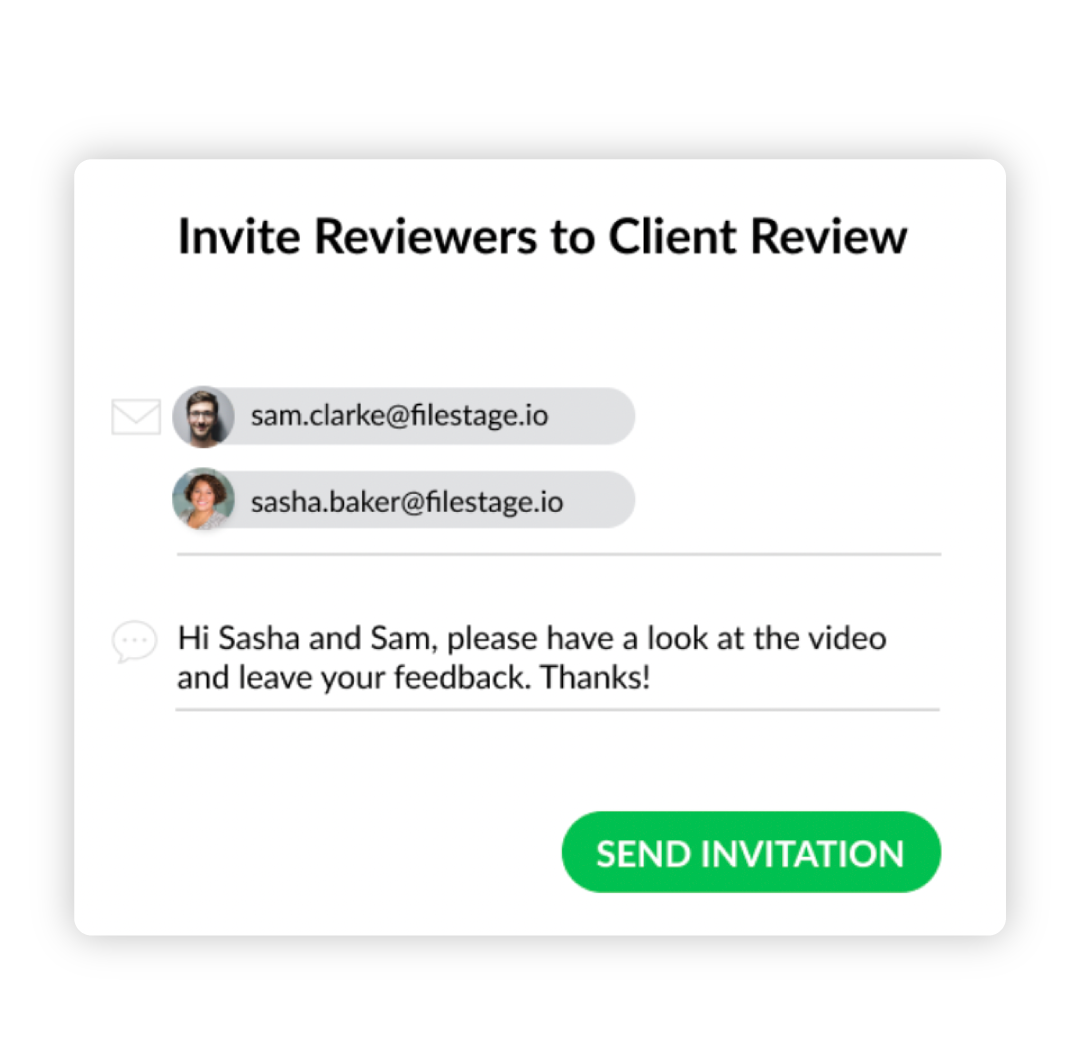
2. Receive feedback from clients
Through the shared link, reviewers should now be able to view the video and leave feedback directly on the file. Since clients and stakeholders don’t usually have much time, it should be as easy and fast as possible for them to leave feedback.
By adding the first comment to the file with clear instructions you can motivate and encourage your reviewers to leave their feedback.
3. React on feedback and discuss changes
Once you get the feedback, you should go through every comment, review, react, and discuss suggested changes until it’s absolutely clear on how to proceed. In this step, client collaboration features like replying directly to comments from others, mentioning reviewers, and being able to add attachments for further explanation can be very helpful. If videos have voiceovers, this can also help the voice actor when script revisions or pickups are required.
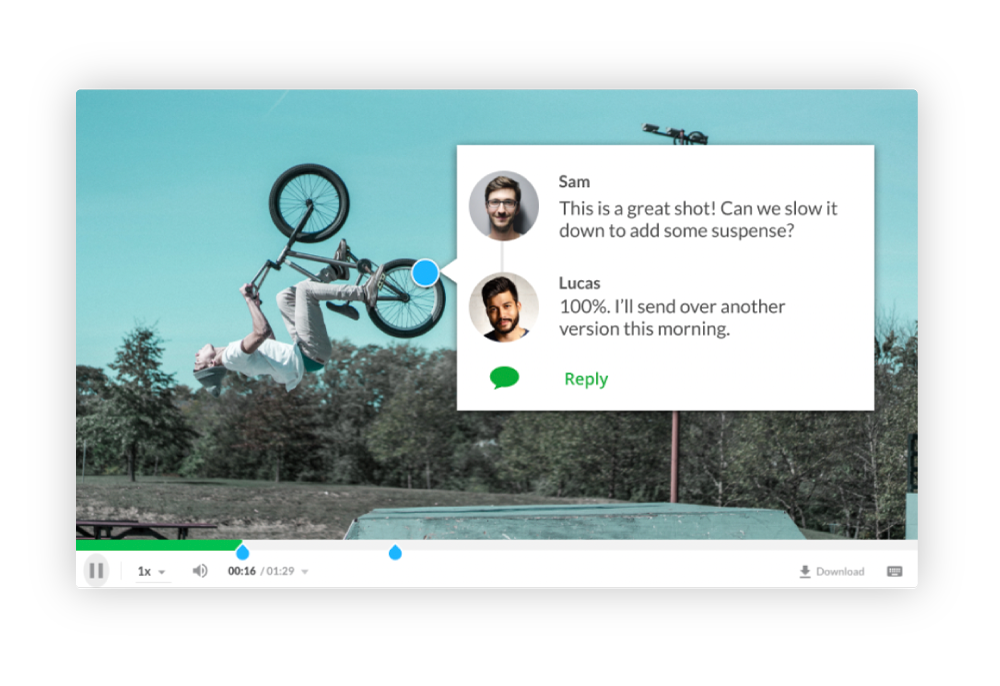
4. Make edits
After discussing the feedback and being clear on what needs to be changed, you can make revisions accordingly. Any changes you make should reflect the suggested changes proposed by the client in their comments.
5. Get more feedback or final approval
Finally, share the new and revised version again and ask your reviewers to leave more feedback for final improvements. Keep sharing the updated versions of the file on your collaboration platform until no more changes are requested by reviewers. When a reviewer is happy with the video file, they can approve it. As soon as every reviewer has approved the current version of the file, your final deliverable is ready.
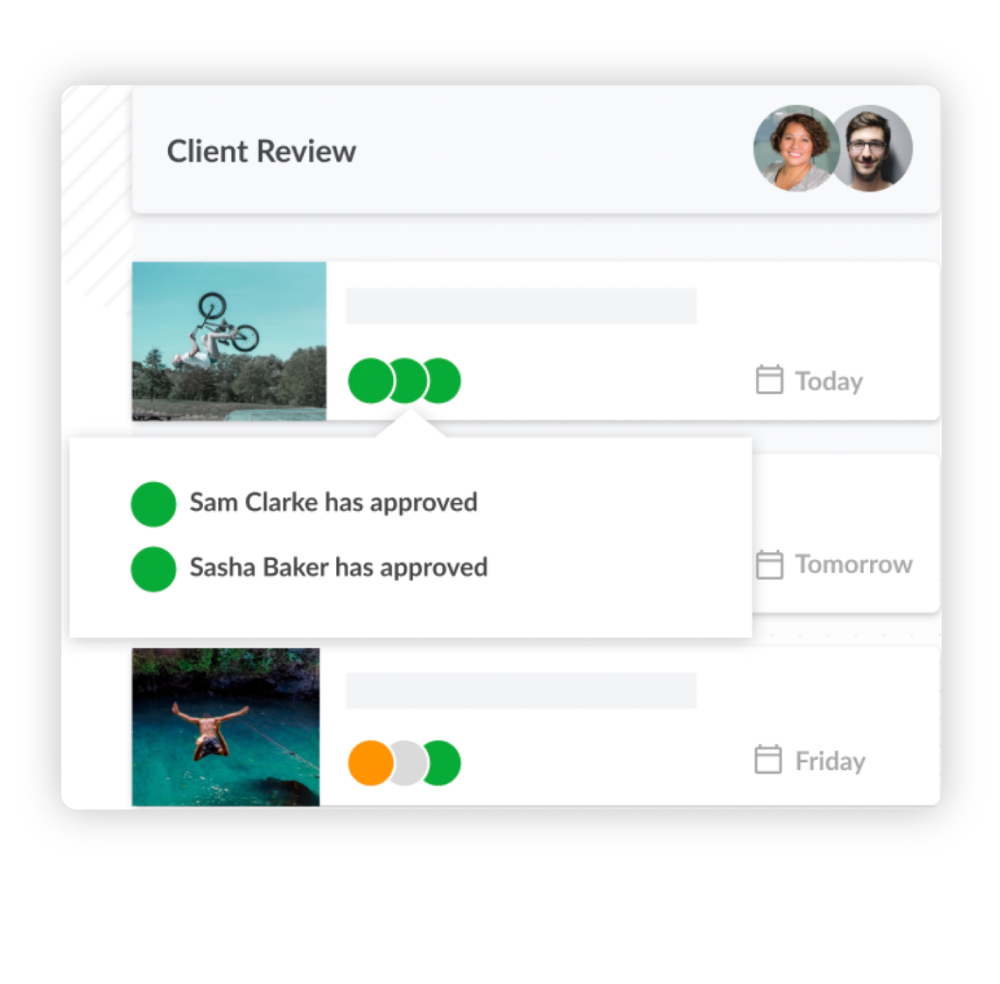
If you are looking for a good client collaboration tool for videos and other multimedia files, you should try out Filestage.
Filestage is an easy-to-use collaboration tool for creative professionals managing the review and approval process of videos, images, PDFs, and other file types. Users can share files with as many stakeholders as they like and reviewers can leave time-stamped comments and annotations directly on the video.
5 best practices to improve client collaboration on multimedia files
Now let’s look at some of the measures creative teams can take to improve client collaboration workflows on various files.
Define responsibilities and expectations
Before starting any project, every person on board must fully understand their responsibilities and what the expectations are. If your clients, colleagues, or partners are unsure of what to do, miscommunications can occur and this will only waste valuable time and resources. Consider documenting the responsibilities and expectations in writing so anyone can double-back and refer to the processes asynchronously.
Make it easy to give feedback
If it’s easy and fast to give feedback, reviewers will be more likely to leave comprehensive feedback. It’s vital that your client collaboration tool is intuitive and easy to use without a need for prior training, as reviewers won’t bother with a tedious process.
“Filestage has made our review and approval process enormously easier since feedback can be given exactly at the point in the text/ image/ video where it needs to be implemented.” – Lisa Weißer, Social Media & Performance Manager at RaboDirect
Enable real-time communication
Real-time communication allows creative teams to collaborate with each other, share ideas, and solve problems quickly. With the right features, teams and clients can easily communicate in a live capacity and clarify bottlenecks faster.
“Different viewpoints can be discussed in a clear and concise way, and in the end, we have all the collected feedback in one file.” – Angelika Schneider, Executive Creative Direction Motion Design at Sixt
Assign clear deadlines
Apart from the primary project deadline, every other small task within the big project should have a deadline. Assigning clear deadlines on every file will help to ensure that you meet the final deadline.
Automatic reminders
Setting up automatic reminders can enable reviewers to submit timely feedback or approvals. This saves time for project managers since they don’t have to manually remind people of pending tasks. Also, being aware of deadlines helps reviewers schedule their time and tasks reasonably.
“We always have an overview of approvals and queries, can assign them to the right person with a single click, and even set due dates. The reminder is then sent automatically by email.” – Felix Boche, Project Manager Corporate Group Marketing at Stiebel Eltron
Be transparent
When reviewers can see the comments and annotations from others, they can avoid duplicate or contradictory feedback. And in case, reviewers have different opinions on a particular area, they can discuss it directly in the comments section. No need for you to jump in to moderate the comments.
“An advantage of Filestage is that the status and all given feedback within the approval process is always transparent for the project team and all contact persons.” – Marcel Martin, Director UX at Oddity
We hope this article showed you that reviewing and keeping track of client feedback for video projects doesn’t need to be tedious, time-consuming, or nerve-wracking.
Adopting the processes and tips outlined above and using an intuitive client collaboration platform like Filestage can help you efficiently manage all file reviews and approvals in one place. This enables you to collaborate with clients, colleagues, voice actors, and stakeholders easier and more effectively.
We've secured some Filestage deals for The Booth's readers!
7-day free trial
20% discount for monthly plans up to the first 3 months
30% discount for yearly plans for the first year

How to find the best voice over work
How to find the best voice over work
If you want voice over work, don’t waste time looking for it. Create a voice over business with a solid foundation so that the work finds you.

Guest Post by David Goldberg
Founder, Edge Studio
My company, Edge Studio, has been educating, casting, and hiring tens of thousands of voice actors since reel-to-reel. We’ve had the opportunity to spot some common denominators between actors who continually have clients calling them, versus those who continuously sweat and pound the pavement. We’ve also had plenty of experience leading emerging voice actors to success by helping them utilize some key principles.
But before we get into the how, it’s good to remember that there are three different avenues that can bring voice over work to you:
- Establish relationships and network with people who can bring work to you
- Use a matchmaking service to bring work to you (casting agent, online casting site)
- Hire someone to bring work to you (manager, intern, business partner, etc.)
Next, it’s good to keep in mind that the meaning of ‘success is personal and can be different for every voice actor. So, let’s highlight some of these definitions.
Common definitions of success in the VO industry
- Cranking out telephony prompts all day.
- Recording long-form fiction audiobooks.
- Recording a variety of voiceover genres.
- Working around the clock and auditioning frequently.
- Working with clients who are open to creative input.
- Sticking with one high-volume client with dependable consistency.
- Having voiceovers become a vocation and relying on the income.
- Turning it into a worthwhile avocation and doing it simply for the love of voice over.
- Working with clients who know precisely what they want and don’t want creative input.
- Being able to build a career around a specific subject matter, vocal style, or energy level.
- Providing clients with everything they need from A to Z.
Interestingly, I remember being on a panel at a VO conference. One of the other panelists told a crowd of 300+ relatively newcomers that they should consider themselves successful when an agent sends them national commercials.
Since I disagreed, I eagerly waited for my turn to offer another definition of success. I mentioned the many, MANY voice actors I know who are as happy as clams narrating telephony & GPS voice-prompts all day long, five days a week. While others are stoked to record non-fiction 3rd and 4th-grade educational textbooks all day long. Still, others are just as thrilled when they get to record local commercials for tiny businesses all day long. The point I was trying to make is that someone else’s definition of VO success will probably be different from yours.
Create a practical game plan
After you’ve considered which avenue(s) you’re most comfortable using to bring work to you and how you define success, then – and this is the critical step – consult with someone who knows both sides of the industry. Specifically, someone who:
- Works very closely with clients during every phase of the production process, and therefore knows why clients hire, don’t hire, repeat hire, and don’t repeat hire voice actors.
- Has the know-how to help actors establish themselves.
This is the person who can ultimately help you to create a practical game plan so that legitimate work finds you. (Investing a bit of money in this at an early stage of your career should pay off over time).
What should this game plan include? Start by assessing your most marketable genres (based on your personal interests, subject matter knowledge, vocal strengths and weaknesses, your level of marketing skill, etc.). Then, tailor every element of your business to convey to clients why you’re the voice actor they should reach out to. Finally, you need to strategize the best way to convert first-time clients into both repeat and referral work.
Avoid unnecessary obstacles
If you want voiceover work to find you, then you can’t afford distractions, such as voice actors who say it’s impossible because it’s really not. We are reminded of this every day at Edge when voice actors approach us seeking work (via cold call, cold email, auditions) and unknowingly reveal the incorrect ways they’ve been using to look for voice over work. So, to recap, having work come to you is not that difficult when you have a clear game plan and practical strategy.
And for anyone trying to beat the system, hoping to bypass the steps listed above, or focusing on an unrealistic work approach, trust me, it’s not going to work. You see, at Edge, we focus on converting emerging voice actors into working voice actors. We do this by maintaining the approach and steps listed above. So, we know this approach works.
You can be a successful voice actor and have work come to you. But if you don’t put in the initial work, it’s unfair to blog that getting voice over work is impossible. Because that’s not the truth, and it only creates needless concern and distractions. If you create your voice over business with the right foundation, you will achieve successful results over time.
Insights from our experience
We’ve trained newcomers who have become successful in virtually every nook and cranny of this industry. These have progressed to becoming the voice of major telecom companies, recording big-brand TV commercials, narrating films and documentaries, being ‘that voice’ of telephony systems and GPS systems, and starring in animated productions. In fact, they’re so busy that they have to hire editors and office assistants to help them run their businesses.
That’s why we truly are in a rare position of being one of the largest, longest-running, and busiest voiceover businesses in the world. This means that the ideas and suggestions in this article are what we experience day in and day out.
We know that you can establish a successful voice over business that has work finding you. All you have to do is define the avenues you can use to bring work to you, establish what success means to you, create a specific game plan, and don’t allow yourself to be distracted by obstacles.