
Social media strategy checklist
Download your free social media strategy checklist!
Some of the greatest composers and artists like Da Vinci and Beethoven never created their masterpieces by throwing random music notes or colors together, hoping it would turn into something glorious. It took a combination of talent, skill, and preparation.
And when you’re working on social media marketing for actors, the same applies. You can’t throw together a few posts, random comments, or quick tweets in the hope that it will create a memorable online presence. The best way to get it right is by having a well-planned strategy. Get yours for free!

How to brand yourself as a creator

How to brand yourself as a creator
Knowing how to brand yourself as a creator is essential for clients to remember you in a crowded market. So, in this guide, we’ll explore how to brand yourself as an influencer, voice actor, and freelancer through personal branding strategies to help you build a unique brand.
What is personal branding for creators?
Personal branding for creators is a branding strategy that involves creating a unique, consistent identity across the creator’s various social media platforms or websites to build a recognizable presence that attracts potential clients. Personal branding encompasses your vocal range, delivery, versatility, storytelling ability, or niche expertise in specific genres, projects, or industries. So, as a voice over expert, you’re not just sending auditions and booking jobs; you’re creating a distinct personal branding that clients associate with you as a quality benchmark.
How to brand yourself as an influencer
- Identify your niche: If you’re just starting out as an influencer, choose a specific niche to help you stand out and attract a targeted audience.
- Create a consistent visual identity: Develop a unique, recognizable visual theme for your social media profiles with a consistent color scheme, logo, and style.
- Develop a content plan: Craft content that’s centered around your niche and make it valuable for your audience. Diversify your posts with tutorials, reviews, personal stories, and collaborations.
- Engage with your audience: Build a community by responding to comments, hosting Q&A sessions, and participating in relevant discussions.
- Collaborate with brands and influencers: Partner with brands that align with your niche and values. Collaborating with other creators can boost your credibility and expand your reach to new audiences.
How to brand yourself as a voice actor
- Create a professional demo reel: Include a high-quality demo reel in your voice over portfolio that showcases your range and versatility with various styles and genres.
- Build a voice over portfolio: Set up a voice acting website and sign up for a free profile on Voice123. Include your samples, demo reels, resume, client testimonials, and contact information in your profile and website.
- Optimize for SEO: Use relevant keywords related to voice acting on your website and social media to improve search engine rankings and visibility.
- Network within the industry: Attend VO events, join voice acting forums, and participate in online communities to build connections and learn from others.
- Keep improving your skills: Stay up-to-date with industry trends and enhance your voice acting skills through ongoing training and workshops. Showcase these new skills and capabilities in your voice over portfolio.

On this point, Celia Siegel, author of Voiceover Achiever aptly notes that “language, imagery, font, and color choices all matter in developing a cohesive brand story. When properly executed and marketed, online and across all collateral materials, your brand will educate the world about your voice, open doors, and inspire confidence in both you and your buyer.”
How to brand yourself as a freelancer
- Define your unique selling proposition (USP): Highlight what makes your services unique and how you can better solve your clients’ problems.
- Create a professional website: Build a comprehensive website with a portfolio, service descriptions, client testimonials, and a blog to showcase your expertise.
- Leverage social media: Use social media to promote your work, share industry insights, and engage with potential clients.
- Network and build relationships: Attend networking events, join professional groups, and collaborate with other freelancers to create referral opportunities.
- Seek feedback and testimonials: After completing projects, request feedback and testimonials from your clients. Display these on your website and social media profiles to create a credible brand that will attract new clients.
Joan Baker, VP of Sovas points out that “there is no space for the “fake it until you make it” attitude. From your truth comes your audio/visual brand presentation; website, demos, logo, business cards, photos, etc. Use these to strategically and consistently target clients whom you believe will resonate with your talent. Continue to define your brand through your work ethic, interpersonal skills, and willingness to do what it takes to deliver the best possible performances.”
How to brand yourself with a voice over portfolio
1. Identify your brand persona
Your voice over portfolio reflects your vocal image. So, consider the projects you want to be associated with and create a matching persona—a friendly neighbor, authoritative expert, or quirky character.
2. Diversify your samples
Opt for samples highlighting your strengths with a mix of voice over styles. These could be commercials, corporate or documentary narration, and character voices.
3. Create a concise portfolio
Use clean, attractive, simple designs with a brief bio and your contact info. Include a handful of your best voice over samples that represent your skills and versatility.
4. Optimize for SEO
Voice over and voice actor keywords related to your specialties and industries enhance your visibility, helping potential clients find you through online searches.
Creating a sample playlist? Check out our helpful guide on optimizing your Voice123 samples for success.
Rudy Gaskins, CEO and Chairman of Sovas advises you to “think strategically about what you say and do as it helps clients better understand your unique value. If you’ve been interviewed for podcasts, articles, etc., share these items (if they are well produced) as they will help shape and give concrete existence to your brand. All your social media channels should express a well-honed theme that expresses what you believe to be your brand.”
How to use social media branding as a creator
When and what to post
- Brand on platforms where your target audience is most active, such as LinkedIn, Instagram, Facebook, and Twitter.
- Create interesting content with cool voice over samples, behind-the-scenes insights, or personal stories to engage followers.
- Post routinely to keep your audience engaged without overwhelming them. Around 3-5 posts per week.
- Engage with followers by responding to comments or integrating client interactions into your CRM for easy access and follow-up.
- Monitor online results with analytic tools to adjust your social media strategy to match the content followers want.
Check out Voice123’s social media checklist to optimize your social media branding for success!

“Voice actors overlook a clear objective. Are you trying to use social media to reach new clients vs. email marketing? Are you connecting with existing clients to remain top of mind? Or, are you trying to increase your followers to use as leverage? Or maybe some combination of these? Define your focus and craft a content creation strategy from there!” – Melissa Moats from The Voice Actor Studio
Resources on how to brand yourself as a voice actor
- The Booth is a content studio for voice actors with useful voice over resources to help you find VA jobs, set up a home studio, improve your VO business, and more.
- The voice over resources on Voice123 can help you prep your voice over toolkit with various free options for voice actors, from books to podcasts.
- The Voice Actor’s Studio offers a supportive learning environment by covering the full spectrum of the voice over industry, including the craft, the tech, and the business.
Boost your voice over work opportunites with a paid Voice123 membership
First-time paying members are eligible for a discount
FAQ's
Start by defining your strengths, values, and style, then analyze your audience and create concise brand messages for social media to build a professional network and establish your reputation.
Branding yourself means creating a professional identity and reputation that consistently showcases your strengths, values, and skills across various platforms and resonates with your target audience.
The seven pillars of personal branding are purpose, authenticity, consistency, visibility, expertise, value, and networking.
Clarity, consistency, and constancy are crucial to creating a unique brand identity that clients recognize and remember.
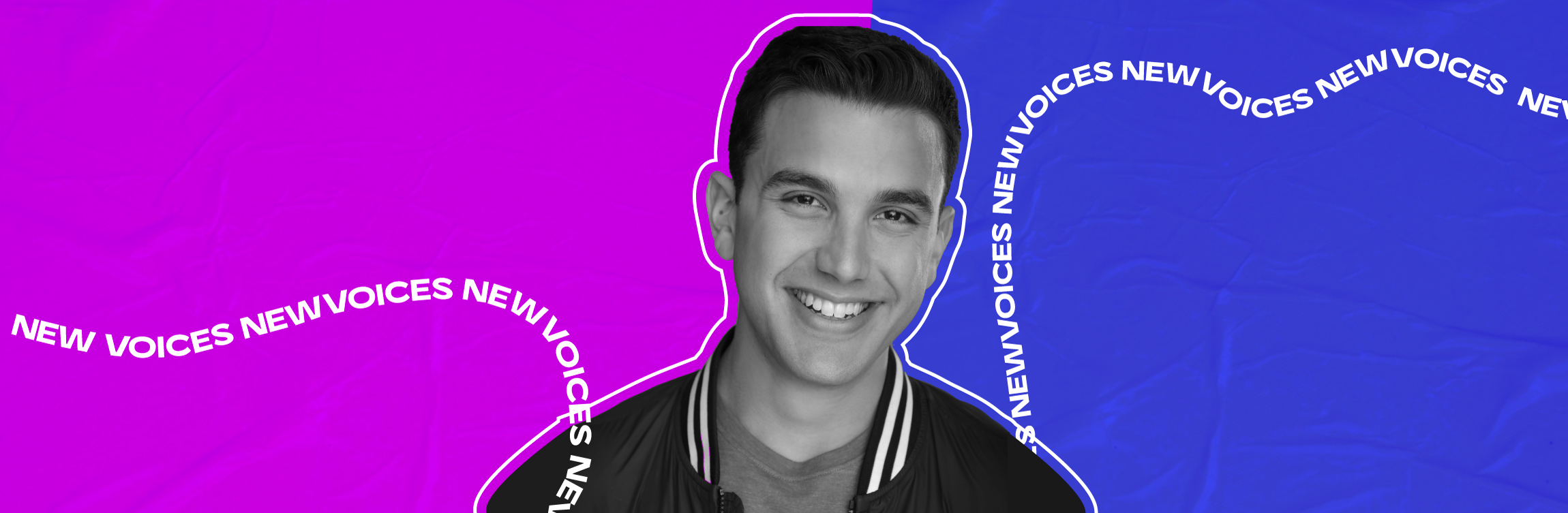
New Voices with Javier Prusky
New faces, new people, new stories — this is New Voices.
You've said you dreamt about being a voice actor since you were 3 years old. Do you think moving from home at such a young age impacted your childhood dreams?
When I was a kid, Uruguay didn’t have a big voice over industry (to my knowledge), so if I had to evaluate the impact migration had on my dreams, I would say moving to the US was positive.
I remember I did a lot of wacky voices when I was very young, I would make stories up and make my parents hear all my horror based storylines that included a lot of weird voices. But it wasn’t until I turned 10 and moved from Uruguay to Atlanta (United States) that those interests turned to dreams. Watching all these great studios and shows being done there would later inspire me to pursue an education and travel the world.
One of those educational experiences you had was attending a clown school in France. What was your biggest takeaway; anything that you now use in developing a character voice?
My personal take on that experience is that clowns are the purest forms of people. You learn to take the thing that you are most vulnerable about, and expand on it a hundred more times. So, even though the experience was very painful, I really learned so much from it.
And It’s funny because clowns are probably the opposite of voice over. Traditionally, you are not supposed to speak and you can only communicate with sounds, gibberish, or movement. But now, if a raw moment is needed from me while dubbing…especially in animation, I’m able to find that vulnerable place in me.
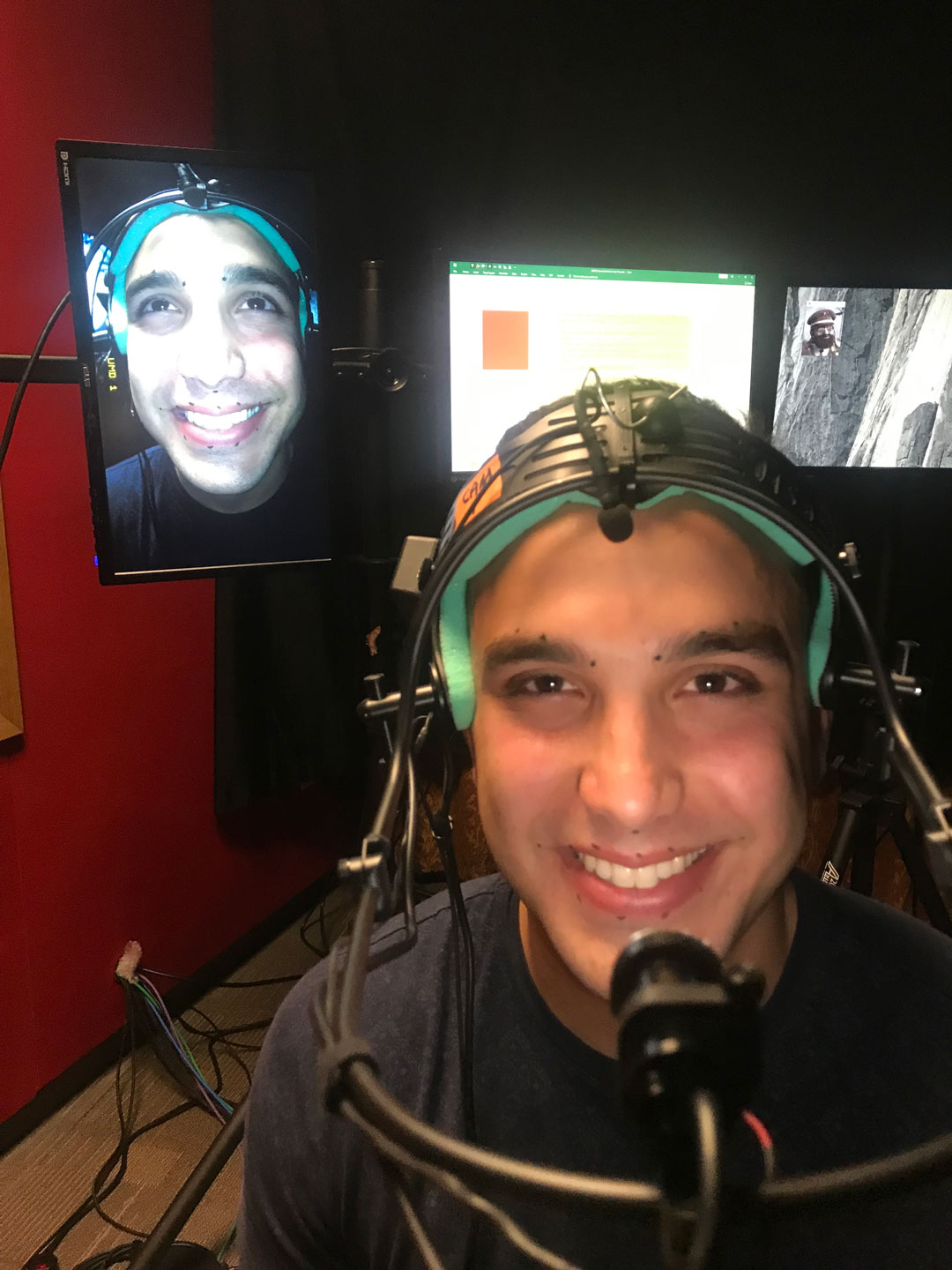
Also, I get to work in motion capture and performance capture for video games, and the clown work sure came in handy to create bold characters. When it comes to voicing animation and video games, using your body while doing a character voice brings so much more life and depth to them.
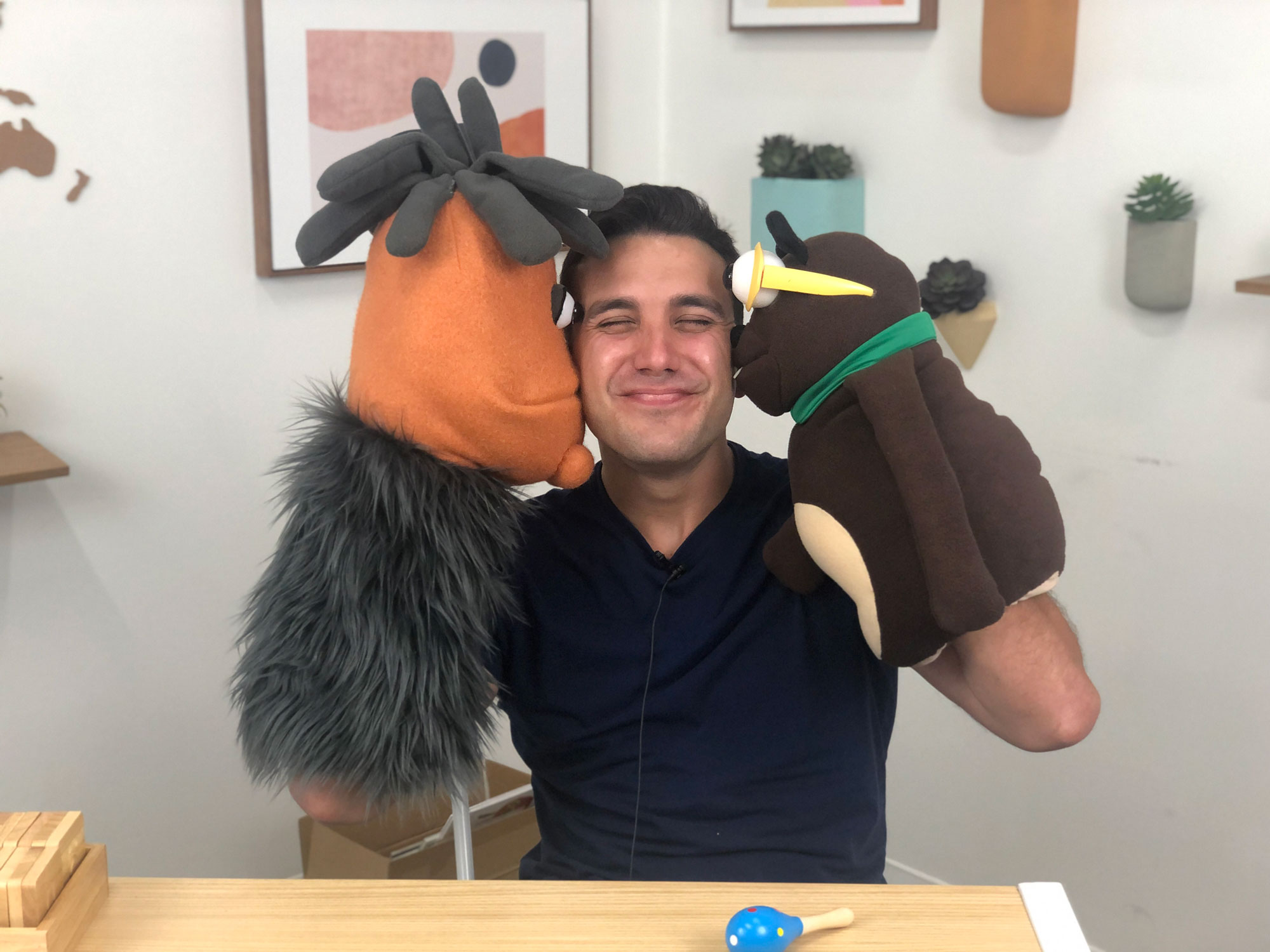
A good example of this would be a Chinese educational show I’ve been working on as a regular. I get to be different animals, and because it’s supposed to be for children, emotions are very extreme. The show is part puppetry, part animation so I have to do two different characters and puppetry at the same time. Switching back and forth while interrupting and talking over myself, that one is a feat.
What kind of equipment do you have at home? Or do you usually go somewhere to record?
Best case scenario is I get to go to a studio and have an engineer so I don’t have to take care of the technical aspects. But with the pandemic, I built a soundproof booth from scratch. And then I use a Neumann TLM 103, which is the staple for animation, and then Audient iD14 for my interface.
What's the biggest challenge for you in the voice over industry?
I would definitely say the amount of auditions you do. This week, I’ve done 45 and I think my record on auditions in one week was 96. It’s a struggle if you don’t have the luxury of time because you’ve got to move quickly, be a great reader and immediately make choices.
One recent lesson I am learning is to be more selective, and that it is okay to not do every single audition you get. Saying no and knowing your boundaries and limits can be a powerful tool in the actor’s toolbox.
But overall, the whole process can be discouraging, as sometimes it feels like you are sending auditions and your hard work into the void of space. When at the end, as voice actors, we only want to be heard and get paid in our field for what we love to do.
Considering those numbers, what advice would you share about voice acting auditions?
To all beginners, I would say pay attention. Start paying attention to all the animation and commercials you watch. Hear all those voiceovers, because each of them has a tone. And that’s very important to catch. Ask yourself: what’s the tone of the brand you are working for? Who’s the character voice of the product? This will give you a place to start.
I would also say, if you speak a second language, or a third or fourth, and if you particularly have an ethnicity or a background that’s not the “traditional” one in the voiceover industry, make good use of it. My Spanish demo gets me a lot of work because the pool is smaller. And not a lot of people tell you that.
What advice would you give young people who're a little afraid about doing voice acting or doing a character voice?
I’m afraid all the time. I would be lying if I said otherwise, but I’m not going to let those fears stop me from continuing. One of the things that gave me confidence and a foundation to start my career was training and education. That’s very important in our field.
This craft is not about raw talent because that will only get you to a point, after that, you’ll need technique. I went to college and I got a BFA in acting, but that doesn’t have to be everyone’s route. I had a friend who couldn’t afford acting classes, so he chose scenes from every Academy Award winning movie and every two weeks, would practice a scene from it. And that’s how he started.
And there’s also the things you can get educated on that you don’t even know you might need. For example; In Atlanta, I trained with Eileen Kimble for 8 months. She taught me about booth etiquette, which is how to behave when you go into a studio. I never thought it was a skill that could be taught, and not knowing proper etiquette can cost you jobs.
What are your biggest learnings from 2020 and what would you love to learn in the future?

2020 was the year I realized I needed to up my game. When the pandemic hit and I had to do everything from home, I decided to invest in good equipment so I could offer better quality results. Same with the business side, the interaction and the social media aspect of my career had to be greatly improved.
It takes a lot of time and money and there’s a lot of people who won’t be able to do it as fast, but for those struggling I would say: this field is not going anywhere. There’s a million commercials and animation shows out there. If you don’t have the money right now to do classes, the demo, the equipment, if you don’t have the money or the resources for all of that, take your time.
I would also add, 2020 made me reevaluate my priorities and passions in life. It reminded me the importance of family and those I care about and not taking life for granted. It encouraged me to be a little more fearless and make bold decisions.
Special thanks to Javier for sharing his experience on starting out, voicing animation, and doing a special character voice.
Check out Javier's profile here! And listen to his most recent work:
Share this post!
A blog owner yourself? Relevant links to quality sites will help your performance on search engines. If your readers will benefit from the services or information on The Booth's Voice over Guide, please consider linking to this post or the guide itself.

Client Communications Checklist Collection
Access our Client Communications Checklist collection for free!
We're creating a living, breathing document full of message templates that you can copy and tweak to use in your own client communications.
You'll want to keep your eyes on this; we suggest either creating a copy for yourself or if you're a GSuite user, adding a shortcut to your Google Drive.
Boost your voice over work opportunites with a paid Voice123 membership
First-time paying members are eligible for a discount
Client Communications Checklist: For voice actors working with clients
Client Communications Checklist: For voice actors working with clients
The Client Communications Checklist is designed to help voice actors successfully communicate with clients in a variety of situations. Each section is a combination of first-hand experience, insight and advice, with bonus templates that you can copy and paste when working with clients.
What does a client really want from a voice actor?
It’s a question that voice actors puzzle over during pre-audition preparation to post-booking confirmation.
What does a voice actor really need from a client?
And this is a question clients tend to muse over during the script-writing phase, all the way to audition follow-ups.
These are two commonly asked questions when working with clients and voice actors.
The answers to both questions are pretty simple.
For a client, it’s about finding a voice actor that sounds like the voice in their head. A voice actor who is professional, fits into their budget, is easy to work with, and takes direction well. In other words, they want great value with quick, reliable, and accurate service.
For a voice actor, it’s about having all the information. Where will the recording be used, what should it sound like, when does it have to be delivered, and can the client’s budget fit into their rates?
That’s why the most common reasons that cause project delays are a lack of openness, transparency, and information. Working with clients becomes like sitting behind someone at a drive-through. You’re really hungry, but they have no idea what they want to order. Or it’s like asking someone for more information on a product. Then watching them painfully um and er their way through the catalog.
What do we know about this?
Well, we’re taking our research and experience and turning those insights into valuable checklists.
Since January 2021, our customer success team has received almost 70,000 support requests from users who need real-life assistance in real-time. At the same time, we’ve also hosted approximately 48,000 sent messages and 6000 bookings through the Voice123 platform. To bring it all together, we’ve revamped our Voice Over Guide with interviews, discounts, and helpful advice for those who want to get started or practice voice acting.
So whether you’ve just signed up for a Voice123 profile or been a member for years, we’ll walk you through our exclusive insights. This will give you an A-Z of working with clients and maintaining speedy, open, and effective communication channels.
What you need to know to successfully quote and negotiate as a voice actor
At the end of this section, you’ll be able to quote and negotiate like a pro!
Before you can begin working with clients, you have to first get a foot in the door.
This is usually done by auditioning for projects or uploading voice over samples to your online voice actor profile or website.
Since this is the first stage, it’s often the most time-consuming. It often requires a good deal of back and forth communication. It’s also where voice actors run into the commonly asked question, ‘how much should I quote?’
This is not about choosing a random number as there are many facets to consider such as usage and industry rates.
Then, what if a client likes your audition or voice over sample but offers a lower price than what you quoted? This creates another communication challenge as a voice actor needs to know, ‘how can I negotiate?’
At this point, it’s good to keep in mind that low rates are not always a case of a client trying to lowball a voice actor. Sometimes, they’ve simply been given a number that they have to work with. And realistically, not all budgets can be negotiated. So it’s important to know how flexible you are, what kind of discounts you can offer, and what base rates are non-negotiable.
That being said, what information do you need to know before you decide to take on a new client? And what are the best ways to quote and negotiate?
We’ve compiled our findings and insight in the full post What you need to know to successfully quote and negotiate as a voice actor, which you can read on Anne Ganguzza’s website.
How to be really successful at live direction
This section will show you how to ace your next live session!
After obtaining the necessary information and locking in a budget, the next stage of the project is to prepare for your voiceover. Then deliver your very best performance!
Now, clients are busy people, there are no two ways around that. But you still need certain information in order to nail their brief. A quick way to save time is by having a list of points you need to cover before getting started.
One of these points is how the client will direct your delivery. Some clients provide detailed notes on tone and style. But with key world events changing the scene of things, clients and voice actors are both realizing the value of live direction. Although, this can also bring its own challenges related to terminology, body language, questions, and misaligned expectations.
Remote or live direction can also portray the idea of having a client watch over your shoulder and nitpick your performance. And even though that’s not the case among professionals, what should you do if a client wants to direct your performance? How can you also educate the client on acting terminology to ensure you’re both on the same page?
Then, during the live session, how should you ask questions? And how can you show that you’re really listening to the answers?
Check out our full findings in the post, How to be really successful at live direction on J. Michael Collins' website.
How to best communicate with a voice over client
This section will delve into the nitty-gritty of how you can avoid miscommunications when working with clients.
‘I wish I could delete that!’
At some point in your communications, you’ve probably had that panicking thought after sending the wrong message to someone. Or maybe you had a typo that changed the context of your message negatively. While this does occasionally happen, sending the wrong message to a voice over client could have serious consequences!
This is why when working with clients, you have to be extra careful of what you say and how you say it. Understanding why you should ask something is just as important because the slightest miscommunication can cause things to spiral out of control.
Since most communication is written, extra care has to be taken to avoid misunderstandings, causing offense, or sending messages that can be misconstrued. It’s also vital to be aware of cultural and time zone differences.
Now, if written communication doesn’t come naturally to you, we’ve got you covered! The free Client Communications Checklist Collection has relevant, new, copy and paste templates so you don’t need to worry about backspace or delete.
But, how can you maintain a good communication flow throughout the entire project? What does it mean to be responsive? And what are the 3 Ps that you need to have in order to achieve open and successful communication?
Check out our full findings in the post, How to best communicate with a voice over client on Laura Schreiber's website.
Useful tips to get recurring clients
This section highlights useful tips and best practices to help you create top-of mind-awareness for your personal brand as a voice actor and get you repeat work.

Working with clients can sometimes feel like walking a tightrope.
One wrong move and you can slip and fall. Thus, one delay or misunderstanding can grind a great voice over project to a standstill.
So, is repeat work even possible when working with clients? Well, it’s like why people use the same manicurist, barber, or go to the same car wash. When something works, you stick with it, because you expect the same satisfying results every time. That’s why clients often use the same voice actor or add them to a trusted roster.
Naturally, you’re wondering how you can achieve this kind of career stability. Should you leave it up to fate, or hound your clients until they give you another job?
Definitely neither.
When working with clients, you need to show that you’re a professional by allowing a natural network to build with a slight nudge here and there.
But then comes the internal struggle of “what should I say?”
‘How did the project go?’ No, that’s too fake.
‘Do you have any other projects I could audition for?’ No, that’s too blunt.
This is why we’ll be adding more templates you can copy and tweak in our free Client Communications Checklist Collection.
What about how many times should you follow up? Is there a rule of thumb? Will clients think you’re annoying if you send a follow-up, or rude if you don’t?
Truth be told, there’s no simple answer. It depends on each client and project. But there are certainly industry-recommended practices you can follow to secure recurring clients.
Read our findings and expert advice in the full post, Useful tips to get recurring clients on Kim Handysides’ website.
What you need to know to create successful voice over contracts
This section is packed with industry tips and advice for the best voice over contracts.
It’s often said that a little knowledge can be a dangerous thing.
That can be especially true when it comes to running a voice over business and arranging payments and invoices. In this case, a little knowledge would be a client offering a price and a voice actor agreeing to it. But more information and actions are needed. And usually, it’s the voice actor who has to ensure that both sides fully understand and agree to the payment terms and method.

Understandably broaching the topic of payment can sometimes be awkward, but let’s put it into perspective.
Apple invests billions of dollars into their technology, but do they ever hand out free iPhones? And have you ever seen a ‘free sneakers’ sign on any Nike store window?
Well, as a voice actor, you’ve provided a service and invested your time and resources. You need adequate compensation.
This is why it’s helpful to have a voice over contract that specifically lays out how the invoice will be sent, what details are required from both sides, when the payment will be made, and which payment method will be used.
Now, the phrase voice over contract can be intimidating, especially if you’re unsure of what it really means. Is it a long, ten-page contract that legally binds a client and a voice actor? Or is it simply an email, message, or perhaps even a service agreement?
Learn the answers to these and other service agreement questions in the post, How to Create Successful Voice Over Contracts (Service Agreements) on Actors' SOUND ADVICE.
Here's how to best protect your voice over work
This section guides you through practical, step-by step ways to protect your voice over work without negatively impacting client relations.
“Hey! That’s mine!”
Have you ever said that to a friend who thought they could slip away with your favorite hoodie? Or to a colleague who picked up your phone instead of theirs? That’s because the keyword in that phrase is ‘mine.’
When something belongs to you the need and desire to protect it is innately strong. Regardless of whether it’s a book, hoodie, phone, or especially a voice over recording. That’s why when working with clients, you need to take adequate precautions to ensure the protection of your voice over work. But this is something of a catch-22; while the voice over work is yours, the client commissioned it, provided the script, and is paying for the usage of it.
This is why protecting your voice over work is a two-step process. First, during the audition stage, you have to decide if you need a suitable audio watermark. Second, you need to protect the final version by means of a detailed service agreement.
But how can you know which audio watermarks are suitable and won’t hinder your chances of getting hired? And how can a service agreement prevent unauthorized use of your voice over recordings when working with clients?
How to be successful when working with clients
In these six sections, we’ve worked together with some of the most experienced voice over experts to equip you with the know-how, do’s and don’ts, and practical templates to ace every project, every time!
So, what do you need to keep in mind when working with clients?
When quoting and negotiating, follow industry rates, best practices, and be transparent and confident when negotiating. To ace live sessions, listen to the client’s instructions and feedback carefully. Be cooperative and keep in mind that the client is always right.
To best communicate with a voice over client, prepare your communications ahead of time, follow the right format and tone, and always strive to be Professional, Punctual, and Polite.
What about useful tips to get recurring clients? Well, you have to be the one to take charge by following up, avoiding miscommunications, and doing your best to anticipate a client’s needs. And by striving to keep this in the back of your mind when working with clients, everything you say and do in a project or booking will create top of mind awareness for your voice over brand!
To create successful voice over service agreements, keep it professional, triple-check everything, and always establish your terms in advance. And finally, to best protect your voice over work, you need to take certain precautions, outline your T&Cs in a service agreement, and take the initiative to inform yourself. Avoid being suspicious of every client but do put the right measures in place to protect your voice over work.
Together with voice over experts, we’ve created a living, breathing document full of message templates that you can copy and tweak in your own client communications.
Boost your voice over work opportunites with a paid Voice123 membership
First-time paying members are eligible for a discount
Client Communications Checklist Collection - Thank you
Access our Client Communications Checklist collection for free!
We're creating a living, breathing document full of message templates that you can take and tweak for your own situations.
You'll want to keep your eyes on this; we suggest either creating a copy for yourself or if you're a GSuite user, adding a shortcut to your Google Drive.

New Voices with Dacey Else
New faces, new people, new stories — this is New Voices.
How long have you been focused on voice acting for teens and when did you decide to enter the voice over industry?
I’m 18 years old and I was 12 when I did my first audition, so it was probably five or six years ago that I started doing voiceover work.
It started with theater, as an outlet to meet people when I was homeschooled in fifth grade. I quickly fell in love with it and decided, “Okay, I want to be an actor and theater film director.”
Then I met someone in the industry that I worked with and he told me I could do voiceover work. And I remember I was standing there with my dad. Like, “I don’t know what that even is. I’ve never heard of that.” And he said, “yeah, and you can do it on the internet on freelancing platforms.” I’d never heard of anything like that because what everybody tells you is that there’s only one way to be an actor. And it’s the traditional path with an agency for 10 plus years to maybe get booked. So hearing that there was another way where I could do it myself was really exciting for me. I went home and a couple days later, I signed up for all the freelancing platforms.

It is hard to enter an industry as big as this one, especially as a young woman. What's the hardest challenge you’ve found about voice acting for teens?
I would say, probably finding your niche and what your specific voice is suited for. Because when you first start out, you just try everything. I’ve learned I can do some character voices, but I’m not very cartoon-y. I’m much more into commercials, but there’s some people that are just amazing at doing impressions.
That’s why I always tell people I meet, if you have a skill with your voice, any quirky quality… that’s all good for voiceover.
So yes, I think it would be just knowing yourself, what your voice actually sounds like, and finding your path in a specific area in the industry.
What's your favorite project that you've done, or the one that you are most proud of?
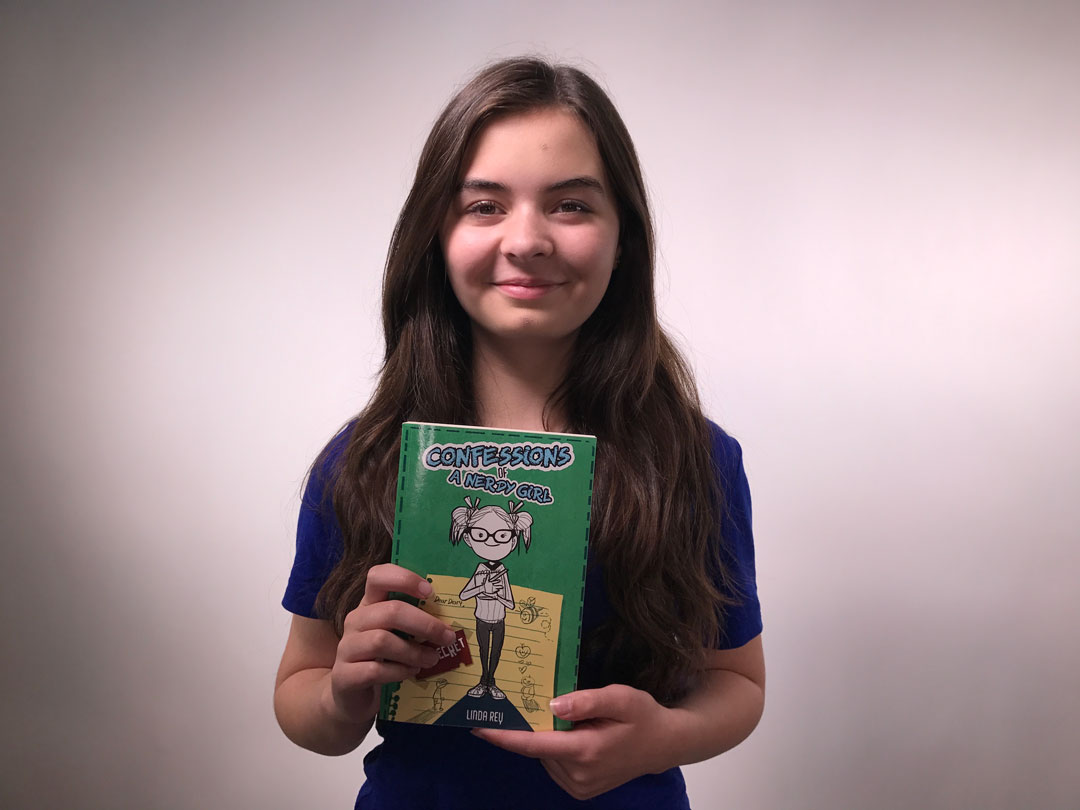
When I started, I met this lady named Linda who had a book series called “Confessions of a nerdy girl” and the books were super funny. She’s an amazing writer.
It was 2017 and I had just gotten started doing voiceover work. I didn’t come from an acting family, so I didn’t know anybody that was doing voiceover work. At that time, my recording space was a cardboard box that had hot glued foam on the inside. And that’s where I recorded for over a year.
So imagine my surprise when I meet Linda over the internet and she tells me that I would be perfect for her character Willa, which is the character that’s writing the diary. Of course, I said yes. And it’s funny because a couple of weeks ago I finished up my third book with her, playing the same character.
I’ve been playing Willa since I was 13, so it’s really fun to go back into the mind of a pre-teen and really become that character, because she has a very specific voice. That’s definitely my favorite project. I feel like it’s the one project that’s grown with me.
What equipment do you have now?
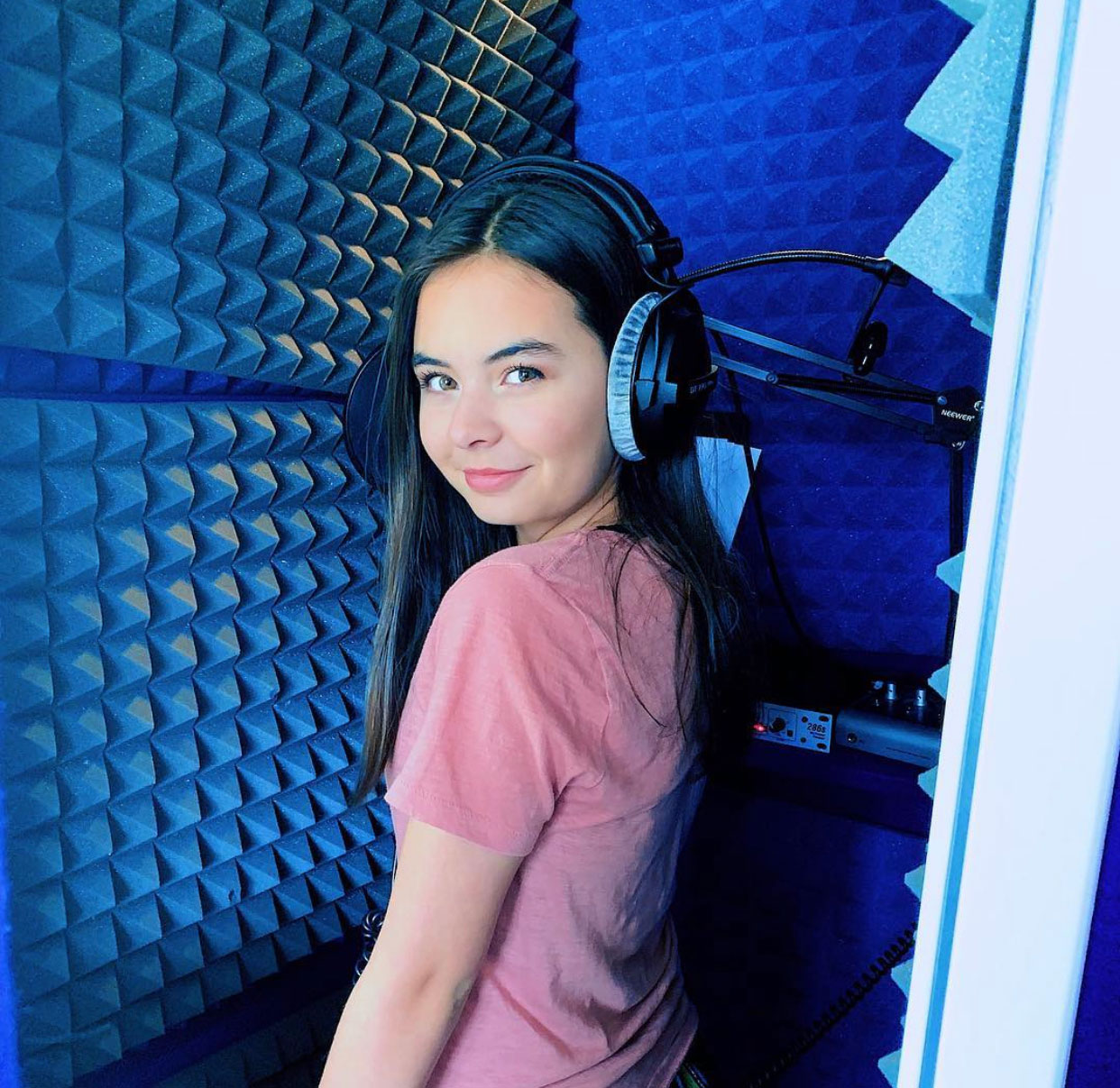
I have a home studio as I got a booth after a couple of years, when I was sure this is what I wanted to do full time for the rest of my life. It’s basically just like a custom sound booth for music, people, or voiceover artists. I call it my big blue box.
Cause I got it done in bright blue, which I don’t know why I did that, I was just 14. And so now it’s still up here and I have it all connected to an iMac with Adobe Audition and that’s what I’ve been using from the beginning. I own a Neumann TLM 103, that’s what I use now.
Do you have any voice acting role models?
In the voiceover industry, definitely Nancy Cartwright, the voice of Bart Simpson. Just the way that she sees voiceover work is very unique and she really has a lot of fun. That’s why I’ve always admired her, how much she enjoys her career. Cause I don’t think you should do it unless you enjoy doing it.
What are some secrets that people never told you about voice acting for teens that you wish someone had told you? Can you share a secret for the younger generations to come?
My biggest advice for anybody that’s starting out would be to stick to the basics. Instead of over-complicating things and trying to grow your business by doing all these really hard, over the top things, literally just make sure your response time is really fast and get your voice overs over to your client as quickly as you can.
Just make sure to always stay active when you’re freelancing. And that will push you forward, even if you’re just brand new.
What are your plans for the future? Where do you see yourself long term?
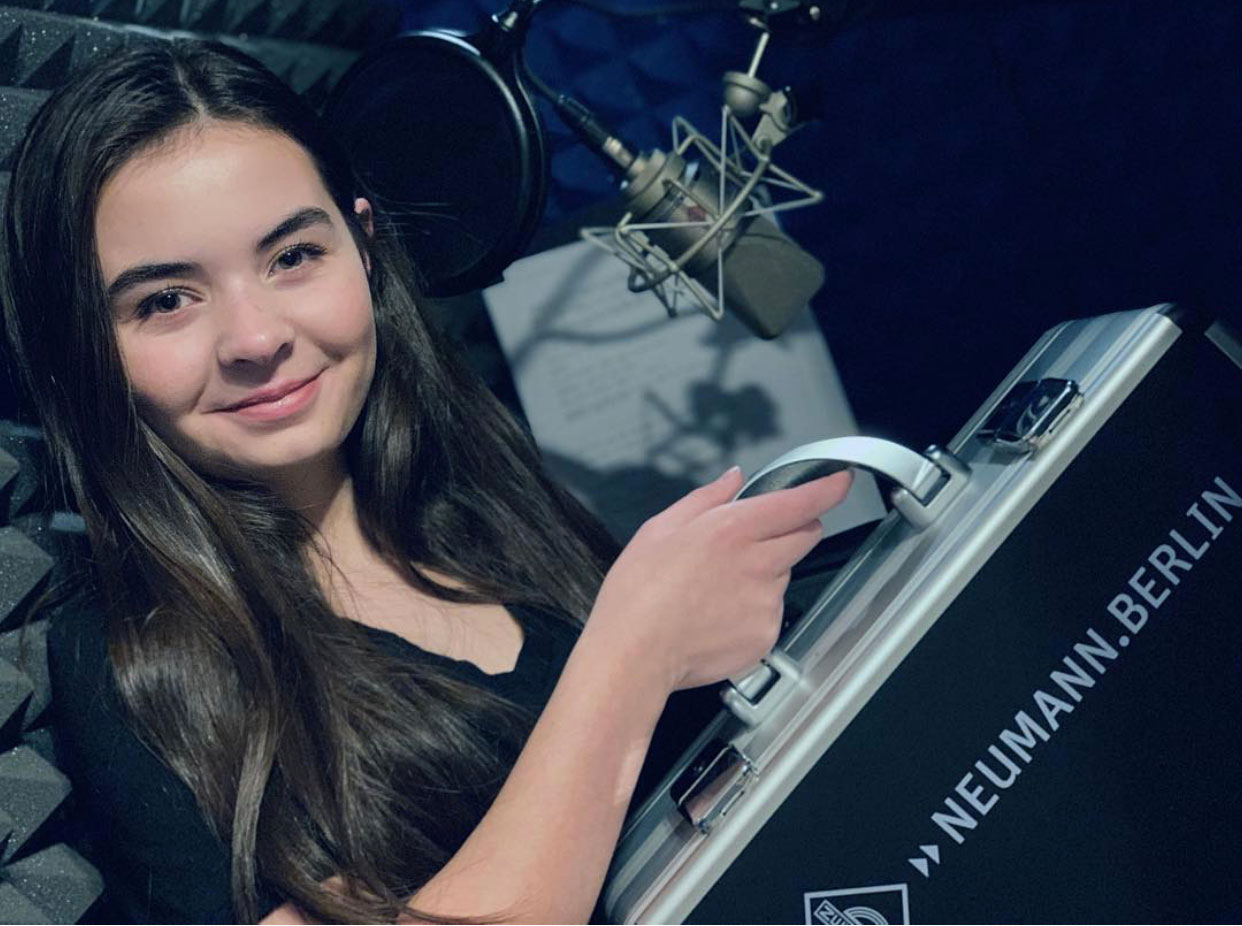
Well, I just hired my first editor. So that was a really big step for me. I think continuing to hire people that can help me edit and respond to people so that I can just be in the booth as much as possible is what I want to do in the next couple of years.
It’s been a really exciting process, having another person and training them about audio and how all that works. My next goal is to keep expanding our team and that way, we can put out work faster and more of it, and make sure it’s the best quality that it can be.
I was a one-woman show for so long and there’s only so much you can do, so If you really want to grow, you kind of have to reach out to other people and grow your team!
Special thanks to Dacey for sharing her thoughts on voice acting for teens.
Check out Dacey's profile here! And listen to her most recent voice acting work:
Check out our new section with tips and advice as we bring you Ask the pros
Share this post!
A blog owner yourself? Relevant links to quality sites will help your performance on search engines. If your readers will benefit from the services or information on The Booth's Voice over Guide, please consider linking to this post or the guide itself.

How to become a voice actor for Disney
How to become a voice actor for Disney
Becoming a voice actor for Disney is much like becoming a voice actor for animation. But with Disney, emotion, color, and character are taken to their heights. Before going for Disney auditions, developing an excellent imagination and improvisational skills is crucial. An impactful Disney animation is more about the character that’s brought to life than the words in the script, and a Disney voice actor must be able to portray that. Once you’re confident in your acting ability, then you can look for Disney jobs, or animation jobs if you need to build a portfolio.
How to become a voice actor for Disney films
1. Practice character and creativity
Disney animated characters are very clear and transparent with their emotions. Practice showing emotion and being the character in the story. The more you can be the character, the better chance you have of becoming a voice actor for Disney.
2. Stay relatable
Becoming a character is important, but being believable is also very important. While Disney characters are certainly emotive and cartoon-like, they are still relatable; a key skill for all Disney voice actors.
3. Be yourself
It’s one thing to create a character’s voice, but it’s another to be a character with a voice. The difference is: the former can be shallow — an effect that is put on top of a voice — while the latter can be a character that sounds a certain way because it’s who they are. It’s the difference between the voice sounding like an imitation, and the voice sounding like a real person. This is a facet of acting true to any genre of voice over, and can be trained with the help of coaching.
FAQ
A casting member has said that those who have skill in the recording booth are those who have skills in theater, improv, and sketch comedy training and experience. Basically, it’s people who have acting chops.
You can learn more about Disney auditions from their website.
"When auditioning for a Disney animated feature, an actor must come prepared to use their imagination and, in some instances, improvise. Our auditions are not as much about the words on the page as they are about finding the essence of a character in the actor’s interpreted performance mixed with the sound of their voice."

How to become a narrator for documentaries
How to become a narrator? It’s a vital skill because documentary narrators must entertain audiences, involve them in the story, teach them something extraordinary, and make them believe in what they see. However, the documentary voice-over genre has skyrocketed recently because of streaming platforms like Netflix, Hulu, Disney, and Amazon Prime. So, there’s never been a greater demand for skilled voice over narration to bring factual stories to life. Learn the ins and outs of how to become a narrator with these tips, skills, and resources.
What is a documentary narrator?
A documentary narrator is a voice actor who guides the audience through the storyline of a documentary film or series through a voice over narration that provides commentary, insights, and personal perspectives from the characters. A documentary narrator uses a compelling, captivating vocal style and tone to enhance the documentary’s feel and impact, making complex ideas more accessible and compelling to viewers. They use their voice to connect emotionally with the audience, educating and inspiring them.
How to become a narrator for documentaries
- Education: You don’t need a specific degree to become a narrator. However, studies in English, journalism, communications, and theater can give you a strong foundation in language, storytelling, and performance art.
- Experience: Improved skills come with experience. You can volunteer for local projects like community radio programs, audiobook recordings, or podcasting for more practice. When learning how to become a narrator, every performance counts.
- Samples: A diverse portfolio of different subjects and styles shows your voice over narration versatility. If you don’t have work samples, make your own with excerpts from books, articles, or popular scripts using different vocal tones and techniques. The Voice Reel Script Library has a variety of scripts you can use in your voice over samples.
- Audition: While not every audition results in a job, it helps to hone your skills and diversify your experience. On Voice123, you can audition for various projects and add them to your profile as voice over samples (if the client allows). This will help you expand your portfolio and voice acting experience.
Start voice acting today with a special discount!
*For first-time paying members
Key skills for documentary voice overs
- Clarity: This vocal quality makes voice over narration more understandable to audiences, regardless of a subject’s complexity. Practicing diction, vocal exercises, and enunciation are valuable steps to improve your vocal clarity during a read.
- Tone: Documentary narrators adjust their tone to match the director’s requirements. Authoritative for historicals or soothing for nature scenes. Listen to and mimic other narrators’ vocal tones to understand different vocal styles better.
- Pacing: It holds the audience’s attention, so information is absorbed and adjusted depending on a scene’s emotional weight. Practice reading voice over narration scripts at different speeds, trying to self-adjust based on the subject and audience.
- Emotion: This is connected to empathy, making the documentary voice over sound authentic. Try to put yourself in the story; it’ll give you a more realistic feel for the information that comes across to audiences in your voice over narration.
Tips for recording high-quality documentary narrations
- Microphones: Voice123’s A-Z microphone guide has helpful tips on affordable, high-quality mics. Options like dynamic, condenser, ribbon, and USB are sensitive to sound nuances, which helps them deliver documentary narration with clarity and depth.
- Soundproofing: Your home studio can be anything from a room to a DIY closet. As long as it’s sound-treated to minimize background noise and echoes. Acoustic panels or even thick blankets and curtains contribute to clean sound in your documentary narration.
- Recording software: Software like Audacity or Adobe Audition offers a range of features to record, edit, and process documentary voice over files. There is noise reduction and restoration, effects and filters, and voice morphing and manipulation.
- Pre-recording prep: Documentary narrators must read the script and research the subject’s background. This ensures familiarity with a natural delivery and nuanced interpretation. You can also pivot quickly to accommodate the director’s requests.
- Practice aloud: Practicing your documentary voice over script aloud helps you focus on specific areas of pronunciation, pacing, and inflection. Use this opportunity to experiment with breath control and different vocal approaches, like a deeper voice.
- Post-recording editing: Editing unnecessary pauses, breathing sounds, or reading errors gives you a clean, polished final product. Apply subtle equalization (EQ) and compression so your documentary voice over is consistent in volume and tone.
Resources to help you master documentary voice overs
- Online Courses: Websites like Udemy and Coursera offer documentary voice over courses that you can learn at your own pace. They teach everything from basics to advanced techniques.
- Workshops and Seminars: Industry workshops provide hands-on experience. The Voice Actors Studio hosts workshops about everything from villain voices to documentary narration.
- Books: VoiceOver Voice Actor and The Art of Voice Acting are popular reads for documentary voice over that cover the technicalities, nuances, and business aspects of voice acting.
- Podcasts: Shows like Atlanta Studio, Mike Lenz, and Voice Over Gurus offer insights into documentary voice over, interviews from veterans who share their experiences, and voice acting tips for success.
- Communities and Networks: Voice actor groups on Reddit, Facebook, and other social media can offer support, advice, and collab opportunities on documentary voice over.
Conclusion
From understanding the nuances of voice modulation to mastering the art of storytelling, learning how to become a narrator takes dedication, practice, and a passion for voice acting. Browse our helpful voice over guide for tips, steps, and techniques to kickstart your documentary narration career. Start your voice over narration journey with Voice123 today, and who knows – your voice could be narrating the next great story.
FAQ
According to ZipRecruiter, in 2024, narrators earn around $80,759 a year. That’s $38.83 an hour, $1,553 a week, and $6,729 a month, with the average yearly range between $55,000 and $102,500.
Start by improving your reading and voice acting skills, create a quality demo reel showing off your voice range, and network with authors and audiobook producers. You can also join a platform like Voice123 to find voice over jobs.
It’s a field that anyone can pursue. But success requires good vocal and acting skills, reading comprehension, the ability to interpret a text’s nuances, and stamina for long recording sessions.
"An OK narrator recites lines. A top notch narrator tells a story with pacing and dimension. You must be inside the writer's mind and heart."
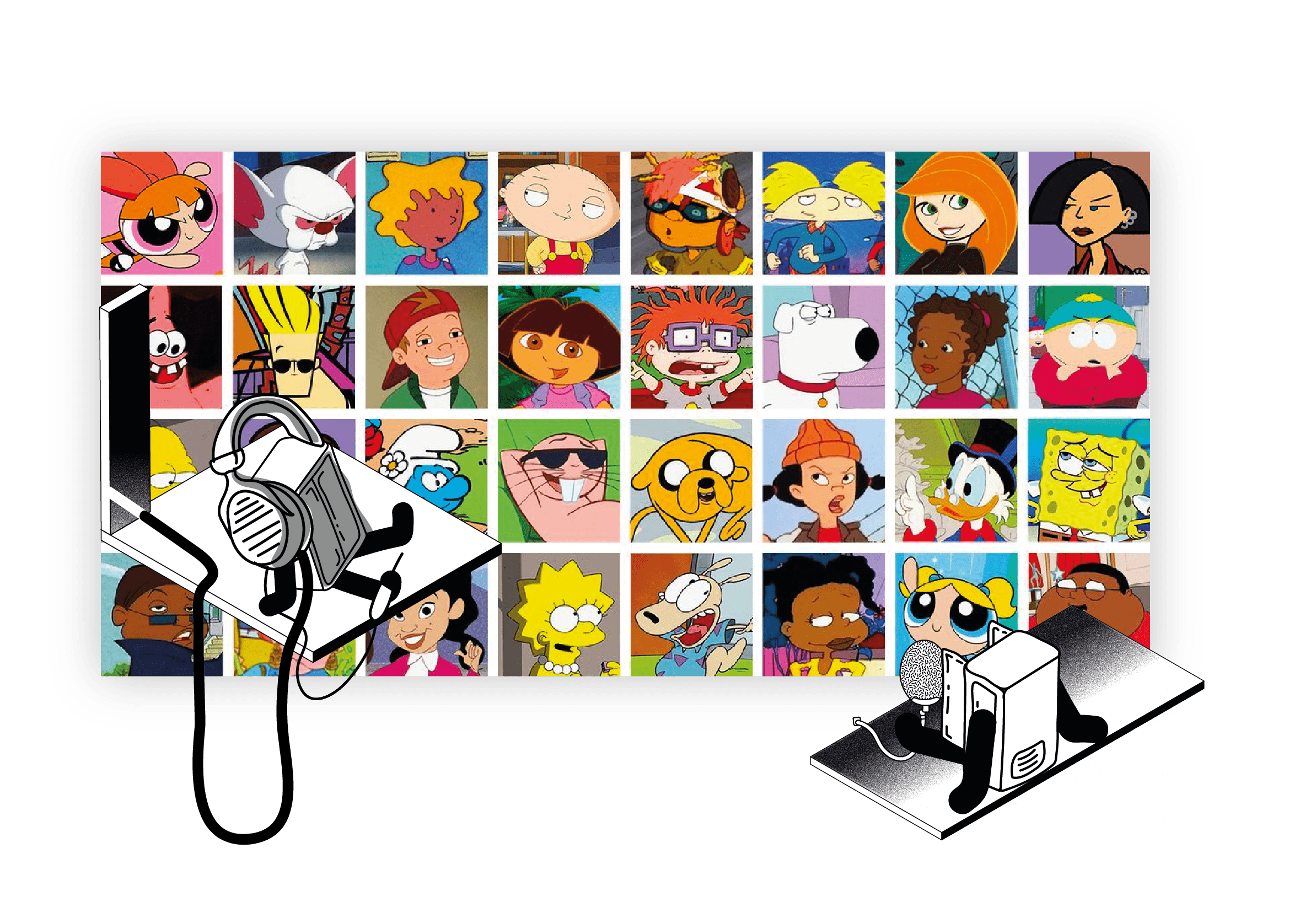
How to become a voice actor for cartoons
How to be a voice actor for cartoons
Growing up with cartoons, many people dreamed of being the characters on the screen. With the colorful characters and expressive emotions, why not? Cartoon and animation resonate with the child within all of us, the person that feels emotions deeply and wears them on their sleeves. It turns out, that’s exactly what it takes to become a voice actor for cartoons. It takes a lot of emotion, acting, and the development of a character.
How to become a voice actor for cartoons
Focus on acting
Acting is at the foundation of voice overs, and it’s especially apparent in cartoon voice acting. Cartoon characters require a greater focus on transmitting emotion, telling a story, and portraying a character. The better you can act, the better you’ll be able to become a voice actor for cartoons. Consider joining acting groups or classes.
Get into character
When voice acting for cartoons, it’s important to focus on becoming the character. When you’re assigned a role, or are auditioning as a character, ask yourself: “who am I? What do I want? Where am I and where have I come from?” Learning the ins and outs of your character are necessary for bringing it to life.
Build a portfolio
It’s unlikely big animation studios will hire you right off the bat. You can build a portfolio by doing animation voice overs that aren’t as high-profile, such as indie projects, or even volunteer projects. Casting Call Club (CCC) is a good place to start browsing for these types of projects.
Exercise freedom
In the recording studio, it’s important to feel free, expressive, and have fun. Characters are brought to life when voice actors give different readings, their own takes on the characters. When you can get into the creative flow of playing a character, that’s where the magic happens. Feel free to use your body and move as the character would (though not too much), sometimes animation is based on how the voice actor moves.
FAQ
Industry rates can range from $100 for a short 15-second animation to $10,000 for a leading role in an animated short. You can earn even more as the lead role in an animated feature film.
No. Especially during the pandemic, people are finding ways to record voice overs in home recording studios. And thanks to remote live-directed sessions, voice actors and directors can have recording experiences that are very similar to in-studio ones.